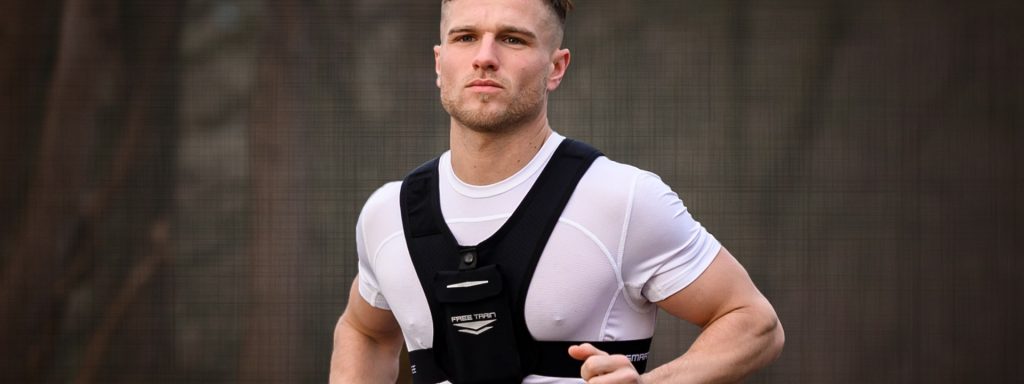
Hate running with your phone in your pocket, in your hand, or in an arm band? I do. I usually run with just a watch and forgo music for comfort. The Freetrain V1 Vest is a potential solution. It puts your phone at the center of your chest in a secure position and features a clasp mechanism for easy access. Sounds intriguing right? Definitely. Now let’s test it in real world conditions.
To test the jordan debut Vest I used it across multiple sports and activities. I also used it in various weather conditions and with different clothing. My tests were designed to approximate what daily use would look like for most people. Throughout the testing process, I noted the positives and negatives of the vest. I’ve organized them here to help you determine if the V1 Vest will work for you.
Pros
Phone access. The ingenious chest-mounted flip-down phone case is the star. It’s easy to get a quick look at your phone whether you want to see your route, music, or a text message from Mom (Hi Mom!). I can’t express how much of an upgrade this is from traditional arm bands and waist bands. It’s the number one reason to buy a V1 Vest.
Weight. Because of how you wear the vest, your phone and the vest itself are easily carried by your shoulders. The vest, at 6 ounces, is very lightweight. For reference, that’s lighter than any iPhone 11 model. I’ve never carried my phone in a better location. I hardly even noticed it was there while running or playing sports. And that’s the best compliment I can give to any phone holder.
Great for sports. This is the only phone holder that I can basically forget about while shooting a basketball. Whether it’s basketball, soccer, rowing, disc golf, or any other sport that involves using your arms and legs at the same time, the V1 Vest just gets out of the way and lets you get to work.
3M. The V1 Vest’s 3M hits on the front and back are great for visibility during night running. Freetrain also offers the VR Vest with full Nike Kobe 6 Protro . It’s sold out now but I’m hoping to try it soon. It looks perfect for multiday relay races like Ragnar and Hood to Coast.
Zip pocket. The pocket on the left shoulder is a vertical zipper pocket that can fit keys or an energy gel. It looks small but once you get your stuff in there it’s not moving.
Quick dry. The neoprene-like material that makes up the entire vest dries quickly. This is absolutely necessary if you run or train daily.
Cable management. While I don’t recommend running with cabled headphones (bluetooth earbuds will make your life 100x better) the Freetrain V1 Vest does have some hidden slots added to keep your cables out of the way. I have no idea how well they work (I’m 100% bluetooth now) but it’s a nice touch.
Cons
Accidental button presses. After I removed my phone mid run to take some pictures and videos (my job requires it lol), I had to endure random pauses of my podcast and my phone getting locked due to too many login attempts. I’m 98% sure this was because I took out the phone and let water get inside the sleeve. I imagine there’s a lot of people who will do the same at some point during their training. If it’s cold, you probably won’t have a problem. But if you do it during sweaty summer runs, be prepared.
Phone pics and video. Removing the phone midrun has consequences. And based on some of the V1 reviews, it’s hard to remove your phone if you have a bulky case. End result, taking pictures and videos during a run or training session is difficult. If you don’t take a lot of pictures/videos while training, it won’t bug you. But for those who do, I hope Freetrain’s next vest allows the smartphone camera to take pics while still ensconced in the protective sleeve. It seems like something that will be necessary when selling to today’s photo-posting, social media savvy athletes.
Chest..ahem…accentuation. Depending on your body type and the shirts you use, the design of the vest can make your chest look weird. For some men, it results in manboobs. For some women, not wearing a super tight or supportive sports bra underneath causes some weird cleavage situations. A lot of this depends on your height and chest size. It’s difficult to predict if you’ll have an issue. Just be aware it’s a possibility.
Sizing. Taller people (like myself) end up wishing the vest was built just a little deeper. The bottom elastic straps align more with my chest than my rib cage. I wasn’t uncomfortable, but the V1 Vest didn’t fit the optimum way. Freetrain is still a fairly new company so I would expect them to eventually offer more fit options. As it is, I think the vest will work for anyone 5’0” to 6’6” with varying degrees of comfort. That’s hard to do with one piece of equipment so I have to commend Freetrain for the versatility of their vest.
Velcro pocket. The pocket on the right shoulder is not very functional. It’s opening is tiny due to being too far up the shoulder strap where it gets really thin. It’s hard to put anything in there. Keys, gels, and credit cards don’t fit. Freetrain needs to rethink this pocket.
Storage. Freetrain made the V1 minimal. You get your phone pocket and one usable zip pocket. This is perfect for training on a field or court but needs more to cater to road and trail runners. Most runners need room for the phone, 2 gels, keys, a card or two, and water. I would love to see Freetrain create a deluxe vest for long distance and trail runners.
Handwash. I put this here because I know it annoys people. The V1 Vest should be hand washed with warm water and mild detergent. Ideally, you’d be able to use a washer and then air dry the vest but that won’t work with these materials. This isn’t a huge drawback for me but your opinion may vary.
Overall
I said it in the intro and I’ll say it again. If you don’t like carrying a phone, wearing it on your arm, in a waist band, or in your pocket, the Freetrain V1 Vest is going to be the best solution for you. The V1 Vest has some flaws but it’s lightweight, easy to forget you’re wearing it, and provides the best phone access of any solution. At $40, it’s priced about the same as most armbands and waistbands. If you’re still looking for the perfect phone holder for training and running, the Freetrain V1 Vest deserves strong consideration.
The adidas 4D Run 1.0 takes the elastomeric polyurethane 3D-printed midsole that adidas created with Carbon, a Silicon Valley based tech company, and applies it to an everyday running shoe. Since its initial introduction in 2017, adidas’ 4D midsole technology has decreased in price. The 4D Run 1.0 is priced at $200. It’s still pricey, but much better than the $300-400 price tag of earlier 4D models. Now that it’s affordable, let’s find out how it performs.
Cushion
The main draw of the adidas 4D Run 1.0 is the 3D-printed lattice pattern midsole. It looks amazing and feels soft to the touch. But it doesn’t compress enough on foot strikes. The adidas 4D midsole feels a lot like standard EVA. For impact protection, I prefer adidas’ Lightstrike, Boost, or Bounce.
So while the 4D concept is super cool, the base material isn’t soft enough or elastic enough to compete with today’s top of the line cushioning. I’d recommend using the 4D Run 1.0 for running shorter distances, working out, and cross training. Adidas needs to make the 4D midsole softer before I’m comfortable recommending it for running longer distances.
Traction
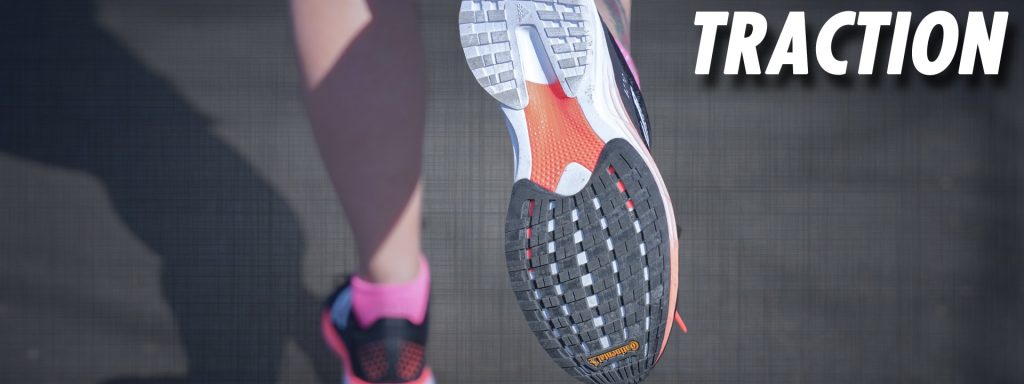
The traction is lattice-patterned to match the look of the midsole. I didn’t get any rainy days while training in the 4D Run 1.0 but the traction bit the pavement and asphalt well. The outsole rubber is on the softer side but I’m not seeing much wear on my pair. I’d expect average durability if you’re running in these regularly.
Support
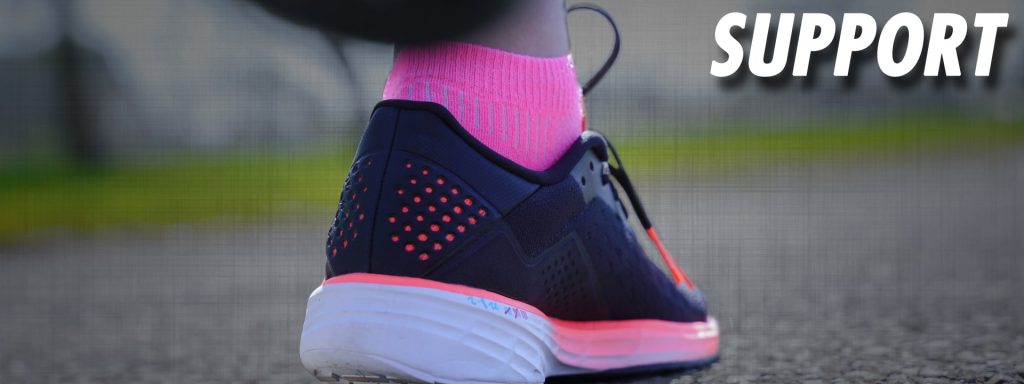
The support starts at the heel where adidas gives us both an internal heel counter and external heel clip. The heel area feels secure with no side to side movement. It’s not necessary, but the heel also features a fuse overlay. The toes also have fuse overlays and a foam sidewall built-in to the upper. The fuse and the foam sidewall serve two purposes, helping the toe of the shoe retain its shape and preventing the foot from sliding off the footbed.
Honestly, it’s already more support than a running shoe needs. But kd 13 isn’t done yet. The midsole flares outward to act as an outrigger all the way around the foot. On top of a 360° outrigger, the midsole material doesn’t compress too much so you stay in place. It’s a really stable platform that won’t roll over. It all adds up to one of the most supportive running shoes on the market.
Materials
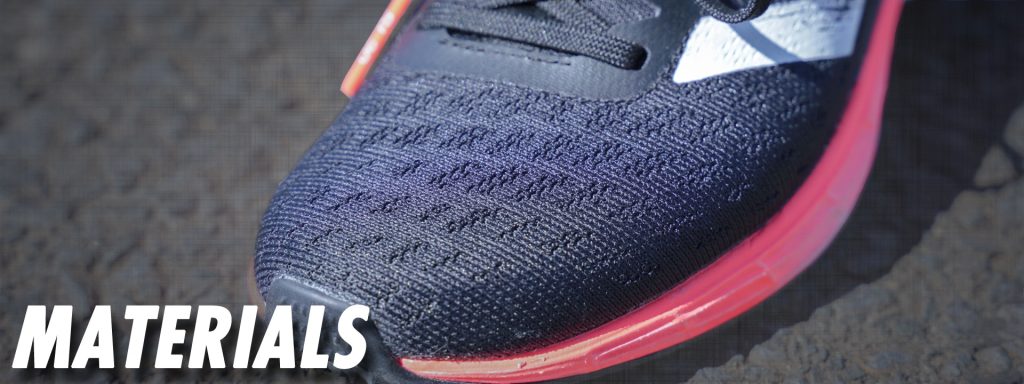
The upper is made of a dual layer mesh with average breathability. Comfort is added with tons of padding at the heel and a squishy tongue that’s not too thick or too thin. As I previously mentioned, there are fuse overlays for structure, the logo, and the lace loops. There’s also 3M touches (depending on your colorway). Adidas also threw in some high quality laces. At $200, I expected more high end materials. But the materials adidas did use are comfortable so I can’t complain too much.
Fit
The 4D Run 1.0 fits like a traditional running shoe. Lengthwise, it feels just a touch shorter than the adidas Ultraboost 19 or adidas Ultraboost 20. I went true to size. Go with your preferred adidas size. Preferred adidas sizing will also work for wide footers as there’s plenty of width. The upper’s fit provides all day comfort for casual wear while working or walking around. It’s very comfortable for a non-knit sneaker.
Overall
The adidas 4D Run 1.0 is a little too heavy and the cushion too stiff to use as your daily running shoe. But it’s a very comfortable and supportive shoe. You can use it for light running, lifting weights, and cross training. And the 4D Run 1.0 is an awesome, attention-getting casual shoe that gets people talking about the 3D-printed midsole. It’s value will depend on how you plan to use it. If your intended usage mirrors my recommendations, you’ll enjoy the 4D Run 1.0.
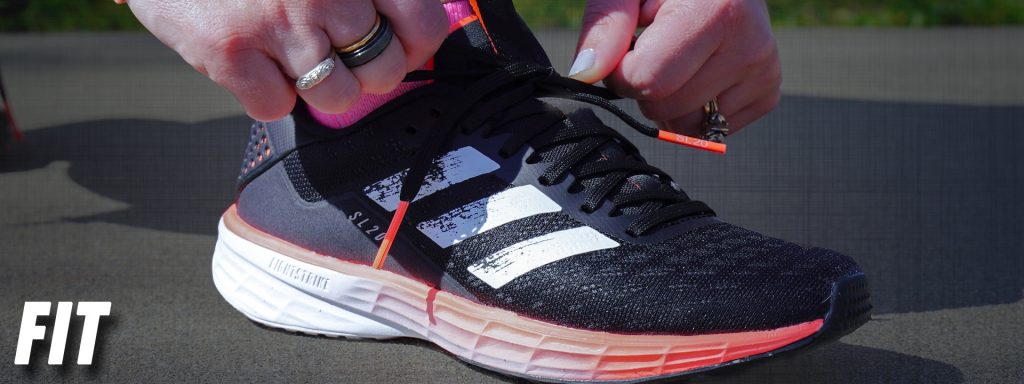
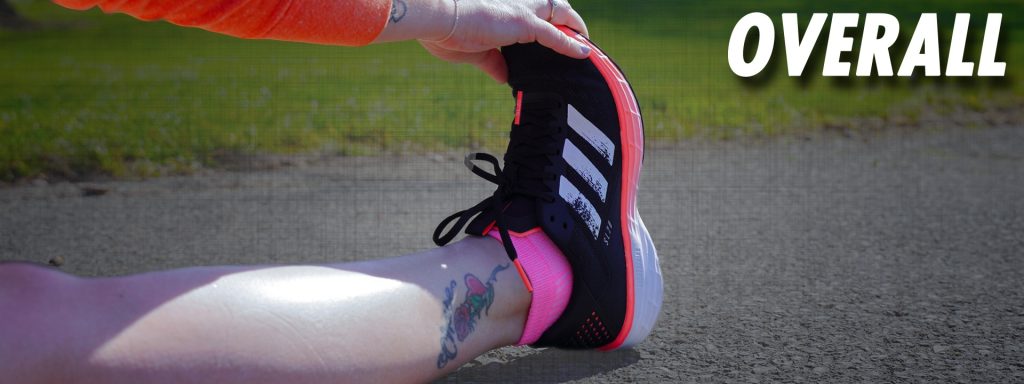
The adidas SL20 is one of the first running shoes to feature adidas’ new Lightstrike cushioning. We’ve been waiting for Lightstrike to come to running shoes since it’s debut last year in the adidas N3XT L3V3L basketball shoe. Lightstrike is lightweight while also providing a nice well-balanced ride. Does it work for running? Let’s find out…
Cushion
Drew: I really like Lightstrike for running. I like it enough that I wore the adidas Ultra in a recent 10k race. At around 8 ounces, it’s just light enough to use as a race day shoe (though probably not if you’re an elite runner).
The Lightstrike is actually light enough that the majority of the SL20’s weight comes from the upper. Most shoes are bottom heavy so having this one be reversed feels great. It makes your brain believe you don’t have much on your feet. Mentally, that’s great during speed workouts and on race days. I constantly found myself reaching for the SL20 before speed workouts.
The impact protection is also top notch. There’s only 14mm of Lightstrike in the forefoot but I never felt too much ground impact. Because there’s so little foam, I also expected the foam to bottom out on long runs or after I put a bunch of miles on the shoes. But here I am with 65+ miles in the shoes, having done a couple 10+ mile runs in them, and they still feel great.
Again, Lightstrike is great for running. I’m convinced adidas is just scratching the surface of what’s possible with a Lightstrike-based running shoe. The fact that the first iteration is so good is a great sign of things to come. Jodi: Being married to Chris, I’ve heard tons of great things about Lightstrike in the basketball world, so I was pretty excited to see what it was all about. I’m actually surprised it didn’t hit the running world first since in a lot of ways, us runners are guinea pigs. I have to say, the cushion system lives up to the hype. It’s flexible, bouncy, and light. And has great impact protection. Every time I ran in these I felt like a sprinter, super quick. And my mile splits for those days reflected the feeling. Placebo effect? Maybe. But I’m not complaining about it.
Traction
Drew: Continental rubber is adidas’ go-to rubber compound and they’ve used it to great effect on the SL20. It rained the night before my recent 10k and the entire course was still wet when we toed the line at 7am. After the race, I heard several people complain that the roads felt slippery and that they couldn’t get great traction. I had to think about why they would have problems because I didn’t even notice the moisture. The SL20’s outsole gripped just like a normal day despite the wet conditions.
It wasn’t a surprise because while training in the SL20 I ran in rainstorms and several other iffy conditions and never had a problem with the traction. It’s one of those shoes where you don’t even have to think about your footing because every footfall is secure. Jodi: Continental rubber is my jam, so I’m always happy when adidas uses it on its runners. I think the way they incorporate it with the stretch web pattern not only helps for great grip on the roads but also helps with whatever cushion system is being used. It’s just another great flexible layer to keep all your joints happy.
Support
Drew: The support is solid enough to compete with most everyday trainers. Adidas included their standard Y-shaped Torsional plate at the midfoot, went with a fairly beefy heel counter that extends beyond the heel on both the medial and lateral sides of the foot. The SL20 uses a fuse overlay along the bottom third of the shoe that starts at the heel and extends all the way to the forefoot on both sides of the upper. It does the job of really keeping you on the footbed. Then the ball of the foot also sits ever so slightly inside the Lightstrike midsole to help prevent rollovers. Finally, the midsole flares out a bit on both sides of the forefoot to provide a wider base for pushing off.
It’s a full package of support despite the lightweight nature of the shoe. I feel adidas went above and beyond what it’s expected from an everyday trainer in this weight class. Jodi: As Drew has already stated, adidas really went all out making sure it would be next to impossible to not feel supported by the SL20. The heel cup is super rigid and extended along both sides of your foot. Then up top they gave you plenty of padding that wraps all the way around to the where the collar meets your ankle. And you can see your midsole peeking way out when you’re standing in them. You would have to land pretty awkwardly for your ankle to roll in these guys.
Materials
Drew: The SL20 features a typical mesh upper with fuse overlays. The tongue is a thin, stretchier mesh that is sewn to the upper. The laces are fairly typical and the insole is extremely thin and doesn’t really help the step-in comfort at all. So while the materials are pretty blah, they do the job, and allow adidas to keep the SL20 at the $120 price point. I like the trade offs they made because the price is a huge selling point of this shoe. Jodi: There is absolutely no stretch in the materials, not even anywhere on the tongue, which is also attached to the upper. And because of those two things, I really gotta talk about the fit.
Fit
Drew: The adidas SL20 fits true to size. Some narrow footers may notice some puffiness in the toe box when they lace the shoe up tight. This is a result of the way adidas sewed the tongue to the upper. The tongue/upper combo could have been executed better but in practice the excess toe box material didn’t annoy me or get in the way. This is where using a flexible mesh helps hide the issue. The thin tongue could also fold up a little while putting the shoe on but the pull tab helps sort that out.
It’s not a perfect upper but it gets the job done and let’s the real star of the shoe, the Lightstrike cushioning, shine. Jodi: Just in case anyone is new to my running reviews, I’m a wide footer. So if you are also a wide footer you’re going to want to stay tuned. As fantastic as this shoe was in the cushion department I struggled greatly with how the shoe fit. I feel like the length was half a size too long, but I could not have gone down a half size because there was no stretch in the upper and the shoe fit me really snug. Also, the tongue that was attached to the upper would somehow fold on itself always on my left foot and it would run between the bones on top of my foot. So I’d have to work at getting that shoe on just right almost every time I’d be getting ready to get out the door. It’s still a great shoe despite those things, definitely not a deal breaker for me. But they are used now for runs that I know will be under 45 minutes. Anything over that and I know I’m going to be feeling uncomfortable pretty quickly.
Overall
Drew: The adidas SL20 proves that Lightstrike cushioning in running shoes is a great option. For $120, you get an amazing cushioning experience, top tier traction, solid support, basic materials, and a few ignorable fit issues. But even if it was just the Lightstrike experience alone, I’d recommend these shoes. It’s a cushion that’s really fun to run in and worth the money. Jodi: I’m pretty happy with what adidas did with its first Lightstrike runner. Dare I say that the cushion could take over the almighty Boost? I can definitely see it being used in a lot of future runners. In fact, I hope they do. If you’re looking for a runner that feels fast, has solid cushion, great support, excellent traction and you have an average sized foot, I’d definitely recommend these. If you have wide feet like me or even very narrow feet, I’d go in store and try them on first. Make sure you can handle the way they fit because like Drew and I both said, due to the way the upper is constructed there’s no way to hide any flaws.
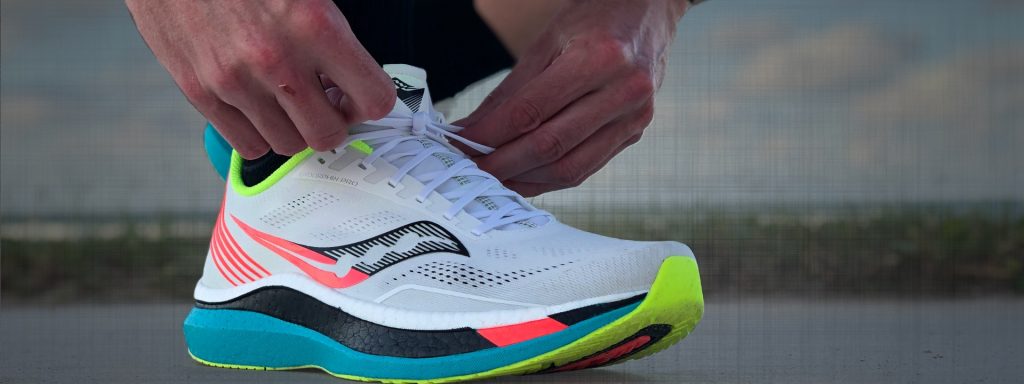
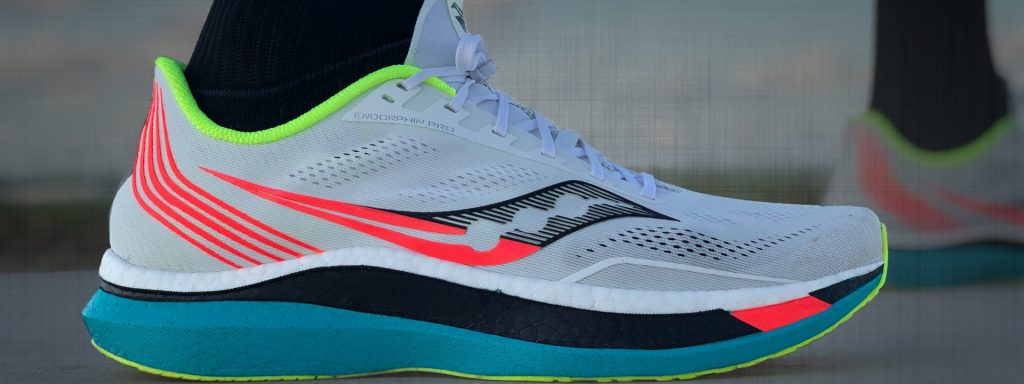
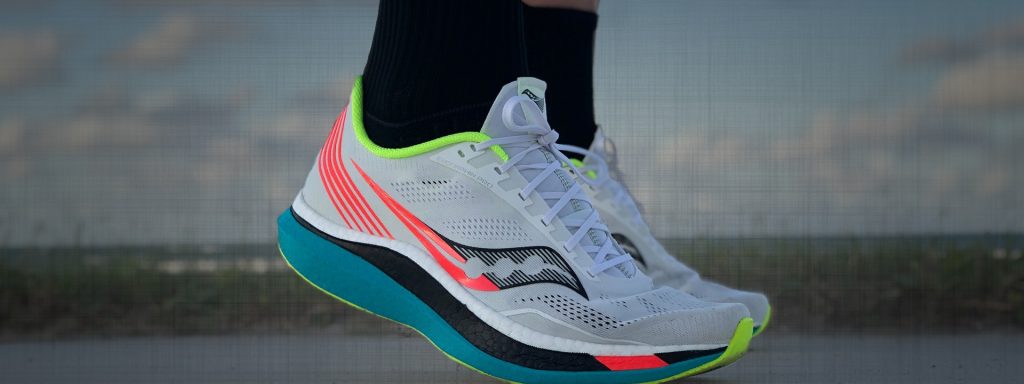
The Saucony Endorphin Pro was on the medal stand at the US Olympic Marathon Trials (courtesy of Molly Seidel) and we’ll probably see it on more podiums when road races start again. As we discussed in our recent Nike Alphafly Next% vs Saucony Endorphin Pro comparison, the Endorphin Pro is legit and will challenge both the Alphafly Next% and Nike Vaporfly Next% for road racing supremacy.
Cushion
Saucony’s version of pebax cushion is PWRRUN PB. It looks like adidas’ Boost but is much lighter and similar in squishiness and feel to Nike’s ZoomX. When paired with the S-curved carbon fiber plate that’s sandwiched between the two layers of PWWRUN PB, you get a snappy bounce on every toe off. The feeling is similar but stiffer than the Vaporfly Next%.
The pebax and carbon fiber plate combo is paired with a rocker shape that Saucony calls Speedroll. I enjoyed how smooth the Speedroll midsole shape made the heel to toe transition. The cushion, carbon fiber plate, and Speedroll shape combine for a smooth and efficient ride.
Traction
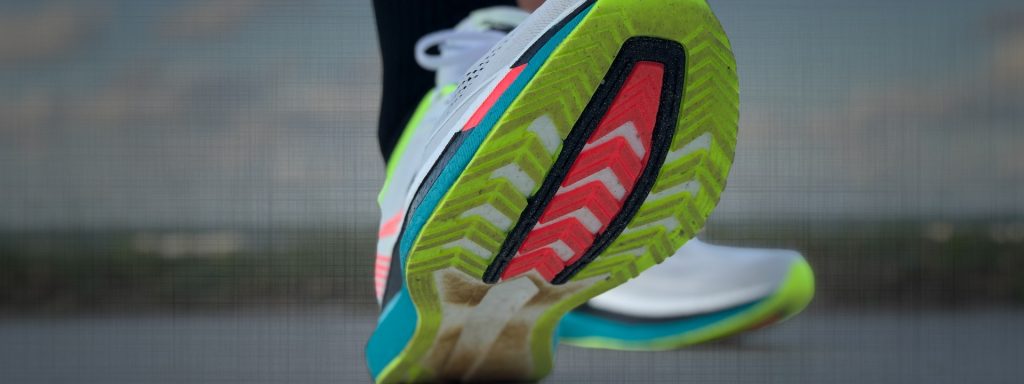
The Endorphin Pro features a traditional chevron pattern over the entire forefoot with plenty of cutouts for the pebax to expand. The midfoot only has rubber on the sides while the heel has some extra rubber on the lateral landing zone. While the rubber doesn’t appear thick, it’s durability is incredible. I’ve put over 50 miles on my pair and the outsole barely looks used. The traction is built to last in a way that the Vaporfly and Alphafly can’t match.
On top of that crazy durability, the rubber sticks to everything. I travelled a lot of wet ground and rainstorms in the Endorphin Pro. I never felt slippage. They even handled mildewy wooden bridges without issue. If you’re faced with bad weather on race day, reaching for the Endorphin Pro will be a great choice.
Support
There’s no internal heel counter but I felt secure at all times. There’s no tippy feeling like you get with other road racing shoes and the offset is a traditional 8mm. The forefoot widens nicely and a flared midsole provides extra support. You sit inside the midsole at both the heel and midfoot to help prevent rollovers. Finally, the gusseted tongue locks you in place. If your previous race day shoes were too wobbly, the Endorphin Pro will be a better option.
Materials
The entire upper consists of an ultra-thin engineered mesh called Formfit. There are some vinyl overlays at the lace loops, the heel, and logo but they’re mostly ornamental. The tongue is a double-layered mesh that feels like super thin neoprene.The shoe’s materials are common on traditional daily runners so there’s nothing to get used to. I didn’t experience any hotspots. It’s a minimal upper that does its job and stays out of the way.
Fit
The Endorphin Pro fits true to size without any dead space above the toes. The gusseted tongue provides a comfortable, locked down feel without feeling too tight. The tongue has a small bungie sewn on so you can tuck your laces into it. It’s perfect for people who hate the laces banging around as they run.
Some people I talked with needed a runner’s loop to get perfect heel lockdown. However, my heels stayed put from the beginning using the standard lacing configuration. In totality, the fit feels like a (very light) traditional running shoe.
Overall
The lebron 17 is a near perfect shoe. Fit, traction, and cushion are just awesome. True, it doesn’t have the extreme stack height and cushion of the Alphafly or Vaporfly, but not everyone needs that level of squish while racing.
With the Endorphin Pro’s $200 price tag being $50-75 less expensive than its closest rivals, any trade offs are worth the price. Based on my testing, I’m confident we’ll see the Saucony Endorphin Pro on a lot of podiums in the near future.
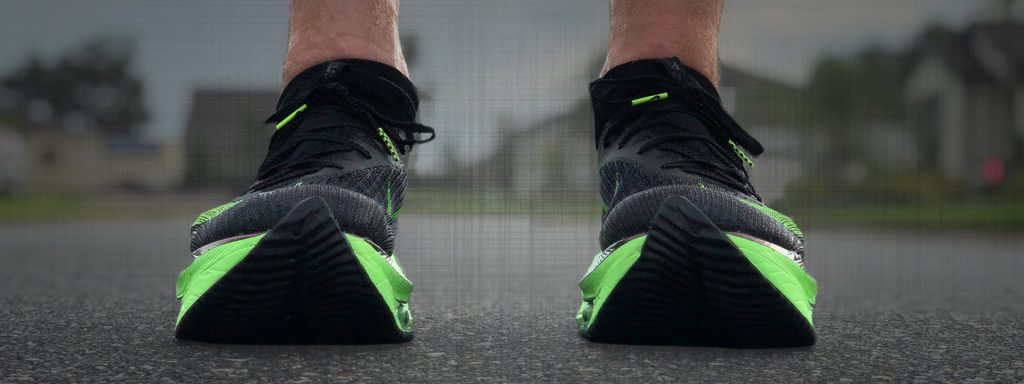
The Nike Air Zoom Alphafly Next% is the most anticipated running shoe since, well…ever. Why? Its predecessor, the Nike Vaporfly Next% has been the top road racing shoe for over a year. Before that, the Nike Vaporfly 4% was the undisputed king of the roadways. The third shoe in the trilogy was bound to be extremely hyped. And then, Eliud Kipchoge added to the Nike Alphafly mystique by wearing it to break the freakin’ 2-hour marathon barrier.
All of the above has led to today. Thousands of runners eagerly await the July 2nd release date so they can use the Alphafly to set PRs and climb onto race podiums. Is the Alphafly worthy of all the hype? TLDR, yes! But keep reading for the full performance review. Note: For those interested in how the Alphafly Next% stacks up against other top of the line road racing shoes, we recently published two detailed comparisons:
Cushion
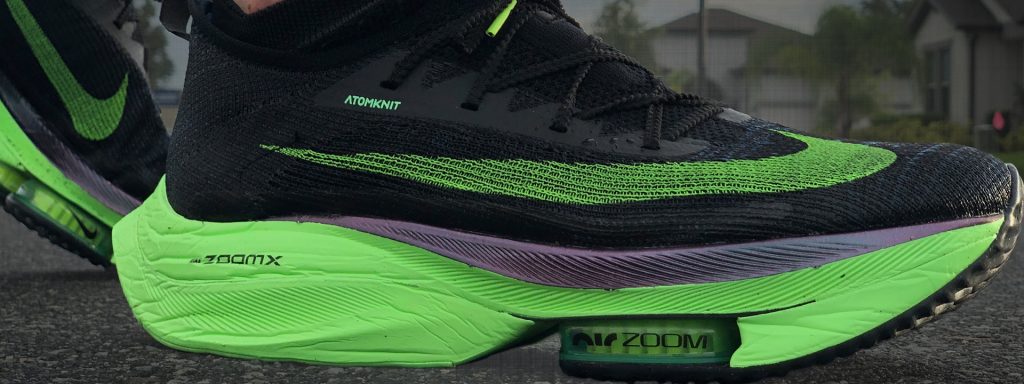
Nike’s pebax cushioning, ZoomX, is the foam used in the midsole. And there’s a ton of it. The, now standard for Nike’s road racing shoes, full length carbon fiber plate is sandwiched between the two layers of ZoomX. The heel’s cushioning level and bounciness feel a lot like the Vaporfly Next%.
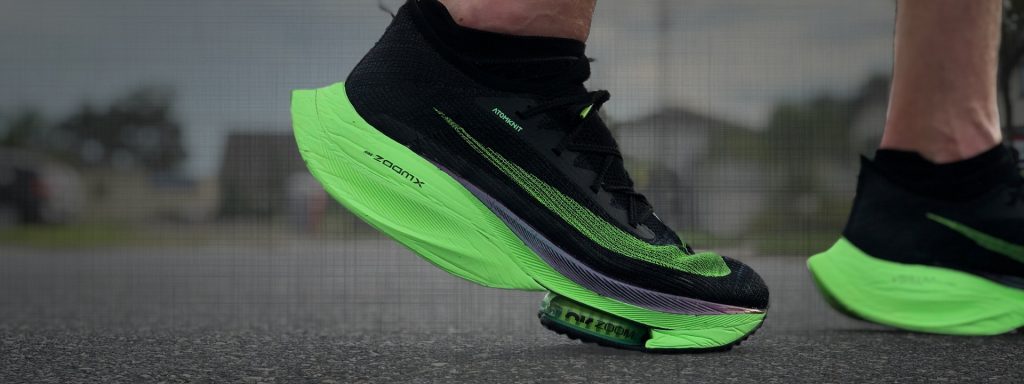
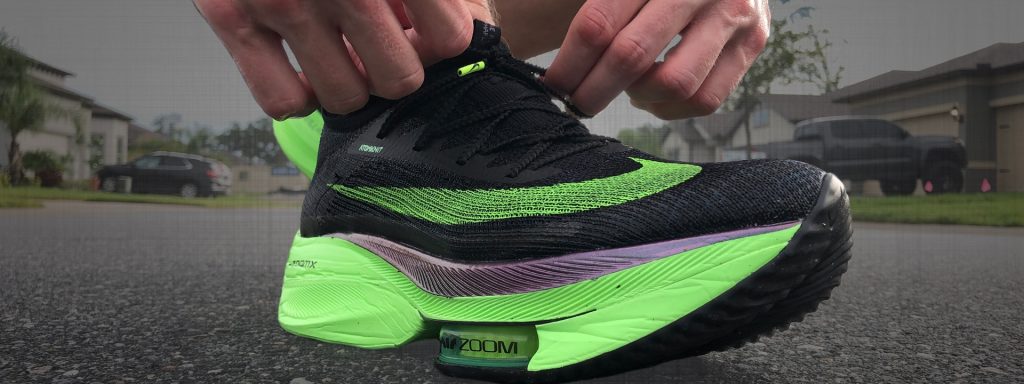
But the forefoot is completely different. There’s a nice slab of ZoomX in the forefoot above the carbon fiber plate. Below the plate, however, Nike changed things up from the Vaporfly. Right above the outsole, Nike placed two large volume Zoom Air bags similar to what’s in the Lebron 17. We’ve previously seen Zoom bags this size in basketball shoes but never in a running shoe.
If you’ve read WearTesters for any length of time, you know we love Zoom Air. The Zoom Air in the Alphafly Next% doesn’t disappoint. It’s bouncy and returns most of your energy. This was a solid improvement from the Vaporfly and lets the Alphafly shine in speed workouts. The more you’re on your toes, the better the Alphafly feels. The addition of the Zoom bags encourages you to get up on your toes and run faster. And that’s exactly what you want during long distance road races.
Traction
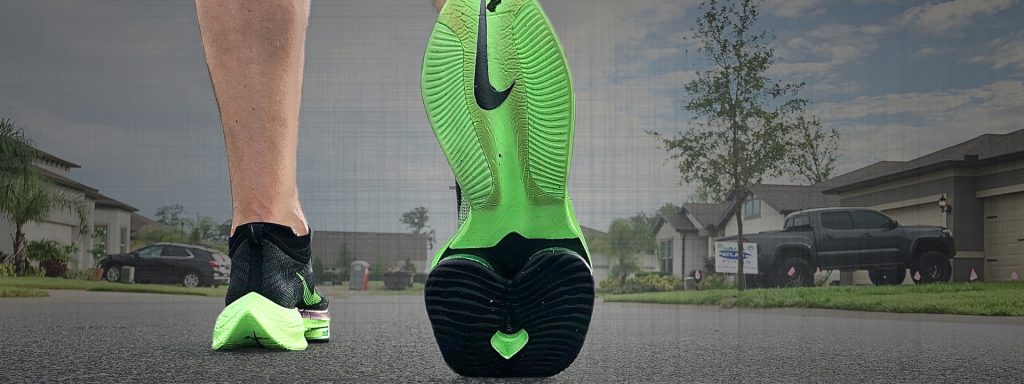
The Alphafly Next% traction is really close to perfection. The wavy-patterned rubber fully covers the forefoot (except for a small cutout in the middle to save weight) and does not slip. Ever. Nike has finally nailed secure traction on its flagship racer. On the heel, the camouflaged rubber coverage on both the lateral and medial sides is quite generous for a racing shoe. And the rubber used is nice and sticky. In terms of the outsole sticking to every surface, it’s perfect.
The imperfection comes from durability. I’ve run 50+ miles in my pair and the waves on the outsole are intensely fraying along my strike path. At this rate, the entire lateral side of my forefoot will be bald way before I hit 250 miles. I won’t be running directly on the foam or Zoom Air bags because the rubber below the wave pattern is still fairly thick. However, I’m worried it may affect the shoe’s awesome traction over the long term. This isn’t a huge issue since these are racing shoes. Durability is never the top priority on a racing shoe. But if Nike had used a slightly harder rubber, the Alphafly’s outsole setup would have received a perfect rating.
Support
Support was an issue for a lot of people with the Vaporfly Next%. The Vaporfly had a narrow base and felt tippy when turning or on uneven ground. The Alphafly Next% rectifies a lot of the support issues with a few tweaks.
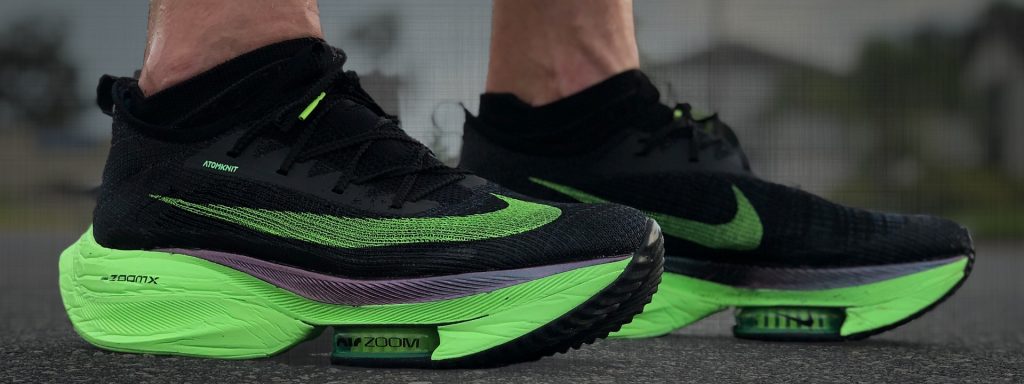
Nike flared the forefoot’s midsole out wider and used the two Zoom Air bags as outriggers. This was appreciated as the Alphafly is tall. It has a forefoot stack height of 35mm vs the Vaporfly’s 32mm (they’ve got a 39mm and 40mm heel stack height respectively). The heel midsole flares wide too which is a big change from the Vaporfly. There’s also a strip of fuse around the bottom of the upper where it connects to the midsole. Fuse is Flyknit and glue melted together. It’s stronger than normal knit and adds side-to-side support to help prevent rollovers.
The Alphafly is a bit tippy around tight 90°-ish corners. Gradual corners (like you’d find on a track) are not a problem. I’m impressed that Nike was able to improve upon the previous generation without adding too much weight. Racing shoes aren’t known for their support but the Alphafly has enough to get most people through race day.
Materials
The Alphafly Next% upper is made of Atomknit. Atomknit is Flyknit that’s been steamed and stretched. It’s coarser and less stretchy than Flyknit but still fits like a knit. It doesn’t absorb much water on long runs but I’m sure it absorbs more than the Vaporweave upper on the Vaporfly Next%. That said, it doesn’t come close to absorbing as much sweat as a typical mesh running shoe.
The tongue area is a stretchier layer of Atomknit with a built-in pad to relieve lace pressure. The lace holes go through fuse overlays on both sides of the foot. The laces themselves are still small but of medium thickness with serrated edges. The serrated edges keep the laces from pulling free while wet during runs. I also liked the serrated edges because it’s easier to get a handle on them. I think we’ll start seeing these serrated laces on more models as they seem to “lock in” better than traditional, smooth-edged laces.
Fit
The Atomknit upper is one big sock. The sock like fit may start tight for people with wide feet or high insteps, but Nike’s thought of that. The designers gave us tongue and heel pull tabs to assist in sliding on the shoes. The knit quickly breaks in and stretches to provide the 1:1 fit that knit shoes are known for. The sculpted achilles pillow is a nice touch but, similar to the Vaporfly Next%, the heel is minimally cushioned. Runners with heel spurs or bony heels may dislike the direct contact with the big heel counter. However, if you didn’t have problems with the Vaporfly’s heel, you won’t have problems here.
The Alphafly Next% fits true to size but is wider than its predecessor. Grab your normal Nike shoe size or the size you purchased in the Vaporfly (assuming you didn’t go up half a size to get extra width). The heel and forefoot on the Alphafly are wider than the same areas on the Vaporfly. The midfoot and arch area are very snug but that’s needed to support the sock like fit. The Alphafly will accommodate a wide range of foot types.
Overall
I started by referencing the fact that the Nike Alphafly Next% is the most hyped running shoe ever. It lives up to the enormous hype. It’s the bounciest road racing shoe on the planet (though the Saucony Endorphin Pro gives it a run for the money).
The $275 price tag will feel extravagant for all but the most serious runners but the experience is unique. If you love running and racing, and have the cash, the Nike Alphafly Next% is a luxury that’s extremely fun to have in your closet.
The Nike Alphafly Next% will release July 2nd for $275 at Nike and hoop jordan.
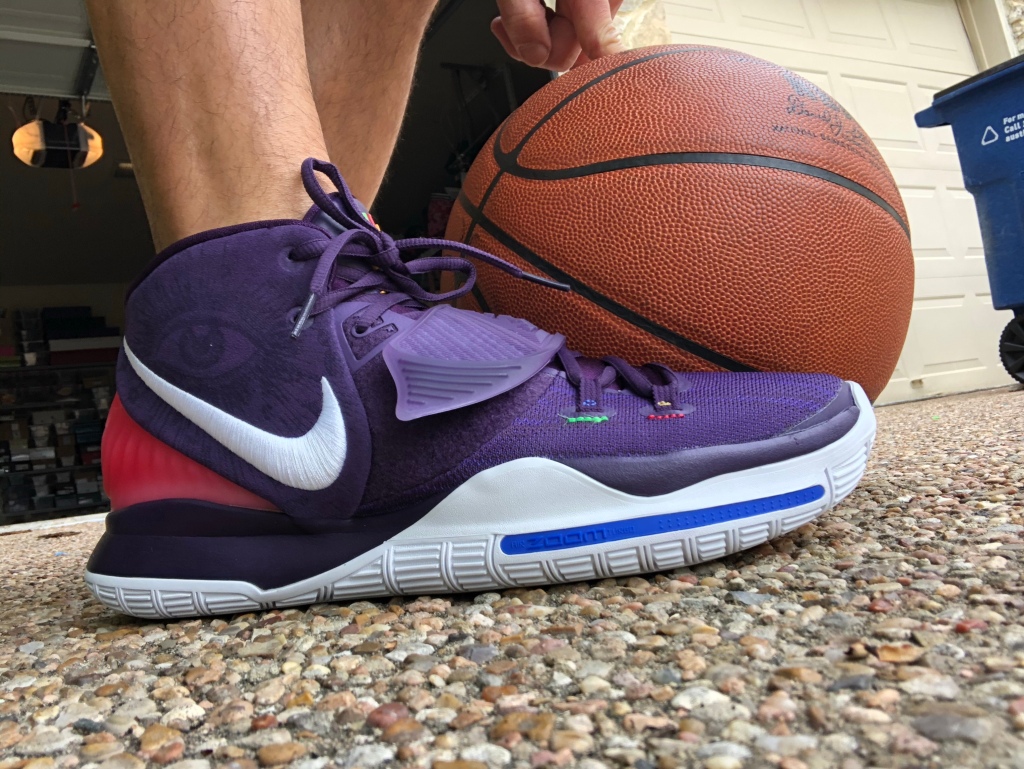
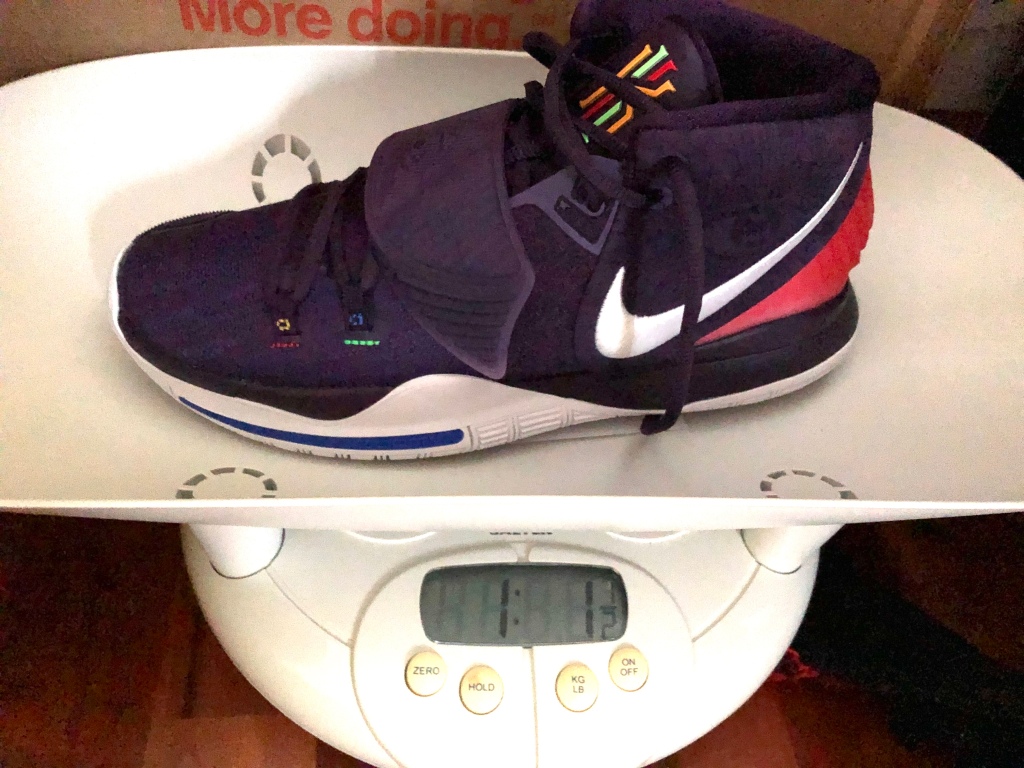
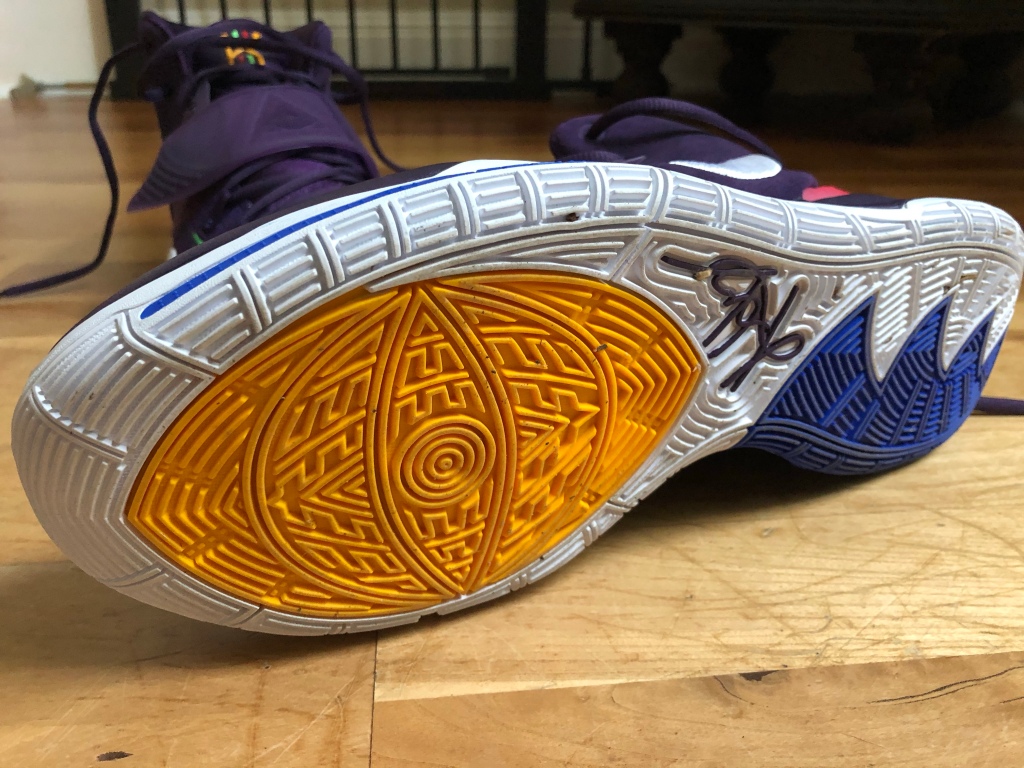
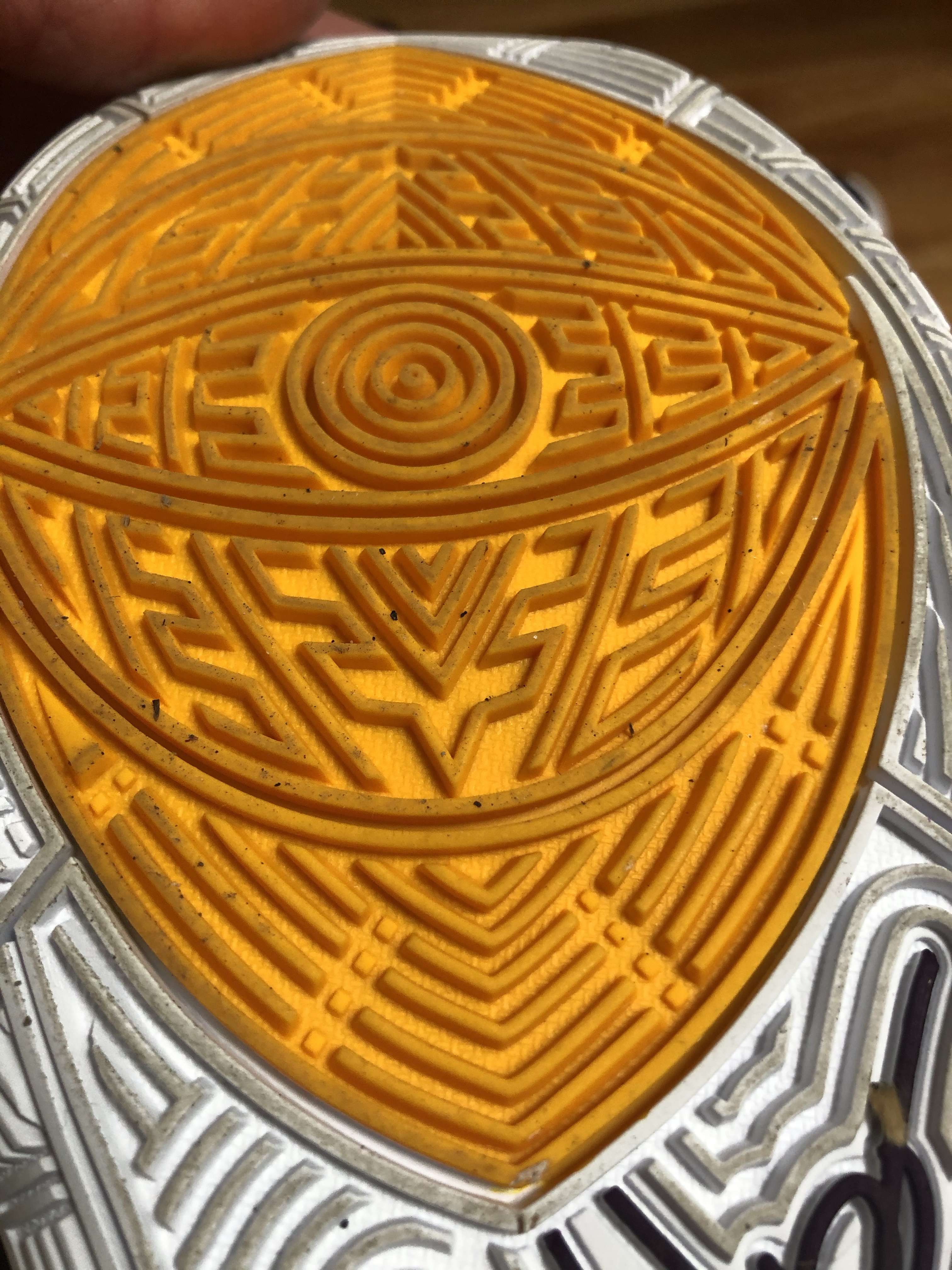
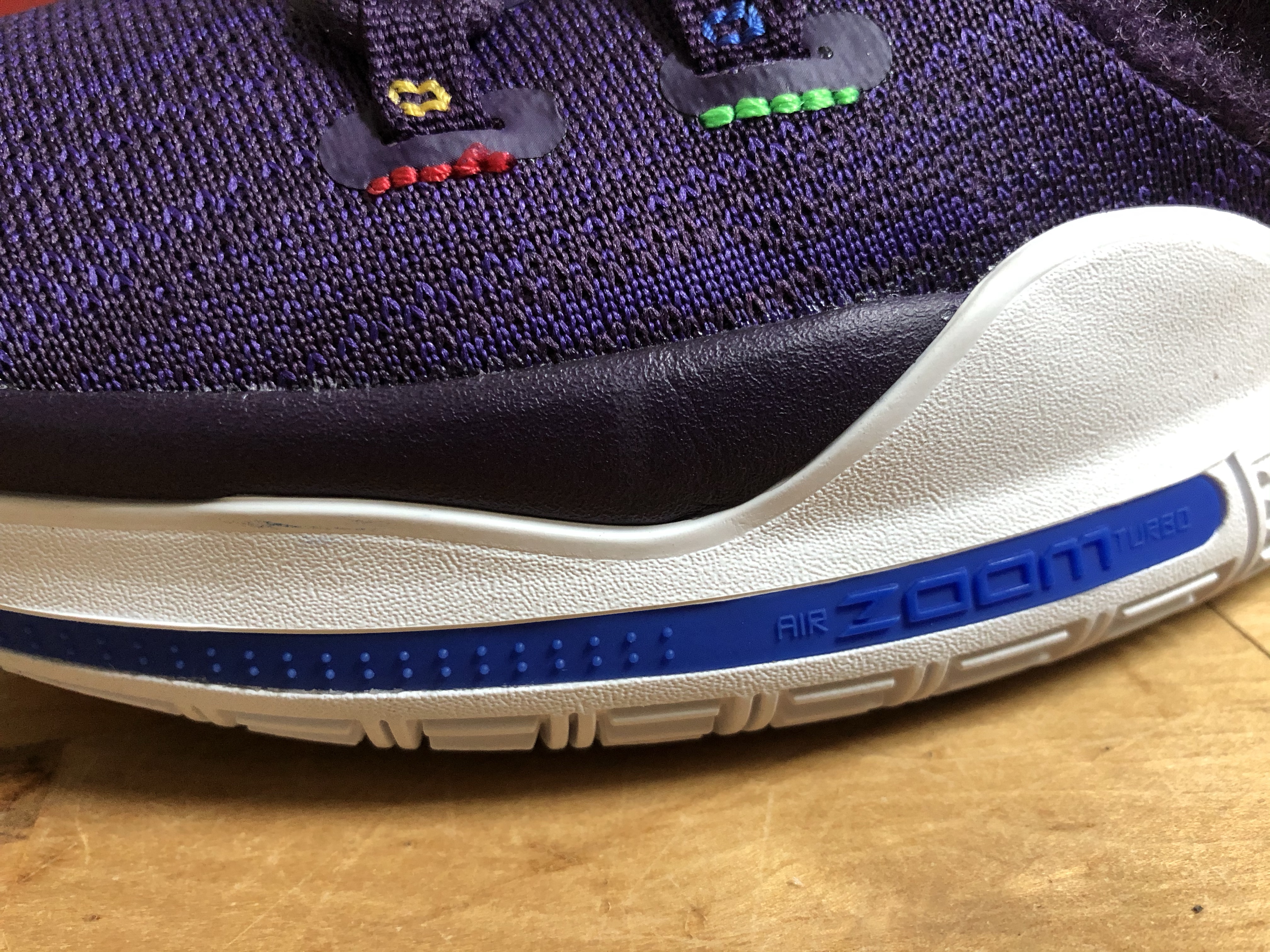
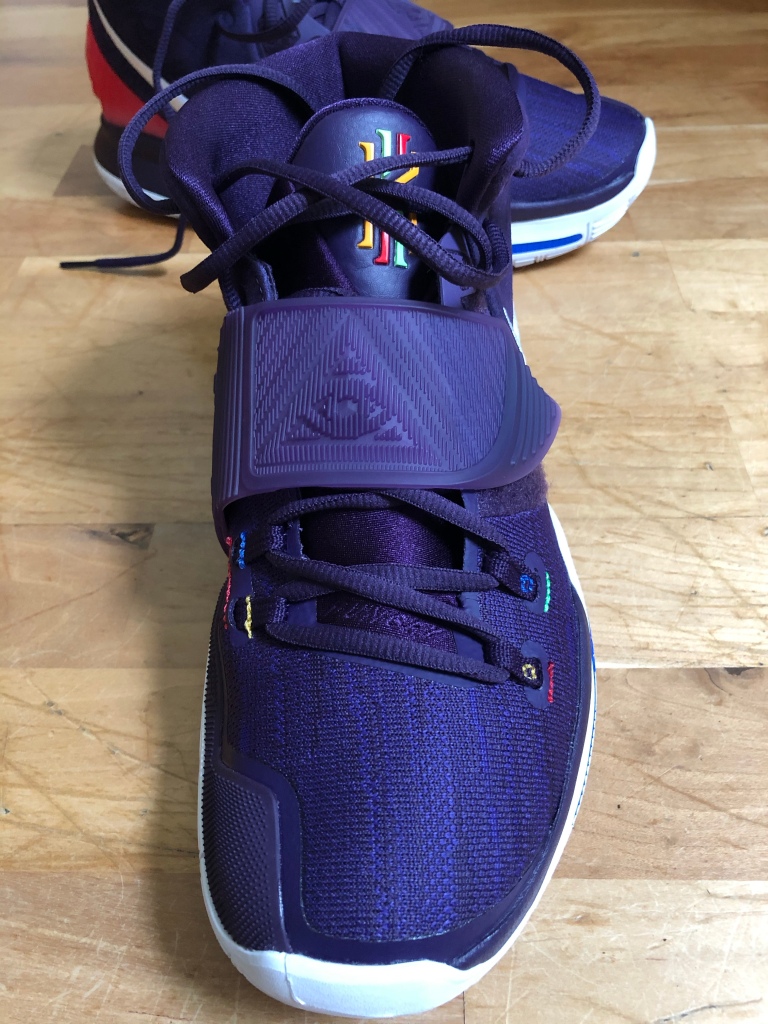
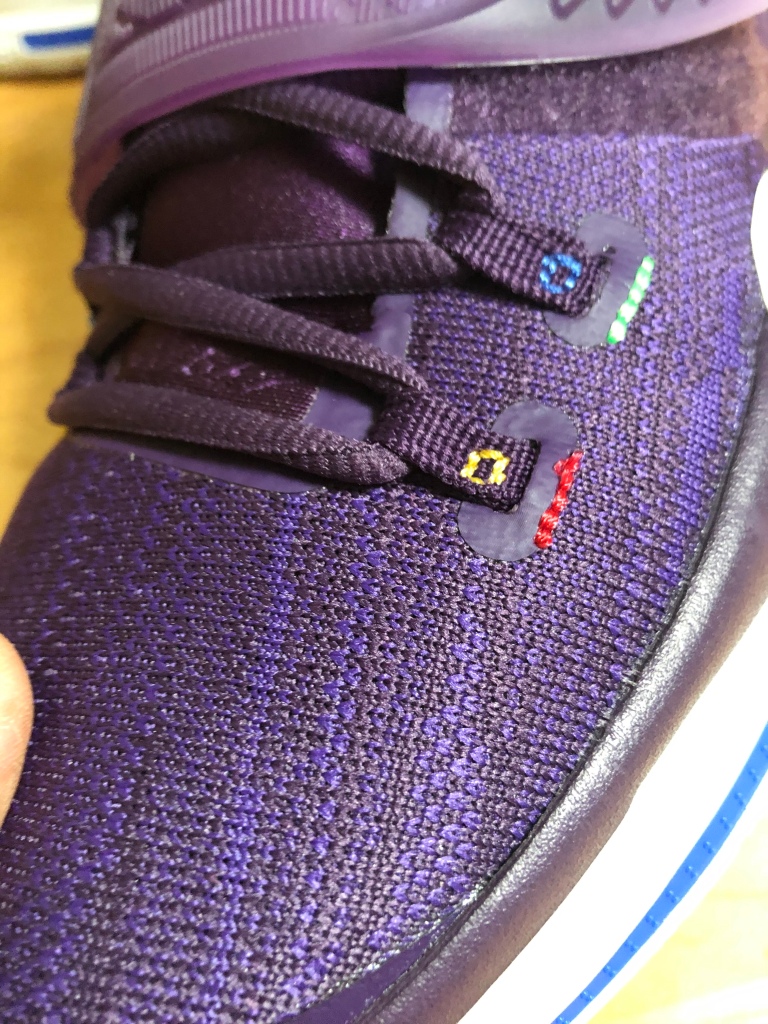
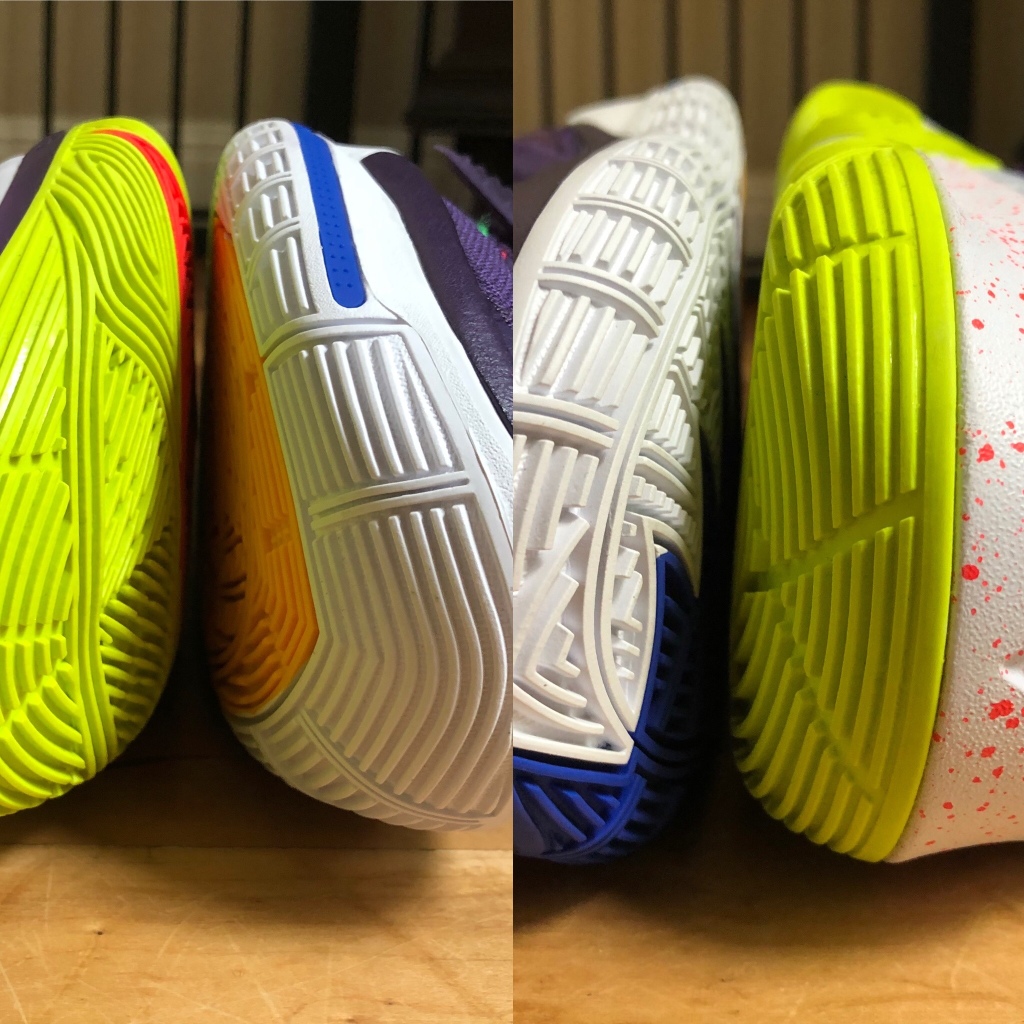
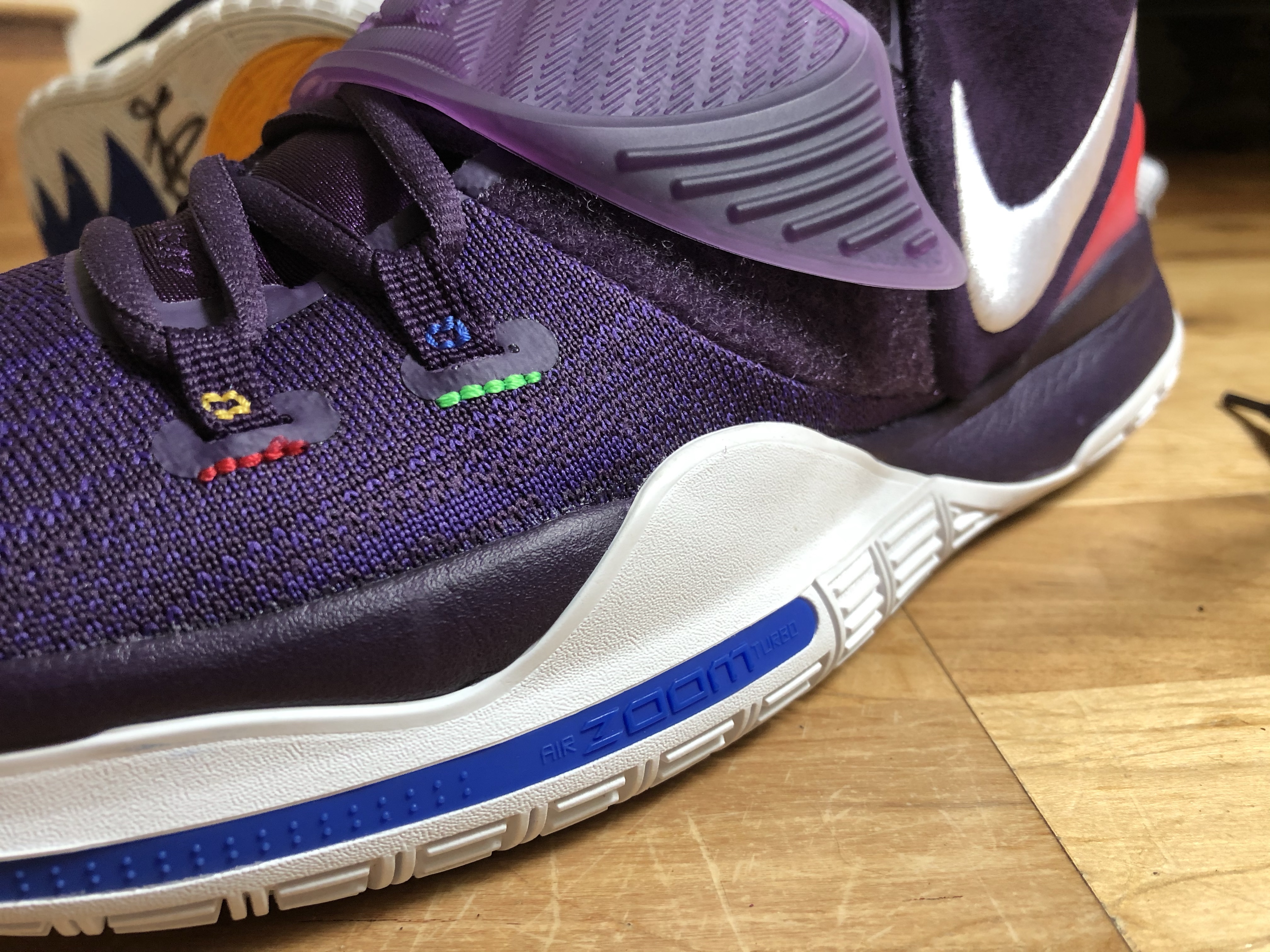
Sorry for the delay on reviews. Apparently lockdown means more time for a lot of people but with everyone at home right now, alone time to write or do anything at all is nearly impossible. I had a review written but scraped it to write something more fitting Pros: traction, cushioning, fit, support stability, containment Cons: starts stiff, heavy for a guard’s shoe Sizing advice: at least half a size up.mBest for: any position of any weight Buying advice: picked up this pair for $67 off Nike.com. $50 should be the bottom but anything under $70 is a great deal. Weight #quarantine15At 17.5 ounces, Nike apparently quarantined itself prior to this COVID19 mess as this is a hefty Harden /Adidas weight. I’m not a stickler for weight and neither should you. Ask yourself this…ifone of the quickest guards on the planet is wearing a 17.5 ounce shoe and blowing by the NBA, maybe I’m right, no? Traction I’ve always felt traction was the most important aspect of a shoe and the Kyrie 6 delivers. Not exactly sure if the rubber is softer but damn these work on every surface with minimal wiping which is great since charmin is a premium quick strike nowadays #hoarders Cushioning Zoom turbo is back again and unlike the Kyrie 5 and Kobe 6, I could actually feel it in the Kyrie 6. It isn’t the thickest or bounciest Zoom in the forefoot but it’s nice to know the $130 (if you were dumb enough to pay that back on release day) shoe you bought has what it says. Overall cushioning is softer than the 5 and slightly firmer than the 4 which is just a near perfect balanced cushioning set up. Not too soft, not too hard, a good bit bounce and feedback make this a great shoe for any position. Fit Kyries have always run a little tight and small (that’s what he said?) and I’ve made due with true to size but these are are definitely half a size small and short in length. There is a lot of padding in the shoe which may contribute to the smaller size. I went half a a size up at 11.5 and tried a full size up at 12 and could wear both just fine with no excess movement but the 11.5 felt more in line with what I’m used to. No heel slip no side to side movement out the box. Really poor social distancing in the shoe which is a good thing in this case. #stayhome #6footrule Materials Nothing ultra fancy here but it works great. It overly stretchy, feels and looks almost premium with no pinching or hotspots like NYC #flattenthecurve Support and Stability The 6 plays is a mid and plays like a mid so if you want full range of motion and minimal shoe with zero support look elsewhere. These just (virtual) hug you like a good shoe should and gives the wearer a nice sense of feedback around the ankles. Very similar widths to the Kyrie 5Unlike the US economy, stability is excellent in the Kyrie 6. The curved outsole has flattened out a little to feel slightly more traditional but i can still feel it. Let’s keep flattening the curved and stay home though. The stiffness of the outsole takes a little time to break in FYI Containment “We have it contained” POTUS Errr, are we talking about the foot with the Kyrie 6? If so, I agree. Nice raised midsole, nice thick strap. Well done Kyrie. Conclusion
Do you buy shoes and worry if it’s the right shoe for you and your game? Do you worry man if I’m half a size off it’s going to go up and down like the stock market (or just down). Do you buy certain shoes for certain games or styles of how you play? Well the Kyrie 6 is just one of the best all around shoes I’ve played in for a long time that can relieve you of those worries. It’s a very Hyperdunkesque , any player type shoe. Remember Kyrie was a HD guy back in the 2012-2014 so it makes sense it’s a good all around shoe. I’m happy the cushioning has come around from the brick days to a more accommodating softer set up that any player can enjoy and I’m really glad that Zoom turbo FEELS like Zoom. If you want to feel active during this crazy time, get up (or don’t) and open an app or browse to buy a great shoe at a discounted price. I’ve seen stock X and eBay prices go for under 80 so if you’re impatiently waiting for sales, you can still get a great deal now.
Most importantly, stay safe during this time, pray for others, help as much as you can within your community and family. Big prompts to New Balance 327 for stepping up and making masks. The faster we flatten this curve, the faster we can get back to normalcy.
If it ain’t broke and people are buying it, don’t fix it.
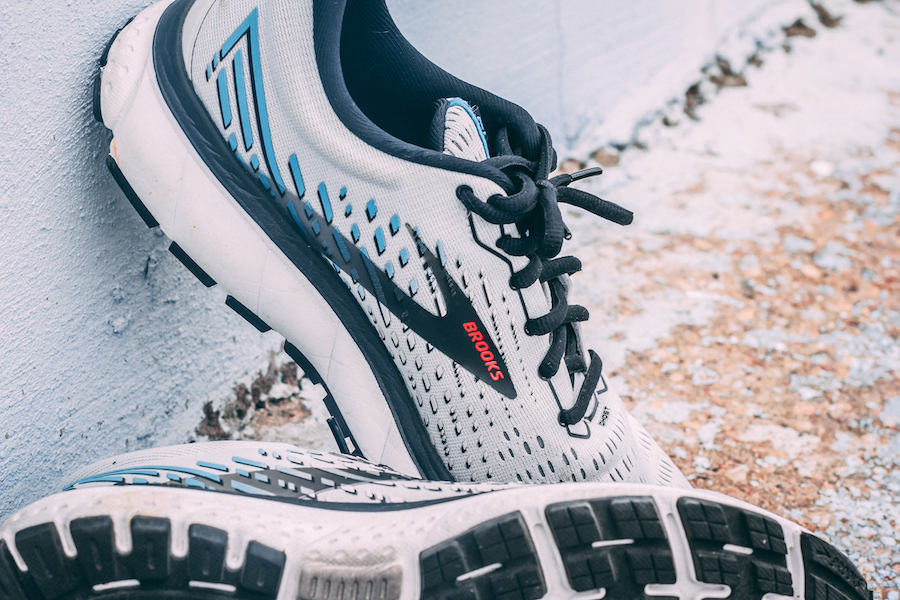
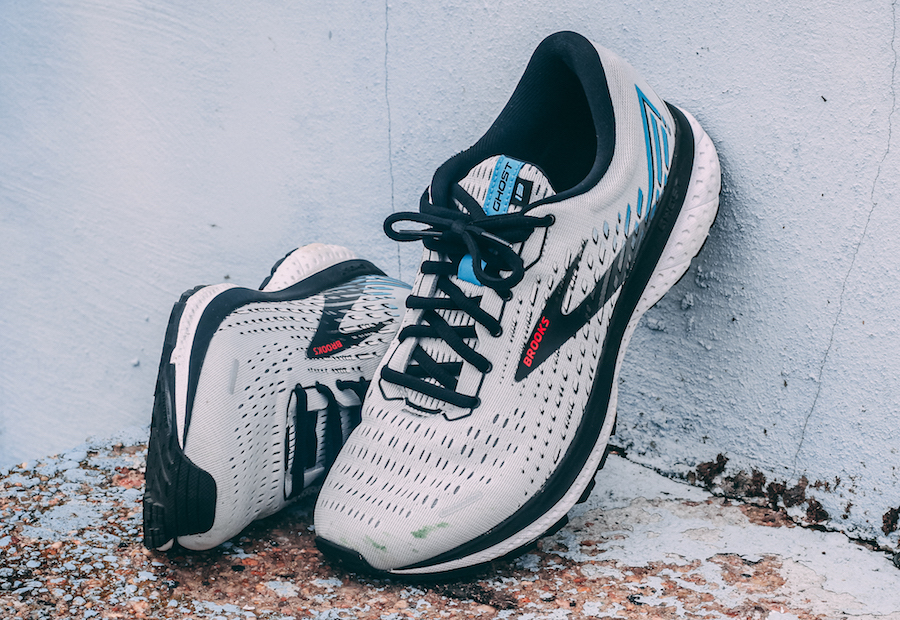
ADRIENNE: After running exclusively in Brooks for a number of years, I totally ignored them for a number more (sorry, Brooks, it’s not you, it’s me). I got back on the train when I started reviewing for BITR, and ever since, my opinions of their kicks have been all over the place. Most models, like the Launch and the DNA AMP models, feel nothing like they used to; then the Ghost 13 arrives at my doorstep. Not to give too much away too soon, but as soon as I slipped these bad boys on, it was like reconnecting with an old friend.
Across most brands, there is a model or two that seems to be struggling from an identity crisis: while still good in their own way, many models aren’t sure if they are for daily mileage, faster training, racing, or foot coddling. Some try to be all of the above, some are more successful than others. Then there’s the Ghost series– it is not one of those models. Long, long ago, it was an up-tempo trainer; however, it was quickly converted into a comfortable cruiser with plenty of cushioning. This is a shoe made to get daily miles in comfort, true to what I remember from years ago. It’s relatively simple in design and oh so smooth to run in.
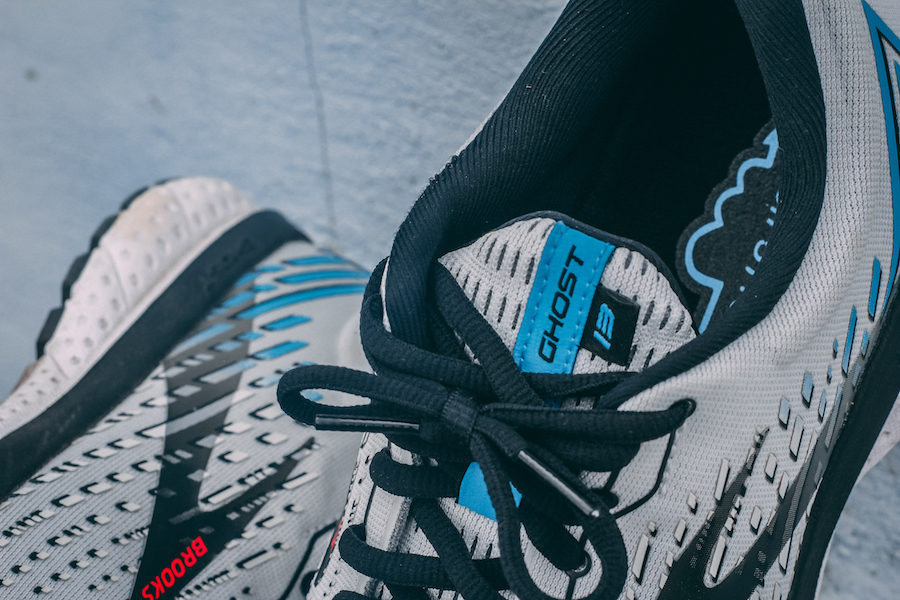
Consistency is key to the Ghost lineup– subtle improvements from the lebron 17 result in an extension of DNA Loft foam from the heel running the length of the foot, and a more stylish (IMO), open-engineered Air Mesh upper. In the Glycerin 18, I wasn’t too thrilled with the use of DNA Loft and was on cushion overload. But for its more-nimble little brother, my somewhat Goldilocks-like preferences in cushioning were satisfied as impact got gobbled up in a virtually distraction-free, pleasant ride. I found myself reaching for the G13 over and over again as I put a good number of miles in them (all easy, plus strides).
Underneath, the generous amount of co-molded EVAs of various densities is rubber and more rubber. Surprisingly, it doesn’t seem to weigh down the shoe and has some pop thanks to some injected air and deep forefoot flex grooves. I’m a sucker for some forefoot flex in a daily ride and Brooks delivers here! I also expect a good deal of life from these; after 30-ish miles there are no signs of wear. The Ghost 13 is finished with a fabulous feeling and fitting upper that has everything you need and nothing you don’t. The finished product is an 8.8 oz, 12 mm drop thing of smoothness.
How does the Ghost 13 ride? Smooth as silk for me. Just like the name implies, it basically disappeared on my foot. For a shoe on the bulky side, it seems to be barely there once you get going. The G13 is the ideal recovery run and easy run shoe today as it almost rewards slowing down. It won’t get in the way if you want to go faster, however, it seems most at home at my easy pace. And I am more than happy with that (I bet my coach is too).
The Good
ADRIENNE: Let’s start with the fit. It is damn near perfect: an accommodating toe box for plenty of splay and no slop and a secure midfoot hold make the shoe as comfortable as it is functional. I seriously have no complaints. It’s almost like it had my name on it, but it’s so well-made I think many others will feel the same way too. Speaking of others, this is probably the most forgiving shoe I’ve run in in years. You can land on your forefoot, heels, sides of your feet… you get the idea, and the shoe just moves with you.
I took these out for a 7-miler the other day on tired legs and felt great the hours and days after. Whatever Brooks did with just plain old EVA and some air, it works in this shoe. And it is smooth as silk. Whether you’re running a 7-minute mile or an 11-minute mile, like the cast of ‘Friends,’ the Ghost is there for you. Given the extension of DNA Loft, forefoot and heel-striders alike get great protection from the road. It also doesn’t run like a nearly 9-oz shoe, so that is neat also. I think this one will make my rotation as a daily and recovery day shoe, and maybe an easy long run here and there as well. Clearly, I dig this shoe. ROBBE: You will not find a lack of comfort in the Brooks Ghost 13. The upper is plush in all the right spots without being overbearing. The fit and mold to the foot are right where they should be. Probably the best upper in Brooks’ arsenal. And the design is a step above most other Brooks offerings.
Like Adrienne said, this shoe will adapt to your running style. It offers a smooth ride, especially on downhills, where the cushion and high-drop work in tandem to keep you rolling along. After a long run, you won’t feel any worse for wear with the amount of pampering your feet receive.
One last thing– there are a handful of shoes out there that beginner runners or budget runners should reach for– shoes that will last forever and provide expected comfort and durability for upwards of 400-500 miles. This is one of those shoes. The outsole rubber will last and last. AUSTIN: DNA LOFT, in the heel of the Ghost 12, extends into the forefoot for the 13. BioMoGo DNA adds extra cushioning and superb step-in comfort. On a related note, if you’re in the market for a Brooks trainer with a full-length DNA LOFT midsole, have a look at the “TempurPedic” Glycerin 18.
After the first two runs, I decided to try the third (8 miles) with a Ghost 12 for comparative analysis. I slipped the 12 (10.1 ounces) on the left foot and 13 (10.1 ounces) on the right to gauge any noticeable fit and ride differences. Honestly, I hoped for glaring distinctions, but the shoes feel quite similar. I thought I favored the forefoot cushioning of the 12, but four miles into the run, the 13 felt a touch softer. That LOFT in the forefoot is swell. The 12 locked the midfoot down better, but the 13 didn’t exhibit any noticeable slippage as my Garmin buzzed each mile.
The upper, an engineered mesh, breathes well. That’s a welcome feature for all runners as June and July temperatures are on the horizon. Heel collar and tongue padding are thick, and I’m excited to say that the laces are an appropriate length. Yes, the laces aren’t too long, friends. Rejoice in less work to tie your shoes quickly.
The Bad
ADRIENNE: Is a 12mm drop really necessary??? This may be just me. ROBBE: Truth be told, the Ghost 13 feels a bit on the heavy side for a daily trainer, even though it is lighter than other daily trainers like the Nike Pegasus 37. For me, the weight seemed to come from the thick rubber on the outsole. I took this shoe on several runs, including one long run, and I felt like I just had to give some extra effort coming off the ground. Weird thing is that I moved straight from the Ghost 13 on to the Brooks Bedlam 3, which is actually heavier but feels much lighter to me.
Lastly, Brooks plays it safe, and maybe too safe sometimes. Not much has changed in this shoe since version 11 aside from the DNA Loft now extending from heel to forefoot.
That said, I know they sell a shit ton of this shoe, so like the old saying goes: If it ain’t broke and people are buying it, don’t fix it. AUSTIN: I don’t foresee the Ghost undergoing a stack height drop anytime soon, but I would like to see the 12 mm offset drop to 10. Better yet, eight. I note this because as a forefoot striker, running shoes with higher drops feel less smooth through the gait cycle. To put another way, the heel gets in the way, especially on the downhill. As for the Ghost 13, I’ve got no bones to pick. Step-in comfort is what you’ve come to expect—it shines, the ride is solid, and the price point ($130) is optimal. Drop the drop and the weight half an ounce eventually.
Brooks Ghost 13 Conclusion
ADRIENNE: For better or worse, Brooks may still be Brooks– but in the case of the Ghost 13, they did an excellent job in keeping a shoe true to itself. Such a good job it won over a lightweight trainer fan. I haven’t slipped into anything as effective for its purpose since the Saucony Triumph 17, and we know how that one went over. This is a shoe that works for both beginners and seasoned runners alike. When it comes to the Ghost, please never change, Brooks. ROBBE: Fans of previous versions of the Brooks Ghost 13 will be pleased that just a few minor tweaks have kept this shoe largely the same. For runners wanting a new and fresh experience underfoot, you may want to look elsewhere. Point being, if you want a reliable daily trainer with great comfort and cushion that will last forever, you could do much worse than the Ghost 13. AUSTIN: Like the Nike Pegasus 37, the Brooks Ghost is a daily trainer that you can depend on year after year. The shoe undergoes changes, but they tend to be minimal so as not to disrupt the fandom that keeps runners regularly returning. Also, if you like shoes with grey and black, the forthcoming palette will not disappoint. Of course, we’ve had enough black for the year. So, I suggest purchasing the brightest color available or waiting for a myriad of other colorways, including a Gore-Tex version later in the year.
The Brooks Ghost 13 releases everywhere on September 1 for $130. You can pick it up at Running Warehouse (featuring free 2-day shipping and 90-day returns) by using the shop link below.