2019年10月31日星期四

Hoka Bondi 6 Performance Review

My Hoka Bondi 6 performance review starts as soon as I finish measuring my height while wearing them. Looks like I just got a lot taller!
If you’ve visited a running specific store in the last five years you already know about Hoka One One. Even if you’ve never worn a pair, you’ve definitely seen them. I’ve spent the majority of 2019 logging miles alongside many runners clad in Hoka’s beefy shoes. And then recently, fellow WearTester Eric did a full performance review on the Hoka Arahi 3. After that, I decided it was my turn to try a pair. Now, almost 100 miles later, here are my thoughts on the Hoka Bondi 6.
Starting from the ground up, lets talk traction. In my opinion, they did a great job balancing out the rubber to no rubber ratio. Some companies strip away as much rubber as possible to lighten the shoe up. Nike, I’m looking at you with the Epic React Flyknit 2. Other companies will use a softer rubber to cover the majority of the outsole that unfortunately gets chewed up by the constant wear and tear of the streets, for example the Under Armour HOVR Infinite. The Bondi 6 kept all the rubber you need, in all the right places AND it’s super durable. I can easily see it lasting another 200 miles out on the road.
I’m not going to lie. I was expecting a marshmallow like feel upon pulling these guys on. I mean come on. Look at that midsole! I gain an instant 2 inches in height every time I lace them up. But marshmallowy is NOT the word I’d use to describe them. They don’t squish underfoot. They’re consistent and super smooth. Those are excellent words for the way the cushion feels. No matter what I ran across, whether it was a sandy path, cracked pavement, random rocks, fruit pits (lots of cherry and plum trees to deal with around here), I felt like the EVA midsole was leveling everything out for me. It was as if I had my own mini shock system buffering the world beneath my feet. My furthest run in them was 15 miles and I had fresh legs the next day. I can’t say that about every shoe.
They have support well-covered. The air jordan 34 is just as wide as it is tall. You have a good, wide base in the forefoot, and then you are also cupped inside the midsole. And to top all that off, there’s a sturdy, yet nicely padded, heel cup. The padding actually wraps all the way around your ankle to the top eyelet. I felt locked into place without any part of the collar digging into my skin.
There is something to be said about good, old fashioned engineered mesh. It might not be pretty, but it works! It’s light. It’s airy. When the wind blows in any direction your toes get to enjoy it too. These shoes don’t lack ventilation. The tongue and ankle area get moist, but they’re lycra and padded, so it’s what I was expecting. Your sweat has to go somewhere.
Story time! After a fabulous lunch (EDITOR’S NOTE: This is without a doubt the first time anyone has ever said that on WearTesters. SIGH), I went to see what kind of Hoka I could scoop up at my local Fleet Feet. If you’ve ever been to a good running shop, you know they’re all about letting you test the shoes on an actual run prior to purchase. It was almost 100 degrees out. Also, I had a full taco plate in my stomach. So I passed on the test run. Instead, I made my purchase and went on my merry way. The next morning, I had 4 miles scheduled. It was not a great run. My feet felt so squished after mile 2. I didn’t understand why so many runners were such fans of the brand. It was not a great first experience. But we don’t do reviews after one trial. So the next day I pull the shoes back on and I am desperately trying to stretch out the upper. I’m basically trying to make space for my wide feet. While cramming my fingers down into my right shoe my fingers slipped under the insole and what do I find? Another insole! And not just a regular insole, a super fluffy one from another shoe brand. Someone had apparently tried on my shoes prior to me, maybe done a test run, threw in a second insole, and then decided the shoes were not for them. Let me tell you, once that extra insole was removed. it was like night and day. The fit went from very uncomfortable as my feet expanded during a run to me never even noticing my feet were expanding. It’s phenomenal. And I learned a valuable lesson. If you’re purchasing your shoes in a store, inspect them! Chris always talks about taking the time to inspect the retros he picks up for quality control and I got a little kick in the butt for not doing so myself.
The Hoka Bondi 6 is super reliable. It’s not quick or flashy. It’s kind of like your mom’s minivan. It gets the job done comfortably. I’ve been done testing them for a good 2 weeks now and I still find myself grabbing them for my short and long runs. If you’ve been on the fence about trying Hoka out, I say you do one of two things. 1) Grab a pair from Hoka directly. They offer you a 30 day trial period with free shipping and returns or 2) go talk to your local running store. Like I said, places like Fleet Feet want you to hit the trail and do some test miles prior to making a purchase. And to top it off they’ll even give you a 60 day grace period to try out their products. What do you have to lose?

2019年10月30日星期三

Under Armour Curry 7 Performance Review

HOVR and Micro G make an appearance on the Under Armour Curry 7. Do they make a difference? Find out within our performance review.

Like most Curry models, traction is something that I never really worried about.
Herringbone is used alongside a radial pattern — both of which are my two favorite styles of traction patterns — and they worked really well. I never had to wipe the soles no matter where I played as the aggressive setup was able to quietly bite the floor and provide ample grip. This setup is perfect for, well, anyone looking for traction. Its multidirectional coverage is perfect for any player, any style of play and any move/footwork you can throw at them.
The rubber is slightly on the soft side so outdoor players will notice some fraying and grinding of the pattern. Luckily, there is a lot of rubber and multiple layers of both patterns so while it may wear down quickly, at least there is some additional pattern to go around.
Under Armour went with a dual setup here, enlisting both of its best proprietary foam compounds. Unfortunately, the cushion feels much like it does on every other Curry signature shoe — lackluster and firm.
If you’re expecting the bounce back from the Micro G and a springy plushness from the HOVR then you’ll be disappointed. Despite utilizing the tech names the setup is still firm. Stable, but firm.
This type of setup is great for those wanting a quick feeling shoe that wont sink under their feet. Stability is typically a priority when it comes to Curry’s footwear and this shoe is no different. Great for shooters, and anyone else looking for a low profile and stable setup. Similar to a Kyrie style shoe, if we’re going to compare to another guard’s signature, but without the awkwardly rounded tooling.
The knit that I enjoyed on the Curry 6 is gone and has been replaced with some textiles and a lot of synthetics.
I don’t mind the setup as it works really well on-court. So, from a performance perspective there is not much to complain about. Where I feel a bit of “meh” towards the setup is that this is a signature shoe without a signature feel. There is nothing that is premium with these, and there could have been.
Instead of using 100% synthetics, a little bit of leather, suede or nubuck could have been used. You could have still kept a lot of the TPU layers, as they don’t stretch and provide a level of durability that raw materials don’t, but the collar area, and perhaps the toe cap, could have been a nice raw material and would have given the shoe a really unique feel amongst a lineup of signature models comprised of mesh, ripstop, and knits.
Again, performance is everything and on that end there are no complaints. I just think that what UA did with the Under Armour Forge 96 was a perfect blend of premium/raw materials along with modern synthetics and textiles. It really would have taken the Curry 7 up a notch from the rest of the signature shoes available.
The fit for the Curry 7 I felt was true to size.
They fit my foot a little better straight out of the box than the Curry 6, which needed a bit of breaking in before everything felt “right”. Maybe its due to the material change, but these just felt a little better in terms of overall fit and lockdown.
If you’ve happened to have worn the Curry 3Zer0.3 then that is what I feel is most comparable to the Curry 7. Otherwise these are just better fitting than the air jordan 34 bred.
Support is very good on the Curry 7. They look like a runner, which may throw off some people, but the way they’re built just cradled my foot perfectly.
The HOVR that wraps up the sidewalls and is ensuring your foot doesn’t slide off the footbed. There is an internal heel counter along with the TPU moderator plater to help stabilize the footbed. While there is an outrigger, it’s not as present as previous models, but works just as good. They’ve found a way to slim down the overall design and make them just as supportive. I know that sounds counterintuitive, but the setup works wonderfully. It might even be the most supportive Curry since the Curry 1.
The Under Armour Curry 7 is a beast on-court.
Traction is great. Materials work wonderfully — despite not having that premium feel. The fit may vary from person to person, since no two feet are alike, but they fit me perfectly. Support was awesome.
Cushion is the one area that I felt disappointed with. I know this is a Curry shoe, therefore we can expect a firmer setup, but the way the shoe is marketed with a heavy focus on UA’s two best foams — which happen to be two of the best foam cushions on the market — without either of the two foams feeling the way I had hoped/expected left me slightly bummed out.
Luckily, everything else on the shoe works so damn good that they stay in my rotation. You never know when you’re going to head to the gym and the floor be a mess. Having something with traction as reliable as this is never a bad thing to have in your gym bag.

2019年10月25日星期五

Reebok Nano 9 Performance Review

Crossfit has come a long way in the last few years, and the Reebok Nano has been here every step, jump, and WOD of the way. The Nano 9 is billed as the best yet, but is it? Only one way to find out…
Reebok is still using the split-finger outsole we have seen in just about every other Nano model (at least he ones I am familiar with) and it works. Not to the extreme of the Vibram Five Fingers but using the same concept, the Nano 9 outsole is split in the forefoot enough to allow for each toe and toe area to grip the floor almost independently. Called METASPLIT, the outsole also allows for lateral flex, meaning the shoe rolls sideways as well as forward, so on lateral movements or climbs the outsole stay in contact with the surface. The heel area in this colorway is a translucent, which is normally bad, but it is Reebok, which is good. For some reason, Reebok historically has had great translucent rubber and the Nano 9 is no different – thick, solid, and wears extremely well under stress. The diamond pattern worked well on squats and lunges as well as box jumps, short runs (more on that next), and even some court work – not basketball, but some drills one of the new trainers at 24 Hour Fitness showed me (he plays on our league basketball team – I don’t need a trainer).
Here is the main change and the one that may really get on air jordan 34 traditionalists nerves. The Nano 9 has added cushioning to an already solid platform, which would seem like the opposite of what most Crossfit/workout shoes aim for. Never fear – Reebok knows what they are doing. While I might have wished for some Floatride (that stuff is AWESOME!!!), Reebok stayed with some normal EVA and it is just enough to make short runs fun but doesn’t set the heel-to-toe offset completely crazy. To be completly honest, I am NOT a Crossfitter – I do some of the same exercises and lifts but I don’t compete and haven’t converted to “the lifestyle”. However, I do lift three days a week, short HIIT runs on those days, and warm up for basketball days with box jumps, lunges, and rope drills. The Nano 9 had no “energy return” as claimed by other cushioning systems, but it did absorb every landing and running 2-4 miles on treadmills or hitting stairsteppers was no problem.
I freaking LOVE the Flexweave uppers Reebok has used over the past couple of years. The Nano 8, JJ WattII, the Fusion Flexweave runner – all of those uppers were flexible, lightweight, breathable, and durable. The Nano 9 upper takes things a bit further with the Flexweave Stretch. The concept is the same – nylon threads woven to give lateral support while still being flexible in the toebox, but the new weave allows for some stretch (well, it is right there in the name), just enough to keep from restricting movement but still keeps your foot on the footbed during movements. The one thing the Flexweave Stretch has over the older materials is it is softer to the touch – not much of a performance feature but it does feel better on the foot.
The Nano 9 does have some areas of fuse over the weave, mainly around the laceholes, but the beloved Vector logo comes back for the first time in years and it is fused over the weave as well. The toe rand also has some light fuse around the edges for toedrag and ropeclimbing durability but it isn’t thick enough to stiffen the shoe. The tongue is well padded but not bulky and is part of an inner bootie system that feels great on the inside, with no hotspots to rub blisters or chafe.
The Nano 9 is a curious fit. Length-wise, I normally have to go down a half size in Reebok performance to a 10, but the Nano fit around a 10.25. I don’t think I could have went down, but true to size gave me just a little more length than I normally like. The forefoot is also roomy, with some deadspace around the outside of the footbed and a little over the toes, so when laced tight there was a slight bunching at he end of the lacing system. This could be because of the Flexweave Stretch not being completely solid, and it wasn’t enough to completely compromise stability, but the fit was not one-to-one if that is what you are looking for.
The midfoot fit is solid, mostly due to the laces but also because the inner sleeve takes up any of the extra room in that area. The sleeve isn’t a true one-piece upper system but the tongue is attached to the sleeve about halfway down. The heel fit is absolutely locked in with an extension of the sleeve running around the heel and up to the top laceloop. The inner has sculpted padding that fits and molds around the heel and sits right under the ankle, taking away any extra movement.
One worry about cushioned shoes while lifting is the instability, especially in the heel – no one wants a soft foam midsole collapsing under a 400 pound squat bar or when coming down from a jump. If you want to know how to cause an ankle roll or knee injury, that is it. Luckily, the Nano 9 has a crazy support system in the heel, featuring raised sidewalls along the lateral and medial heel that runs all the way to the midfoot. It isn’t a hard rubber but is stiff enough to provide enough support for any lift you would do. The rubber sidewalls run down and around the cushioning, tying the sidewalls into the outsole, providing an even stronger support system on lateral movements.
The forefoot outsole/midsole combo is wider than the footbed, which gives the forefoot a solid base for planting and jumping as well as landings. There is no midfoot support shank but the stiffness of the rubber and the flat platform work well to keep your foot bending the right way
Best Nano ever, but I have only tried 4 of them. The added cushioning is perfect for the athlete that may not be a true Crossfitter but the Nano 9 still has the best qualities of the previous models, which should make the diehard ‘Fitters happy. If you need a shoe for the weightroom, rope climbs, two-miler, and plyometrics, the Nano 9 is perfect out of the box. If you desire a true zero-drop, minimally padded shoe, like a Chuck Taylor, you will want to keep looking.
Reebok has been making some serious performance shoe sin the training and running line for at least the last 6 years. they just usually fly under the radar because of the Classics line (kind of like the new Air Jordan models). It’s a shame really – the Flexweave is a seriously awesome upper material and their Floatride cushioning is just as good as Boost but waaaaay lighter. The Nano 9 just continues in the performance vein and shows how advancement doesn’t have to mean scrapping the old – it sometimes means tweaking what works. Oh, and the Vector logo – please Reebok, don’t ever let it go away. Sincereley, everyone.

2019年10月24日星期四

Nike Lebron Ambassador 12 Performance Review

The Nike Lebron Ambassador 12 is here. This overseas Lebron model is always a hit. Can the 12th shoe in the Ambassador series follow the same path? Let’s find out.
The Nike Lebron Ambassador 12 uses the same outsole traction pattern as the Lebron Ambassador 11. The only thing that changed in this particular pair is that it uses a translucent outsole and doesn’t state it has XDR rubber. The grooves are thick and wide and played well on clean courts. There were some instances where I had to wipe, but that was more likely due to the very dirty courts. The Ambassador line has been extremely consistent in terms of traction. The Ambassador 8 and Ambassador 9 had the best traction but the 11 is solid.
Did I say the word consistent already? Because the Ambassador line has been consistent in the cushion set up as well. As previously stated, the midsole and cushion set up is also the same as the Ambassador 11. Forefoot and heel Zoom provide ample responsiveness and court feel with a bit of impact protection. Bigger players like myself will feel the impact from the Zoom Air along with the soft phylon. This is a setup that provides good cushion and responsiveness.
The materials are where there is a slight difference from the Ambassador 11. The weatherproof shroud is gone and a wrap-around strap is implemented (similar to the Lebron 17). The Ambassador 12 has an overall mesh build with some fuse and vinyl overlays to provide durability. The upper is lightweight with support and features little to no break-in time. The shoe has a soft phylon midsole with heel and forefoot Zoom Air for added cushion. Finally, a translucent wide-gridded outsole traction pattern finishes off the shoe.
The fit was true to size for me. While the Ambassador 12 is still an Asia only release, it was built on a wider last, therefore allowing guys with wide feet like myself a perfect fit. Narrow footers, you’ll still be able to stay true to size. However, if you like your toes at the tip of the shoe, I’d suggest 1/2 size down. The lockdown was sufficient especially with the strap across the midfoot adding to the traditional lacing setup.
The midfoot strap keeps your foot locked into the heel where the external heel counter takes over. You sit slightly inside of the the phylon midsole which, along with a nice wide base, helps prevent rollovers.
I say this on every Ambassador post and I’ll say it again. The Nike Lebron Ambassador 12 needs to be STATESIDE!!!! It was a pleasant surprise to see the King himself wear this exact colorway during warmups of a preseason game. I’d love to see him actually play in a pair. The Ambassador line has been the most consistent line in the Lebron series (just don’t mention the Ambassador 10 please). They’re wide-foot friendly, outdoor-ready, and budget ready.
If you’re in the market for a less expensive, wide-foot friendly, signature line shoe, the Ambassador 12 is for you. You’ll enjoy the ride while giving people buckets.

Nike Lebron Ambassador 12 Performance Review

The Nike Lebron Ambassador 12 is here. This overseas Lebron model is always a hit. Can the 12th shoe in the Ambassador series follow the same path? Let’s find out.
The Nike Lebron Ambassador 12 uses the same outsole traction pattern as the Lebron Ambassador 11. The only thing that changed in this particular pair is that it uses a translucent outsole and doesn’t state it has XDR rubber. The grooves are thick and wide and played well on clean courts. There were some instances where I had to wipe, but that was more likely due to the very dirty courts. The Ambassador line has been extremely consistent in terms of traction. The Ambassador 8 and Ambassador 9 had the best traction but the 11 is solid.
Did I say the word consistent already? Because the Ambassador line has been consistent in the cushion set up as well. As previously stated, the midsole and cushion set up is also the same as the Ambassador 11. Forefoot and heel Zoom provide ample responsiveness and court feel with a bit of impact protection. Bigger players like myself will feel the impact from the Zoom Air along with the soft phylon. This is a setup that provides good cushion and responsiveness.
The materials are where there is a slight difference from the Ambassador 11. The weatherproof shroud is gone and a wrap-around strap is implemented (similar to the Lebron 17). The Ambassador 12 has an overall mesh build with some fuse and vinyl overlays to provide durability. The upper is lightweight with support and features little to no break-in time. The shoe has a soft phylon midsole with heel and forefoot Zoom Air for added cushion. Finally, a translucent wide-gridded outsole traction pattern finishes off the shoe.
The fit was true to size for me. While the Ambassador 12 is still an Asia only release, it was built on a wider last, therefore allowing guys with wide feet like myself a perfect fit. Narrow footers, you’ll still be able to stay true to size. However, if you like your toes at the tip of the shoe, I’d suggest 1/2 size down. The lockdown was sufficient especially with the strap across the midfoot adding to the traditional lacing setup.
The midfoot strap keeps your foot locked into the heel where the external heel counter takes over. You sit slightly inside of the the phylon midsole which, along with a nice wide base, helps prevent rollovers.
I say this on every Ambassador post and I’ll say it again. The Nike Lebron Ambassador 12 needs to be STATESIDE!!!! It was a pleasant surprise to see the King himself wear this exact colorway during warmups of a preseason game. I’d love to see him actually play in a pair. The Ambassador line has been the most consistent line in the Lebron series (just don’t mention the Ambassador 10 please). They’re wide-foot friendly, outdoor-ready, and budget ready.
If you’re in the market for a less expensive, wide-foot friendly, signature line shoe, the Ambassador 12 is for you. You’ll enjoy the ride while giving people buckets.

2019年10月22日星期二

Nike By You Reveals Opening Week Collection

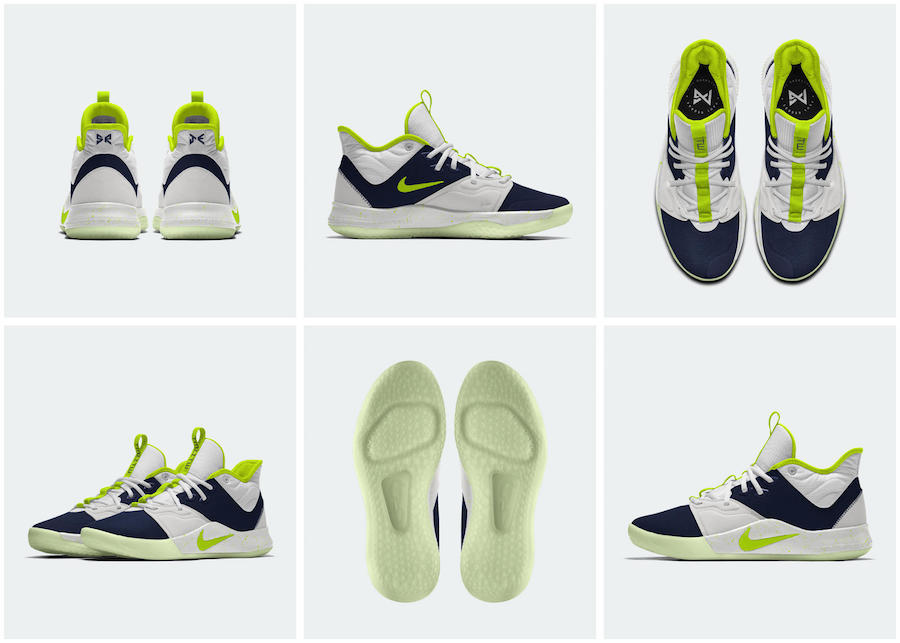
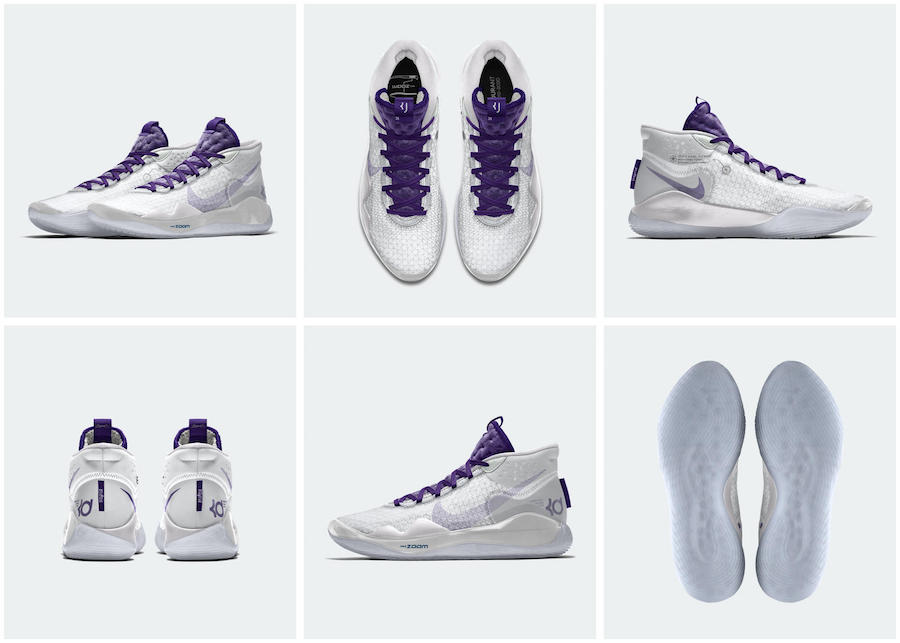
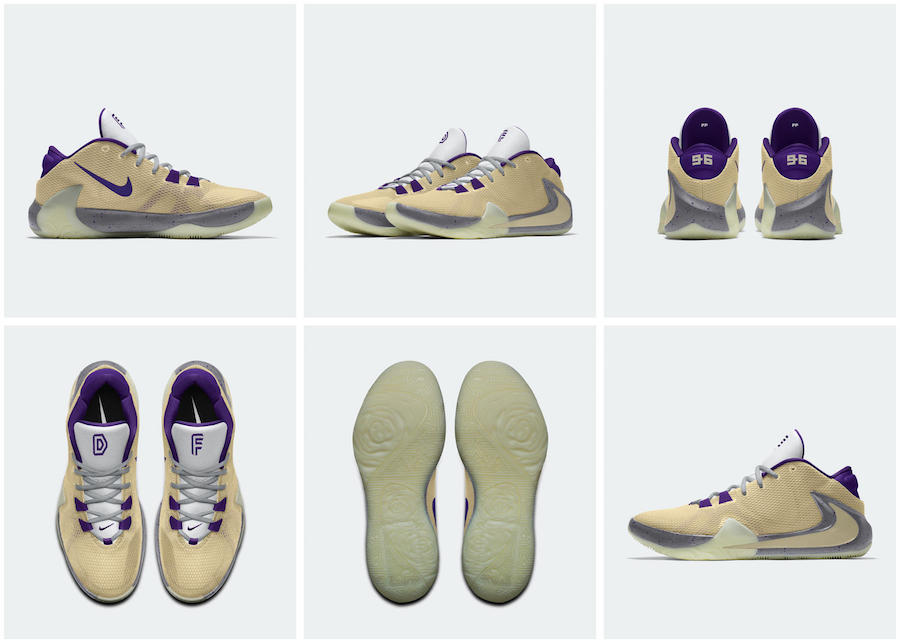
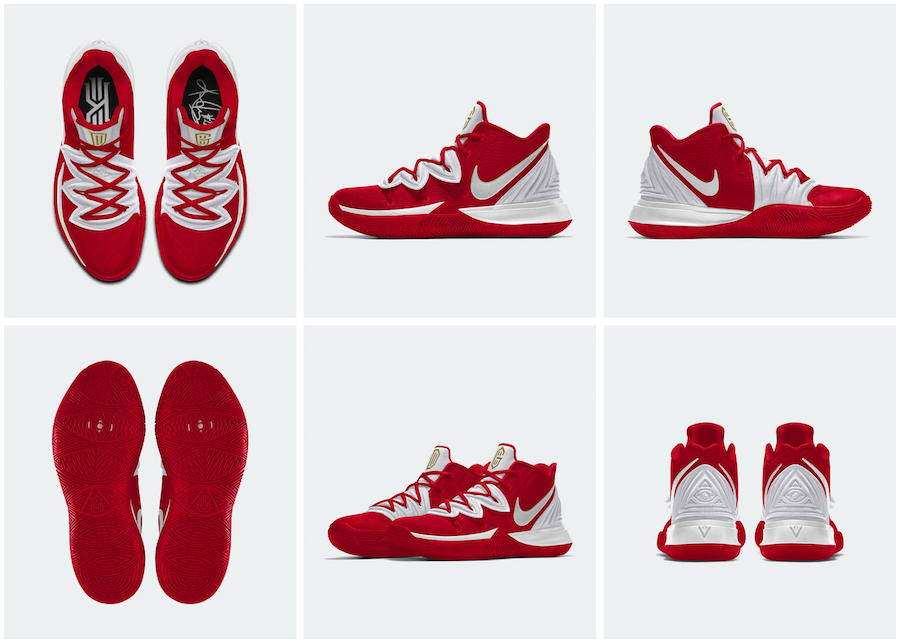
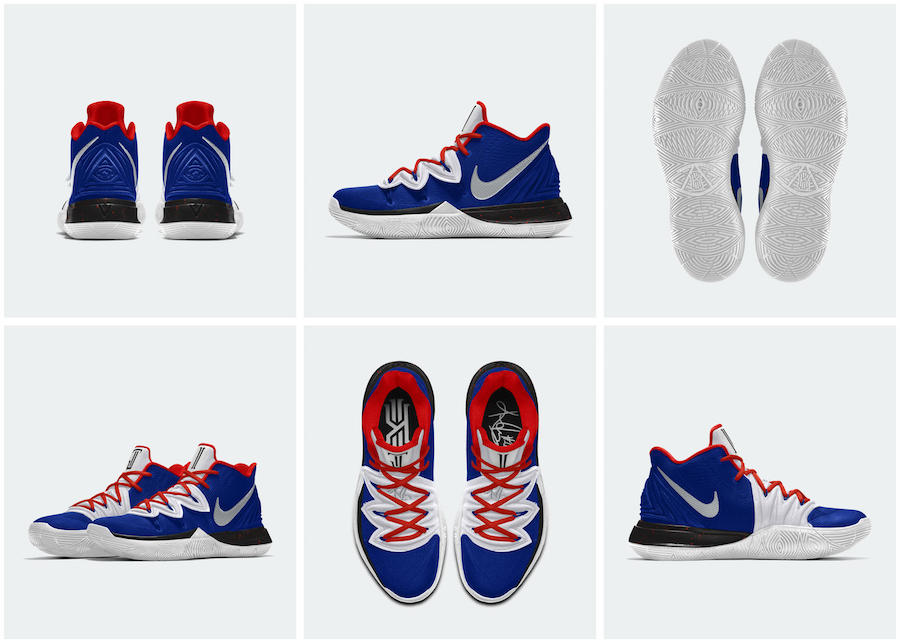
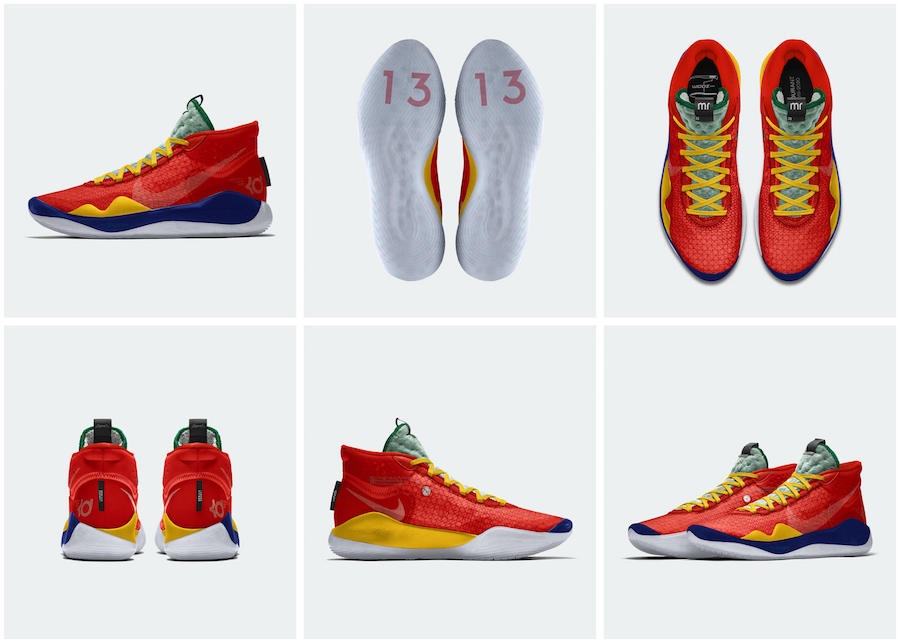
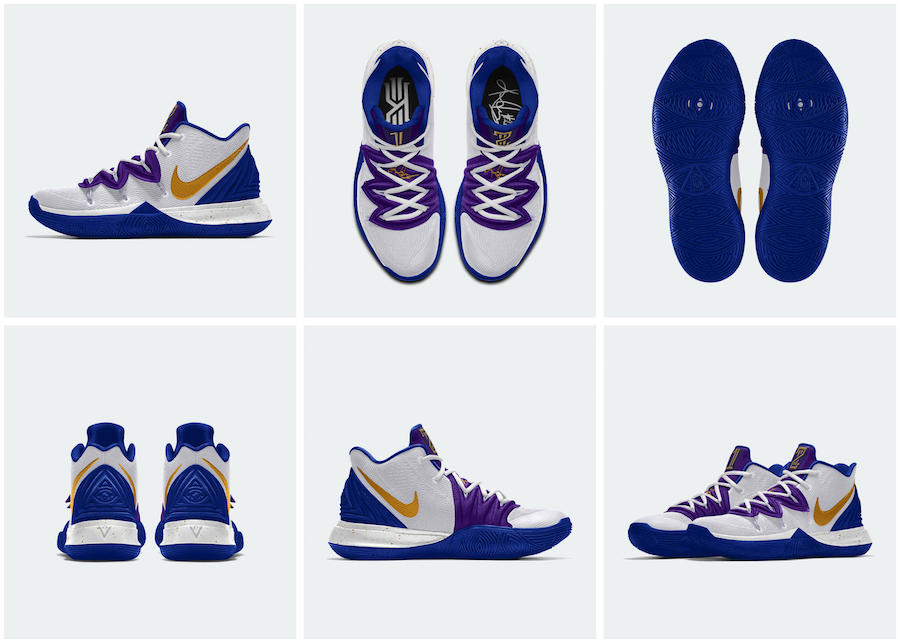
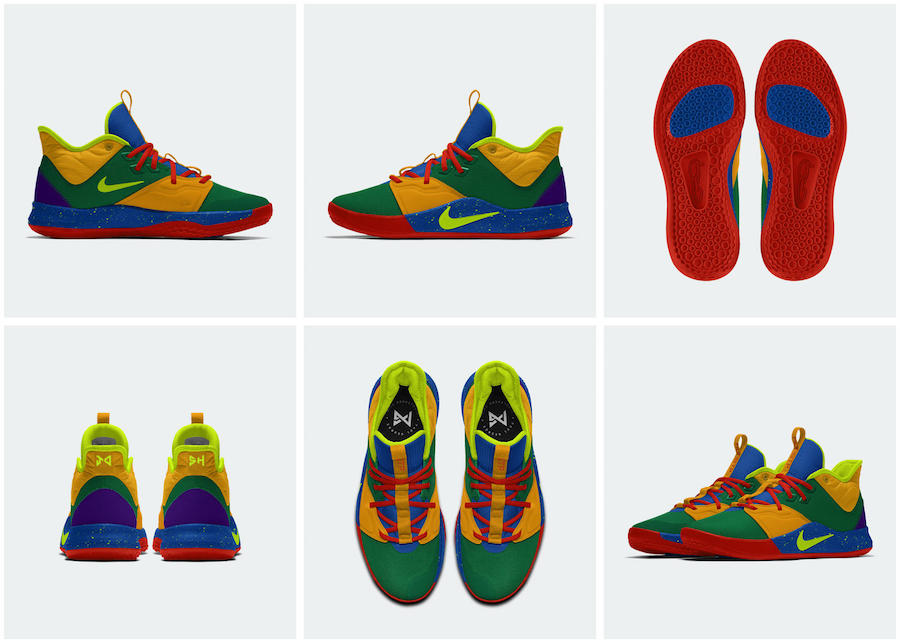
Last season’s NBA opening-week footwear indulged in the league’s generous colorway rules and brought wildly creative designs to the floor, as seen in the Nike By You custom designs led by nine rookies and sophomores.
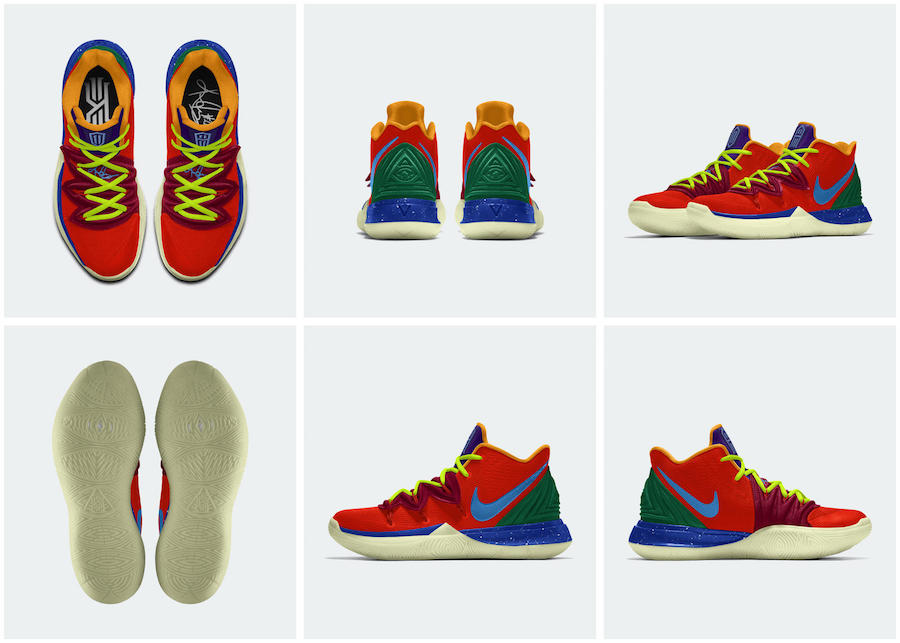
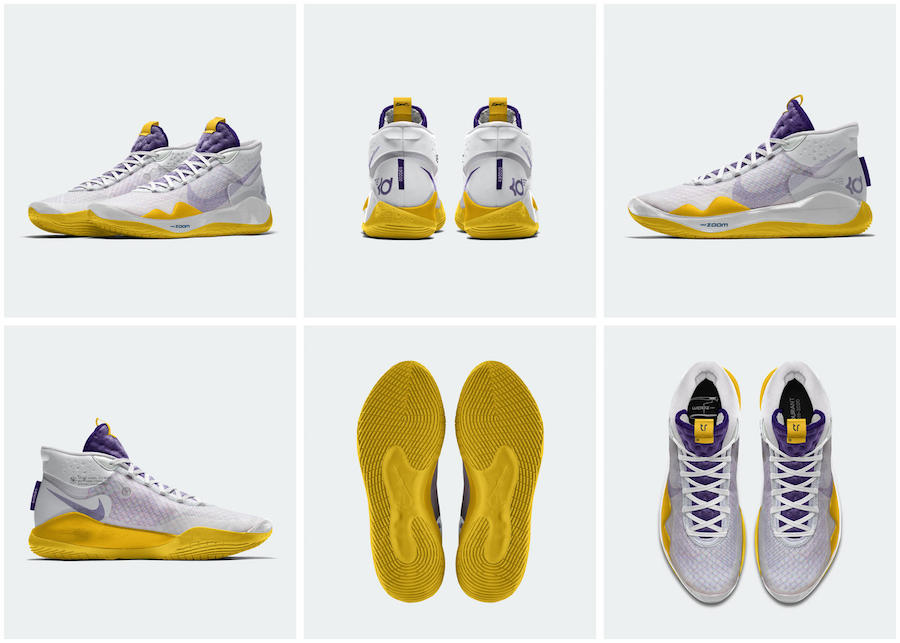
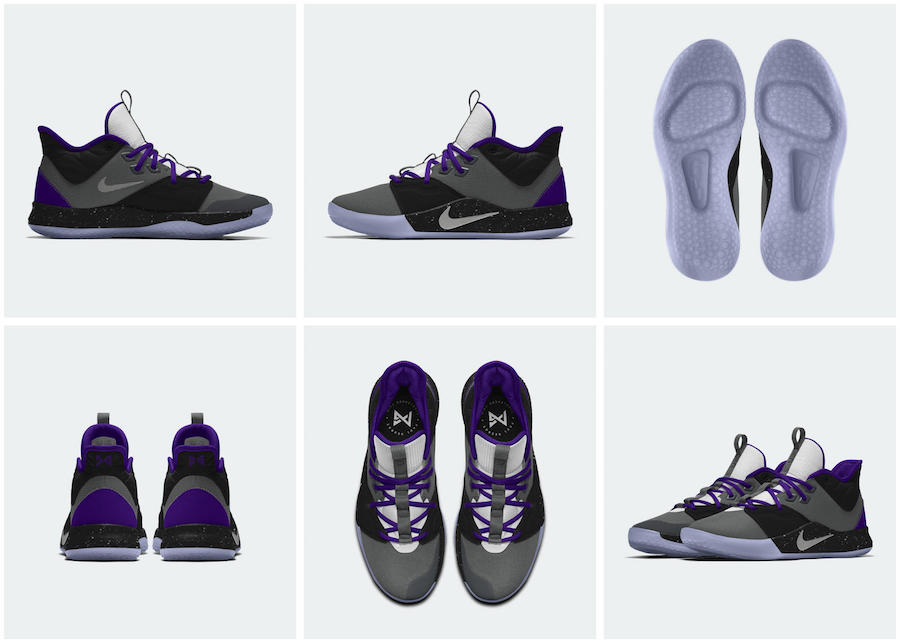
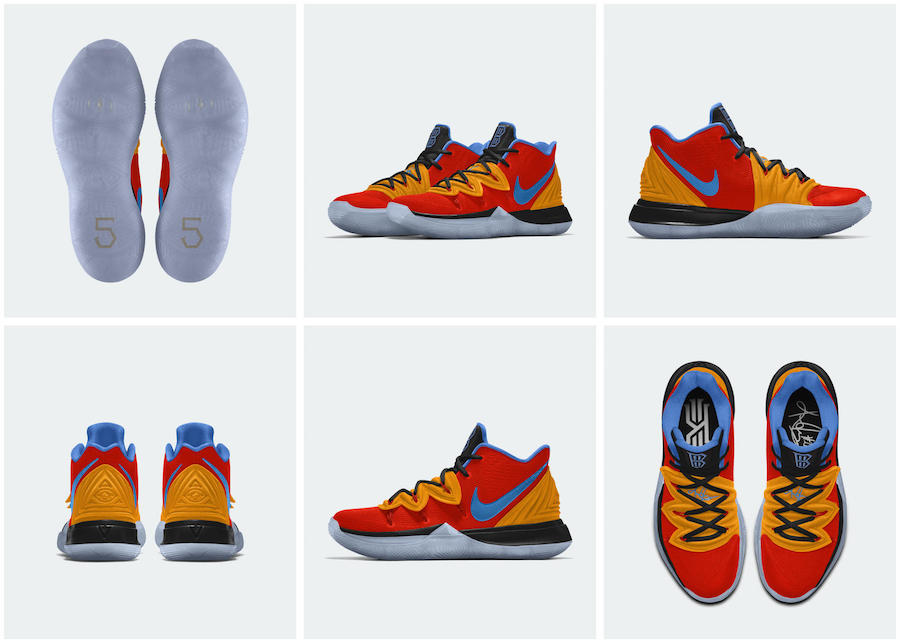
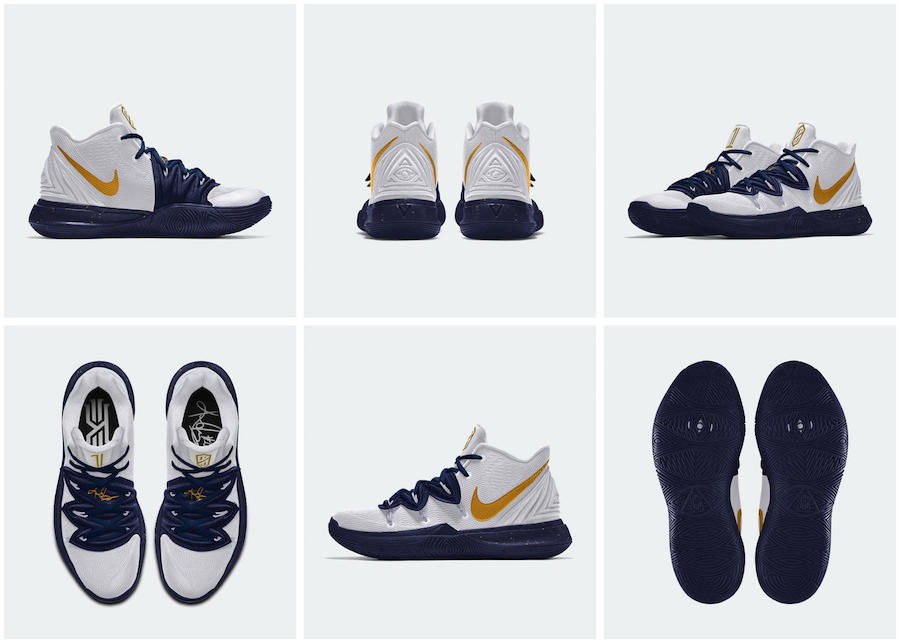
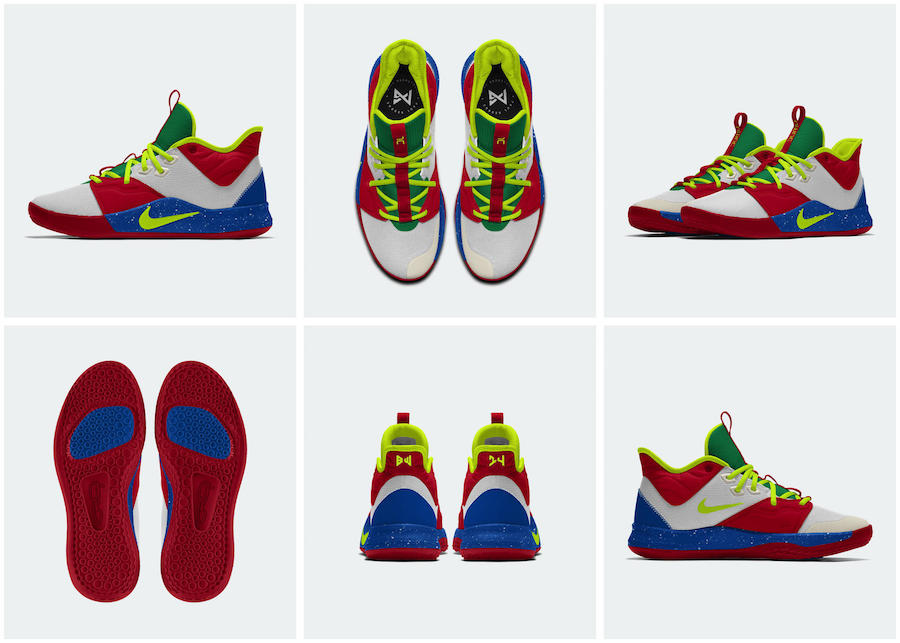
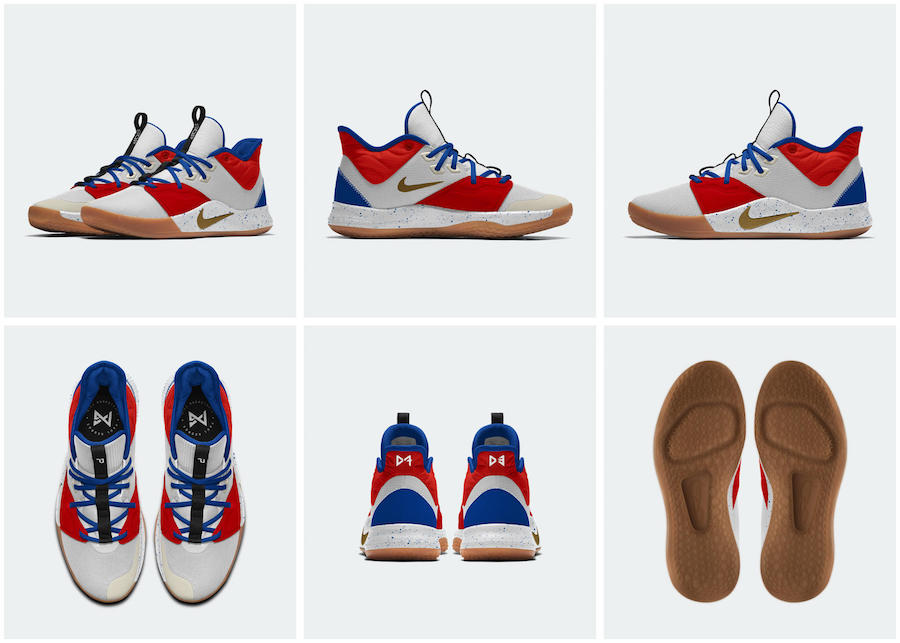
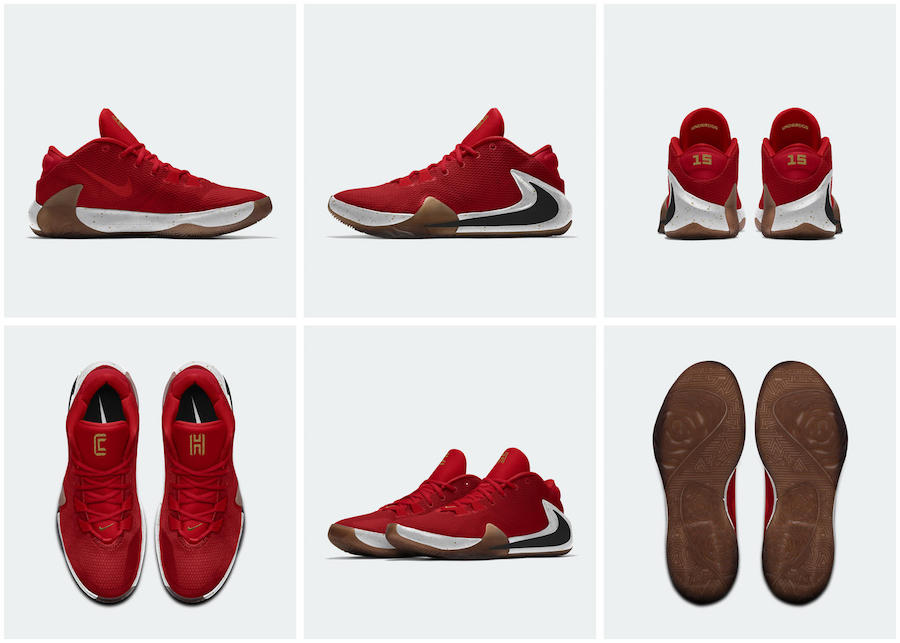
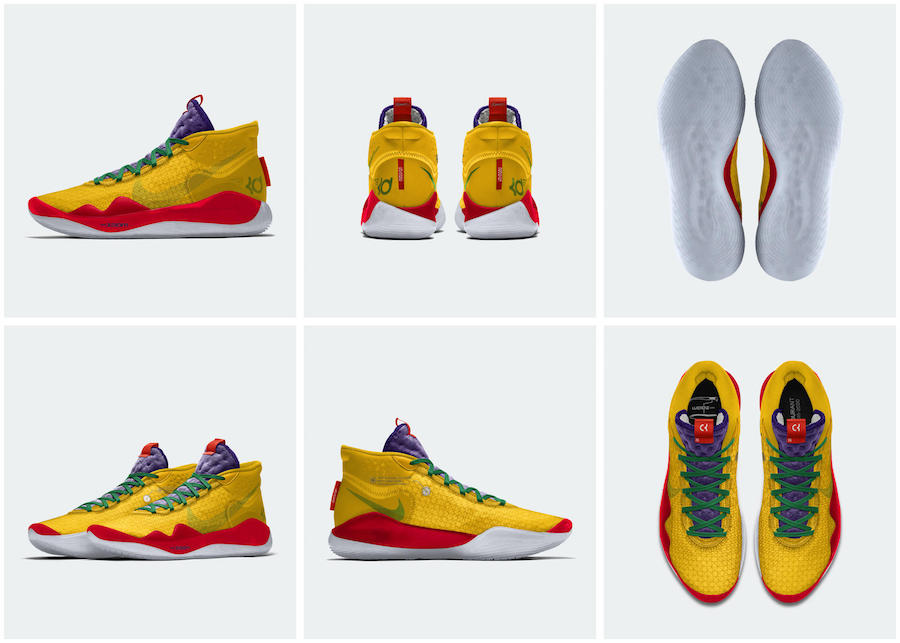
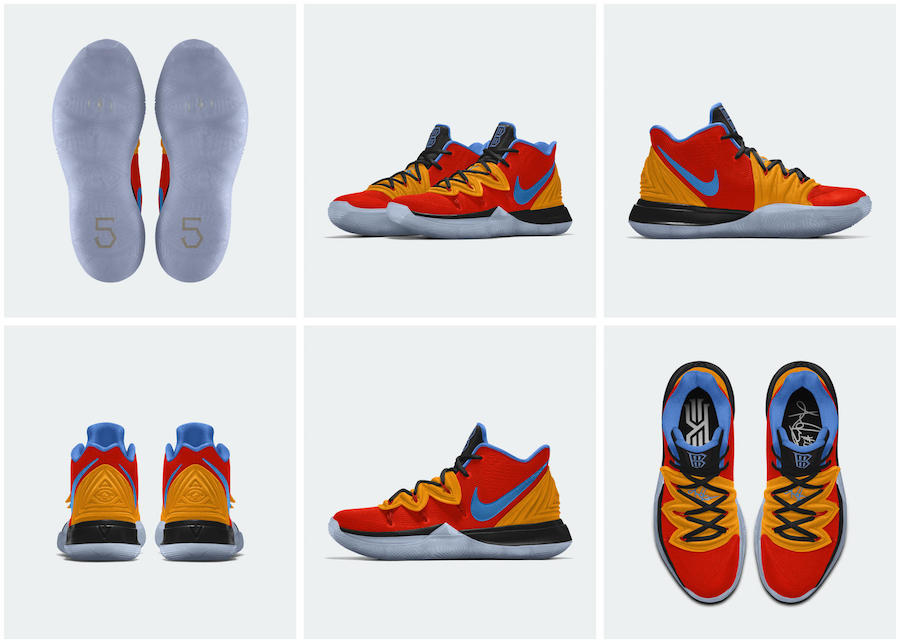
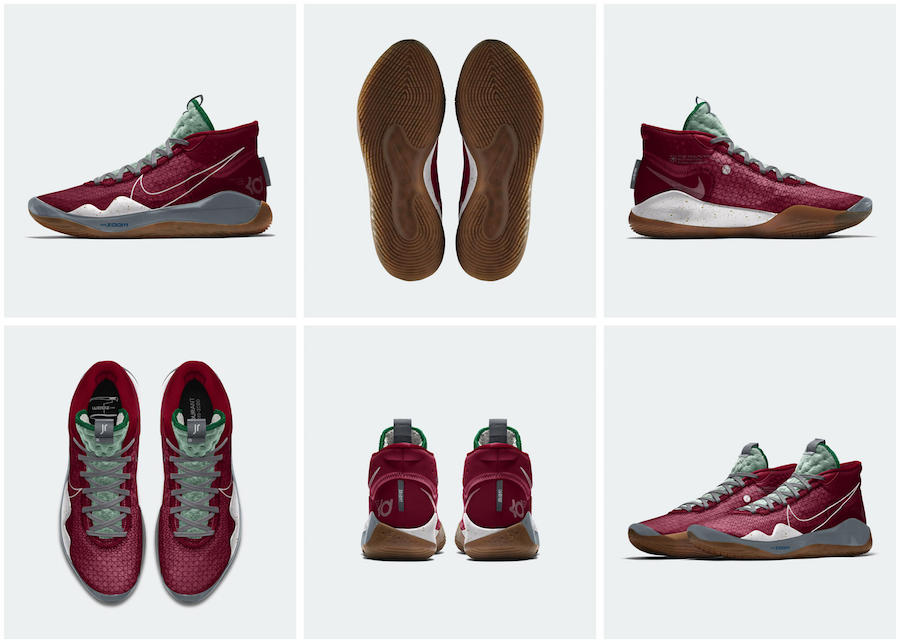
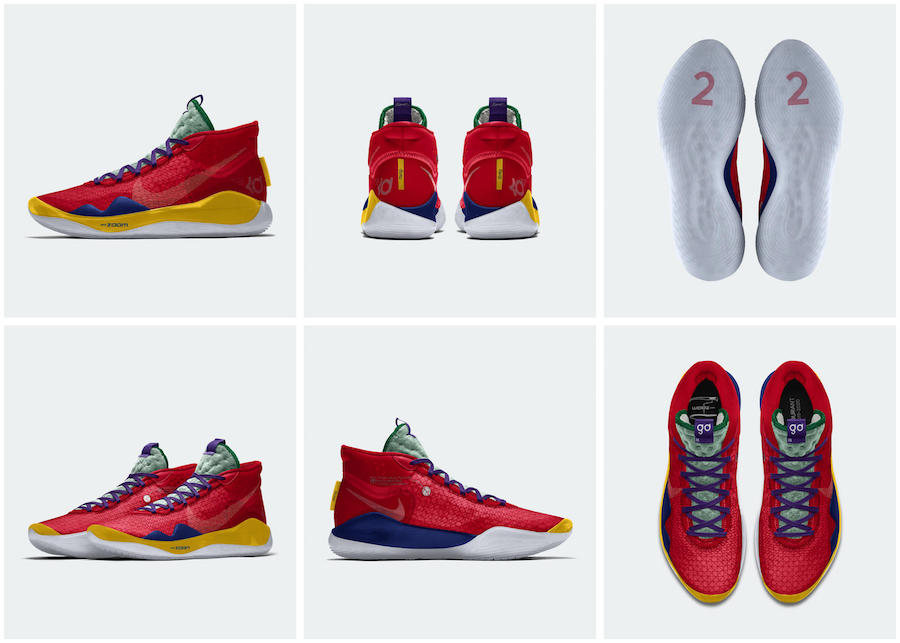
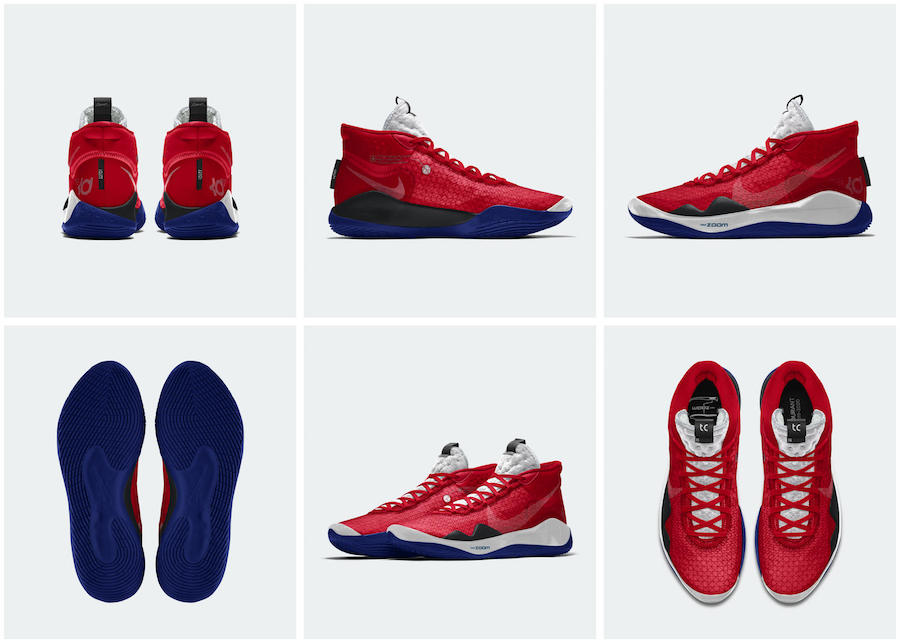
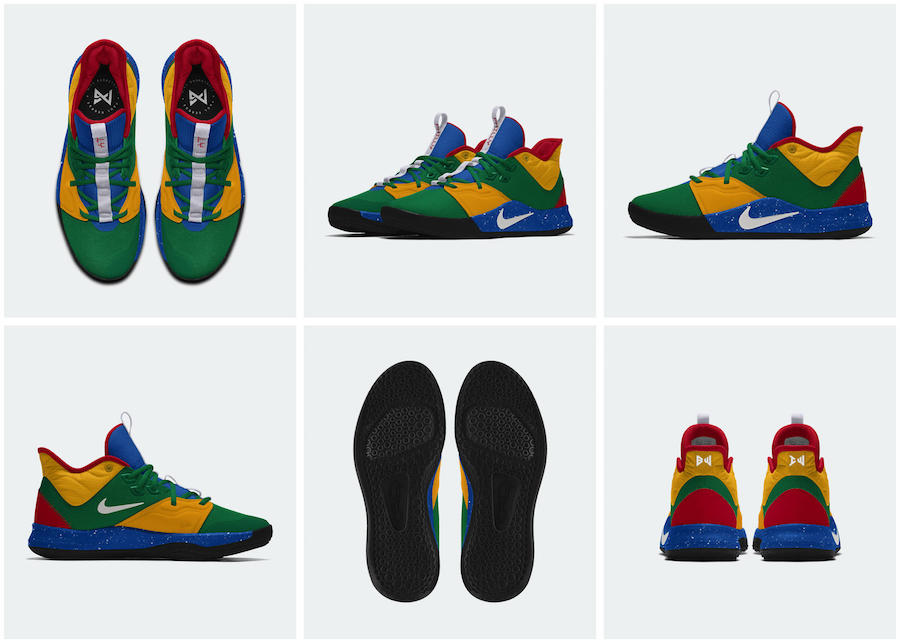
This year, the project was expanded to 23 players who customized their footwear based on four signature silhouettes: Kyrie 5, the KD 12, the PG 3 and the Zoom Freak 1. Here are all the Nike By You colorways — and the personal inspirations that helped create them. You can customize your pair now on Nike.com.
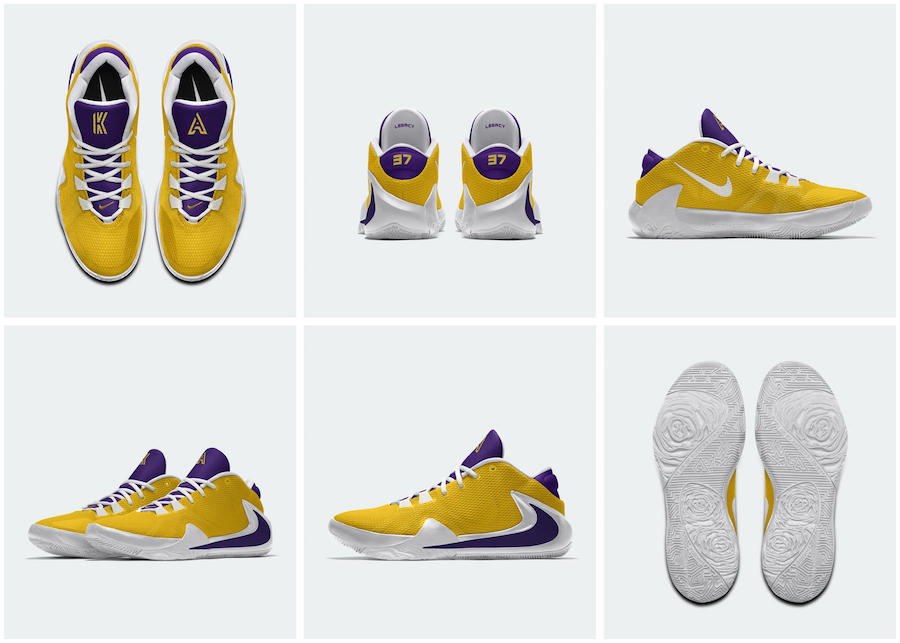
Kostas Antetokounmpo, forward, Los Angeles

Legacy is the word that Antetokounmpo wanted to carry through his shoe, with regal purple accents a perfect match for his team-inspired base yellow. The word is embossed on the inner tongue to remind him to represent his family’s name every time he plays.
OG Anunoby, forward, Toronto

The London native sought out a loud colorway for opening week, choosing a mosaic of contrasting colors and tying the look together with neon green laces.
Mikal Bridges, forward, Phoenix

A self-proclaimed momma’s boy, the Phoenix forward designed a KD 12 based off his biggest supporter and main role model. The shoe is completed in a soft purple and yellow color scheme and includes his mother’s initials on the tongue tag.
Miles Bridges, forward, Charlotte

The athletic forward chose a colorway scheme after his favorite animal, the gorilla, a paradigm of intelligence and aggression. Purple and gray accents add a touch of some of his preferred colors. His son’s birthday is printed on the heel, and a personal reference is included on the tongue.
Bruce Brown, guard, Detroit

Inspired by the idea to never judge a book by its cover, Brown customized his shoe entirely off his love for country music, covering his KYRIE 5 in a mix of yellow, burnt orange and sky blue in a tribute to his favorite country artist.
Jalen Brunson, point guard, Dallas

The Dallas point guard designed his shoe from his personal mantra, displaying an acronym on the tongue for “The Magic is in the Work.” The upper is layered in his team’s colors.
Donte DiVincenzo, guard, Milwaukee

The Milwaukee guard designed his KD12 based off his close relationship with his mother. He highlighted her favorite color throughout the shoe’s upper and added in their motto, “Stay True,” which appears on the back heel tab.
De’Aaron Fox, point guard, Sacramento

In addition to the team-inspired color scheme, the third-year guard included subtle details for his foundation, placing other personal details on the inner tongue and the back heel.
Darius Garland, point guard, Cleveland

The Cleveland point guard designed his shoe in a deep red base with a white flytrap containment system. The bright colors were inspired by the attention he’s had on him since he was young, and how he is constantly reminded to stay humble.
Jaxson Hayes, center, New Orleans

The seven-footer chose a color palette inspired by the reason he first fell in love with basketball — a first-grade team he played on that sported navy blue and gold.
Tyler Herro, guard, Miami

The rookie sharpshooter designed his PG3 around his belief in continually evolving his dreams; he’s already charting new ones now that he’s found his way into the league. With an attitude of always wanting to stand out, he chose bold color-blocking throughout the upper and polished off the design with personal details, such as the initials for his nickname (Boy Wonder) on the heel and an acronym on the tongue as a reminder to earn his playing time.
De’Andre Hunter, forward, Atlanta

The versatile forward came from unassuming beginnings, describing himself as a player who didn’t take basketball too seriously until he was older, developing a supportive relationship with his mother along the way. The colorway pulls from his memory of a childhood gym where his mother rebounded for him. The acronym on the tongue stands for a personal motto: “Skills Over Politics.”
Chandler Hutchison, forward, Chicago

The Chicago forward tells his personal story through his Freak 1 silhouette — printing “Underdog” on the inside of the tongue of his shoes, which represents how he felt he was under-recruited throughout his career. He incorporated his high school’s colors into his shoe to acknowledge his coach as pivotal in helping him get noticed by college scouts.
Jonathan Isaac, forward, Orlando

The blue, white and black colorway is inspired by his Orlando team and is dedicated to its fans. The forward gives his shoe a pop of orange inside and on the laces.
Jaren Jackson Jr., forward, Memphis

Jackson’s vibrant shoe was designed to exude the energy he brings to his team’s play. The initials on the tongue stand for a motto repeated in his family since he was a young player: “Much required, much given.”
Ja Morant, point guard, Memphis

The point guard combines colors from different teams throughout his career that helped propel him to the league — from Sumter, South Carolina to Murray, Kentucky to Memphis, Tennessee.
Josh Okogie, guard, Minnesota

The technicolor theme of this PG3 expresses the guard’s mindset to keep bringing the energy to every single game. “NONSTP” is printed on the tongue loop to remind him of this night in and night out.
Royce O’Neale, forward, Utah

The forward loves candy, so he designed his KD12 to look like his favorite treats. He also embellished his shoe with details referring to his mother and other members of his family, linking back to his childhood (where his history with candy began).
Cam Reddish, forward, Atlanta

The Atlanta forward built a color mosaic with blues and reds from the formative teams he’s played on throughout his career that have helped develop him into the player he is today.
Jerome Robinson, guard, Los Angeles

The shooting guard designed his shoe with an earthy palette to highlight some of his favorite hobbies, camping and hiking. The phrase “Live Free” is printed on the heel and represents his life ethos.
Collin Sexton, point guard, Cleveland

This wild colorway from the point guard revolves around personal expression. The acronym on the heel stands for “Move with a Purpose,” a personal mantra of his.
Anfernee Simons, guard, Portland

A mix of the colors from his NBA team and his Florida high school team, the shooting guard’s shoe follows his pride in being drafted out of high school. Simons added his home zip code (32701) across the heel tag as a shout-out to his hometown.
Brad Wanamaker, guard, Boston

The guard had a multifaceted journey to the league once he graduated college. His shoe tells the story of how he arrived to the NBA after playing with teams in France, Germany and Turkey, each represented by colors in his shoe. As an added touch, he calls out his hometown of Philadelphia on the shoe’s tongue.

2019年10月20日星期日

Hoka Rincon Performance Review

The Hoka Rincon has been getting rave reviews (one examples here). They are one of the lightest running shoes on the market at 7.7 ounces and cost only $115. I’ve enjoyed Hoka’s shoes up to this point and the Rincon seemed like the exact type of shoe I’ve wanted from them, a light responsive runner that is good for both distance and speed work.
I ran 40+ miles in these on roads, trails, and the beach to see how they would hold up across different conditions. The Hoka Rincon was my every day running shoe for the last two months and I used them for both long runs and short distance speed work.
Cushion
I absolutely loved running in the Hoka Rincon. The Rincon has the traditional Hoka max cushioning setup. The midsole is thick and plush but there’s still a ton of bounce with each step. The main difference I noticed between this shoe and other Hoka shoes is that the insole is thinner. This thinner insole adds a large measure of responsiveness. I felt the ground really well and it helped a lot with speed work. The Rincon was easily the most responsive Hoka I have worn. The cushioning was great on long runs as well and my usually bad knees didn’t have any problems.
Traction
The outsole of the Rincon is mostly made up of the EVA foam from the midsole with a few spots featuring harder rubber. There are less hard rubber spots on these than other Hokas. This is most likely because they wanted to keep the Rincon as light as possible. I don’t mind the trade off but don’t expect the Rincon’s outsole to last very long. After just 40 miles, I noticed the outsole beginning to wear down. I don’t see the outsole lasting longer than 200-250 miles. Besides the durability concerns, I didn’t notice any issues with the traction. I ran on trails, roads, and in wet conditions and didn’t experience any slipping.
Support
Most running shoes made to be light end up lacking support, and the Hoka Rincon is no different. The upper is minimal but the heel cup is sturdy enough to satisfy neutral runners. If you overpronate a lot, I wouldn’t recommend these. Most support issues I have with shoes are because my feet are too wide for the footbed, but the Rincon’s width was perfect for me. If you want a light shoe with a good amount of support I recommend the Hoka Arahi 3 (read my review here).
Materials
This was my favorite set of materials I’ve ever had on a running shoe. Yes, you read that right. The upper is made of an insanely breathable mesh that you barely feel when running. It’s thinner than the upper on the Hoka Clifton 6 but feels just as nice on foot. These are the type of running shoe that you just put on and completely forget about. They feel flawless on foot. I ran in these without socks for a quick 5k (running without socks is acceptable for triathletes…I promise I’m not being weird) and the amount of wind I felt going through the shoe is like no other shoe I have ever worn. The only issue with the materials would be the durability of the midsole foam.
Fit
I usually get Hokas in a size 13 but bought the Rincon in a 12.5. My last pair of air jordan 1 stretched out a bit and after a few miles they felt too big on me. I figured I would go half down half a size to see if that helped and it did. The 12.5 fit me a little snug when I first tried them on but after the first run, they were perfect. The fit is great, the width is perfect for my slightly wide feet, and overall, I loved how they felt. There were no uncomfortable spots, hotspots, or pinching.
Overall
The Hoka Rincon is best value for a running shoe I’ve ever seen. At only $115, they’re a no brainer. The Rincon and the Nike Zoom Pegasus Turbo 2 are easily my favorite running shoes of the year. They’re both light, responsive shoes with plush cushioning and breathable materials. The only difference is that the Pegasus Turbo 2 is $65 more. The Rincon’s materials are amazing, and the cushioning doesn’t suffer from the light build of the shoe. If you are looking for an affordable all-purpose runner then you should be considering the Hoka Rincon.