2021年1月4日星期一

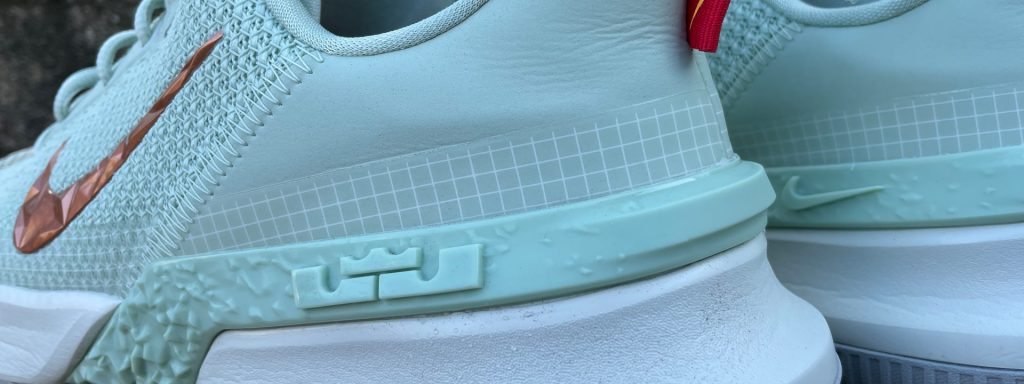
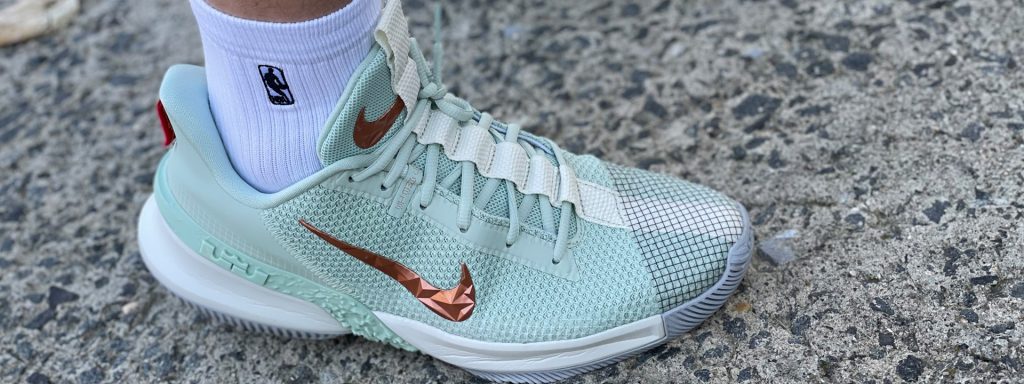
Nike Zoom BB NXT Performance Review

 I finally got enough court time to test the much anticipated Nike Zoom BB NXT despite the pandemic limiting my options. Enjoy the full performance review and keep your fingers crossed that things get back to normal soon so we can all get back to our regular basketball schedules.

Traction

Beastly! The traction on the Nike lebron 18 is nothing short of beastly.

The pattern and rubber compound were solid from an outdoor perspective. I’d expect nothing less indoors, but due to the current COVID-19 pandemic, indoor basketball isn’t a thing in California. Well, unless you’re invited to a private run somewhere. If you’re in the greater Sacramento area and have a high quality private run I can join, reach out on Instagram or Twitter.

I’ve been pretty surprised with the durability of the outsole. air jordan 35 tends to use soft rubbers on its models for indoor grip, but I’ve used these things on every outdoor surface you can think of. They’re barely showing any signs of wear.

Nike Zoom BB NXT Cushion

Cushion

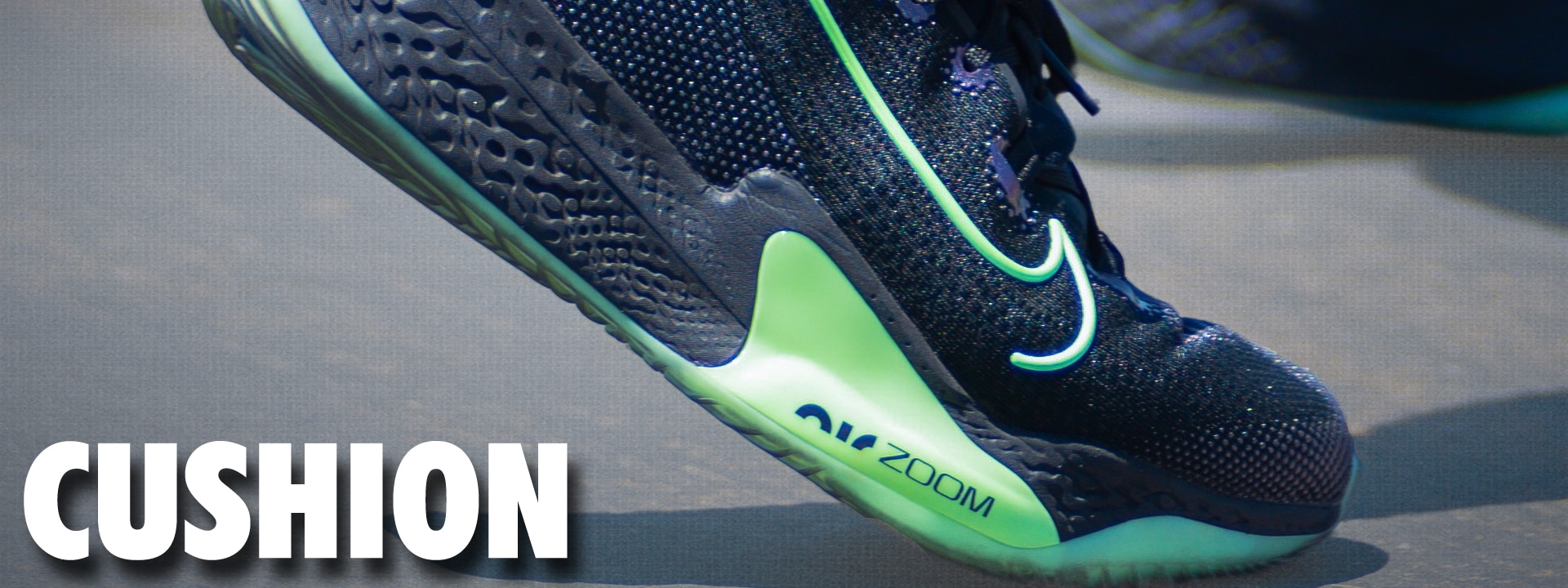
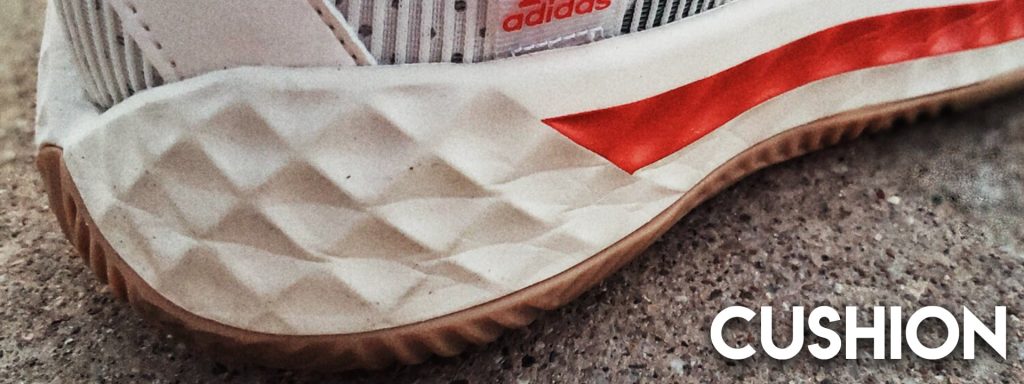
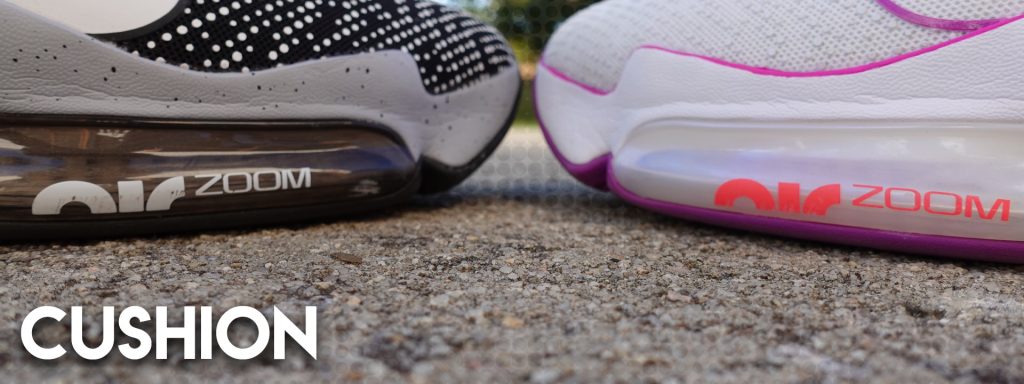
A triple-layered React midsole (the third layer is the React insole) and two large volume forefoot Zoom Air pods make up the cushion. And yes — it’s as good as it sounds.

You sit really high off the ground, so that’s something you’ll need to adjust to. If you play in max-cushioned shoes then it may not be that big of an adjustment. For those that tend to stick with shoes that are a bit lower to the ground, you’ll definitely feel weird until you get used to it. However, the tradeoff is you receive a ton of cushion from heel to toe. The tooling is built like a runner rather than a traditional hoop shoe. You’ll still feel fairly quick on your feet despite the higher ride.

Now, there’s one big drawback to the setup with the forefoot lateral Zoom unit. While it’s wrapped with a TPU wing for stability, it still compresses too much on certain movements. I’ve tweaked my ankle a few times in them. While I haven’t had any injuries, if another foot got under my foot then I’d have a big problem.

Can you try to avoid the stability issue by planting on the ball of your foot? Yes. That’s what I’d recommend — and something you’ll do naturally once you hit the spot on Zoom Air pod that makes it collapse. Is this a deal breaker? For many it will be. I still play in them because the cushion and traction are amazing. However, the lateral Zoom collapsing isn’t a small issue and should have been caught during Nike’s weartesting phase.

Nike Zoom BB NXT Materials

Materials

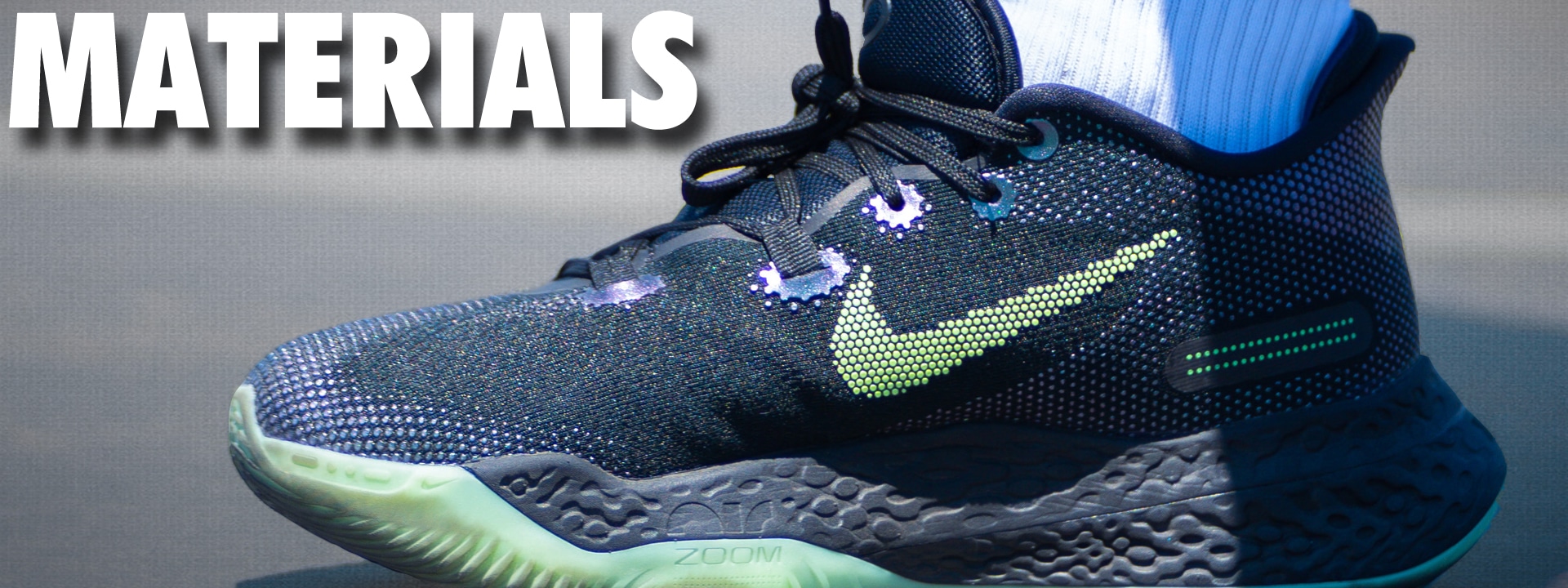
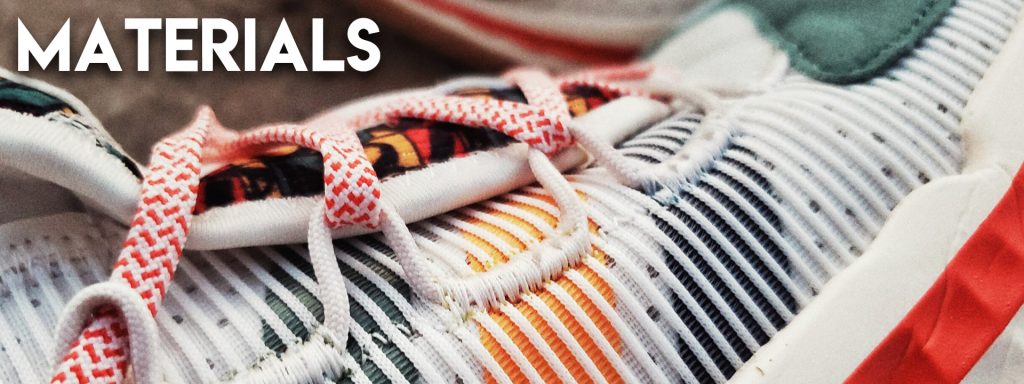
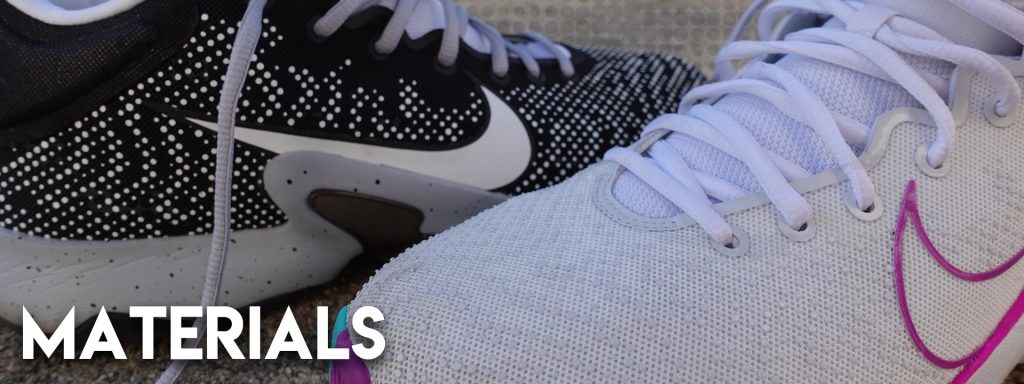
Textiles are used for the upper and, like most of the current generation of basketball shoes, there’s really nothing special about it. It’s comfortable, breaks in quickly, and additional overlays help keep the soft build from getting too thrashed. We all know what’s really going on. Nike is just doing what Nike does, cutting costs. They can save a lot of money by using cheaper textiles rather than raw materials.

This setup has proven to work well enough that I don’t feel it’s a big deal. If it works, it works. But I would love to have the $180 I spent on these be reflected in the build quality as well as the cushion. Not just one or the other.

Nike Zoom BB NXT Fit

Fit

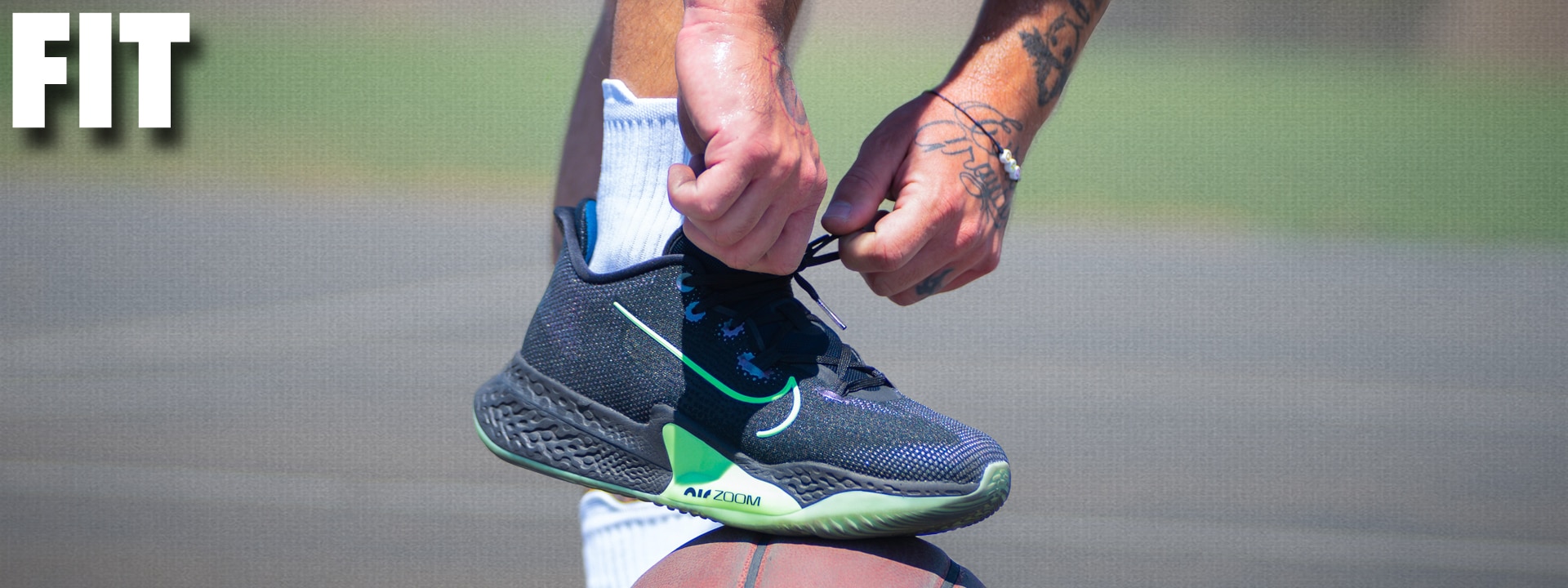
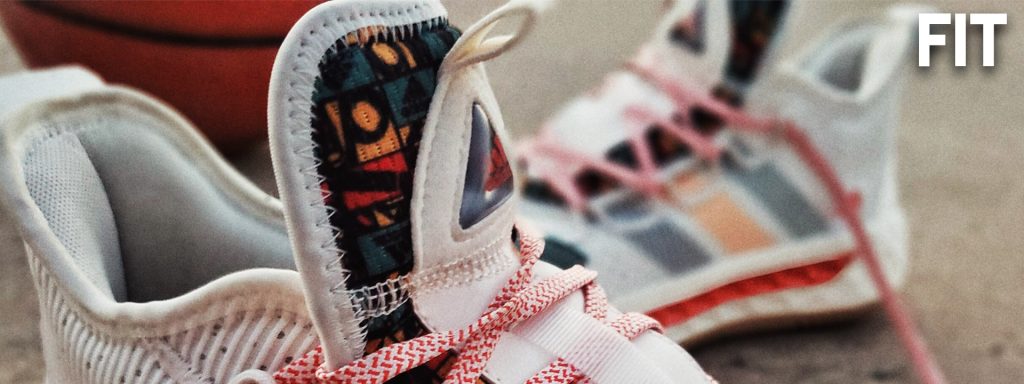
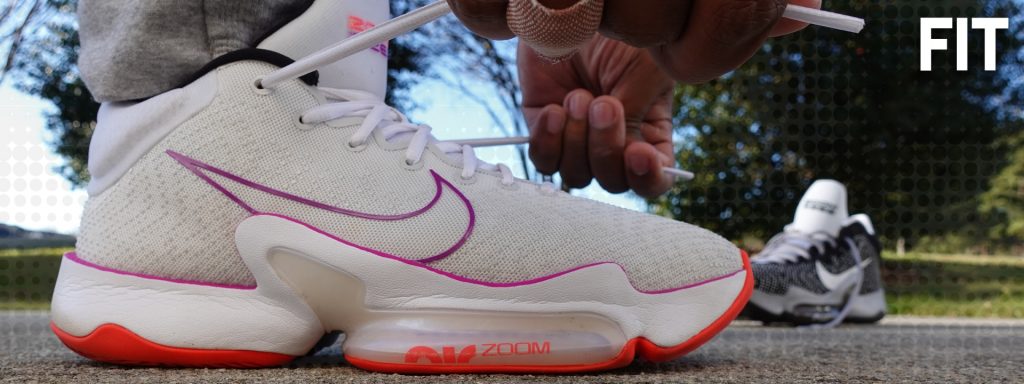
I personally went down 1/2 size due to the shoe looking like a runner. Other WearTesters team members bought true to size and enjoy the fit.

Lockdown has been solid, although the last nylon lace cable chafes my pinky toes. It’s super annoying and again, something that should be caught during Nike’s weartesting. Other than the lace cable hot spot, the build and sculpt of the shoe haven’t disappointed me. They fit like a glove. Which, if you’ve read my reviews before, is exactly how I like it.

Nike Zoom BB NXT Support

Support

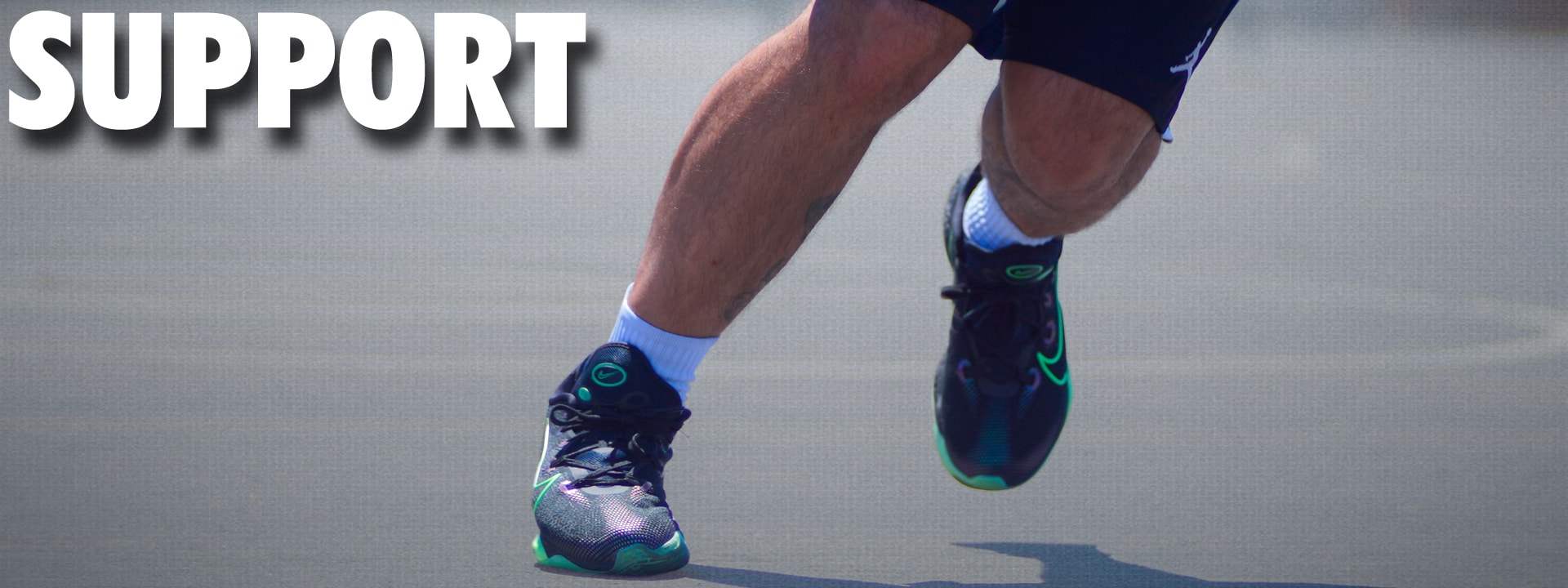
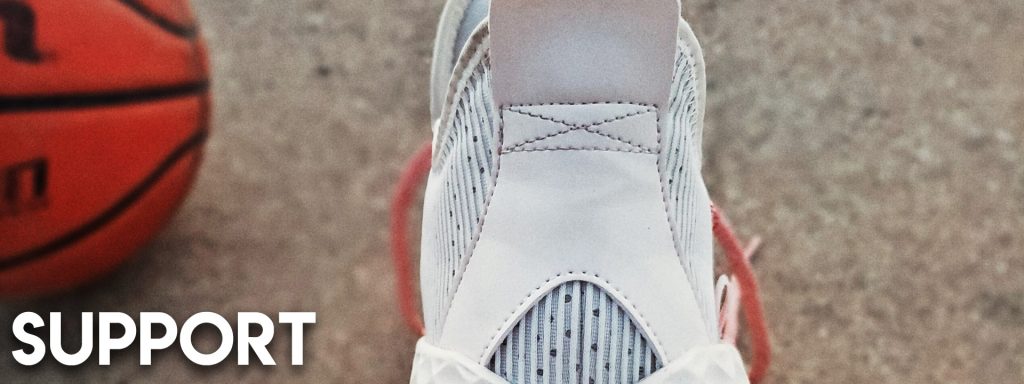
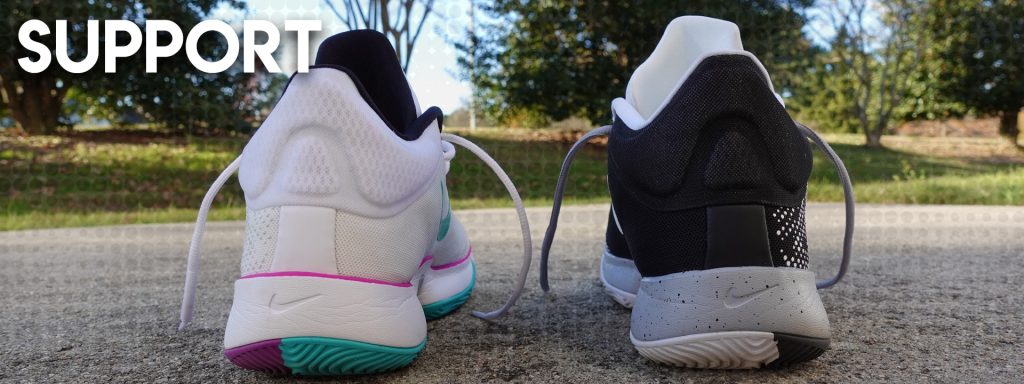
The overall support is solid, but the lateral Zoom Air unit keeps them from getting the Starting Five badge. If the lateral Zoom wasn’t a problem, then the Zoom BB NXT would be one of the more beastly offerings in the entire basketball category. And that means all brands, not just Nike’s basketball lineup.

Aside from the Zoom pod issue, the moderator plate works extremely well as both a moderator for the cushion and as a torsion plate. The upper fits me like a glove, which is why, when I rolled over, I was able to bounce back quickly. The rear also fits well with the internal heel counter and sculpting.

Nike just has to make sure the lateral Zoom Air pod is stable enough on next year’s version.

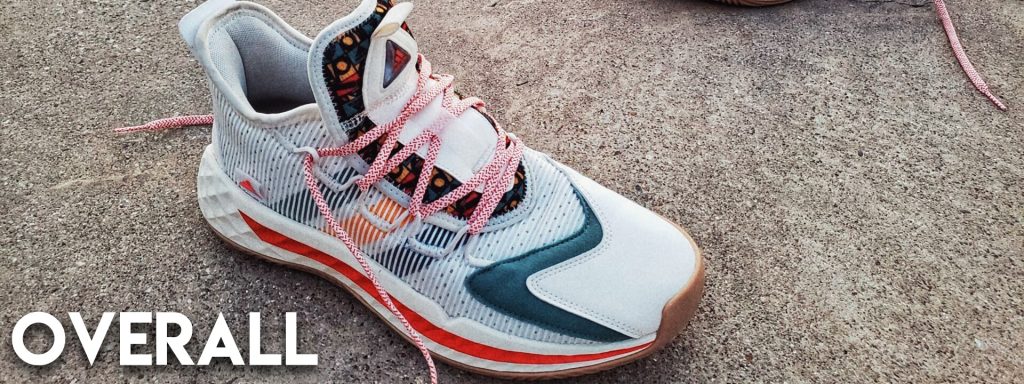
Overall

Overall

The Nike Zoom BB NXT is a really fun shoe with some killer traction and cushion. The fit and sculpting from the tooling makes for a fun ride. I don’t think they’re perfect, but they’re a step in the right direction.

Nike Basketball products have been pretty bland over the last few years (with the exception of the Zoom strobel introduced in the Nike KD 13). So the Nike Zoom BB NXT is a refreshing change of pace. I just wish they had better weartesters that could catch simple issues like the lateral Zoom Air pod collapsing and the nylon lacing cable pinching the toes.

2021年1月2日星期六

adidas Pro Boost Low Performance Review

 Bye Pro Bounce, hello adidas Pro Boost Low…plus Lightstrike. Does the change elevate Adidas to the top of the team basketball shoe category? Find out below as Bryan and Jalique share their experiences testing the adidas Pro Boost Low. After hearing what they have to say, you can decide for yourself who rules in the world of team basketball shoes.

Traction

Bryan: Herringbone, herringbone, herringbone. How many times have we said “herringbone” at WearTesters and rejoiced when it appears on a new shoe. The reason is that herringbone works, and the majority of the time it works well (ok, the nike lebron 18 did let me down). The Pro Boost Low uses a full herringbone pattern in the middle of the outsole (the Boost section) with a modified pattern covering the rest of the outsole. With some slight wiping about every third game this pattern worked as well as any shoe in my arsenal. It isn’t an aggressive stop, but a smooth roll into stillness. Even on stop-and-go, hesitations and step-backs, I didn’t slide at all.

Laterally, forward, backward, even on defense moving to get in front of my man, I was grabbing the floor then pushing off to change directions without a second thought. The best feeling in the world is in transition. I knew I could catch the ball on the move and either stop and pop, put it on the floor and drive, or do a one dribble pull up without any problems from the ankle down.

Playing outdoors? Actually, yeah, it might work. The pattern is definitely outdoor-friendly. The rubber, while not the thickest pattern, is slightly harder than most and should last for a few months on the blacktop.

Jalique: Patterns? On point. Compound? On point as well. The colorway I tested utilized gum rubber so it could differ slightly from other pairs. Regardless, the combination of herringbone surrounded by multidirectional blades didn’t disappoint no matter what movements I made.

Though I wouldn’t consider this a shallow traction set up, my only nitpick for the outsole would be to make it slightly deeper and/or to widen the grooves. This is something that would’ve helped me a bit after stepping in mud and caking things up a bit. But, maybe I’m the fool for trying to make Rodman saves outside after a couple of rainy days.

Though I primarily played outdoors in the Pro Boost with no issue, the time I spent indoors on a dusty court was still a good experience. I didn’t slip or wipe a lot despite utilizing all my typical our court movements. I’ll take it.

adidas Pro Boost Low Cushion

Cushion

Bryan: Wait. Waaaiiiiittt. WAIT!!!! WHAT????? Lightstrike, which we already know feels nice and soft and responsive from the Harden Vol 5, N3XT L3V3L, and air jordan 35, is used as a carrier for…BOOST? Yeah, it is, and the cushioning feels freaking fantastic under foot.

I’ve heard from some in the WearTesters Discord that they couldn’t feel much cushion (no shade, everyone feels things differently). But I’m 210-215 pounds, so the compression is a tad bit stronger for me. The initial feel is the Lightstrike. It’s soft and cushioned under foot, feels great upon step-in, and it absorbs impact very well. At a certain point, the Lightstrike reaches its limit, which is where the internal Boost helps. When the Lightstrike starts to bottom out, the caged Boost is stiffer and responds with a spring. This system felt quicker than both the regular Lightstrike of the Dame 6 and the Boost in the Rose series while still being ultra-cushioned. This may be my favorite cushioning setup from adidas in years.

One thing to note. The Lightstrike does feel softer than the Boost, which can lead to some edge compression and collapsing if you land awkwardly. But in the two months I’ve played in the Pro Boost Low, this hasn’t caused any problems.

Jalique: The love-hate relationship with the Pro Boost midsole is real over here. It’s not anything like what I would expect from a shoe of its name, yet I find it to be a very solid setup. For those that asked for a more stable Boost setup, you get it here. But don’t expect the plushest Boost feeling since its caged inside the Lightstrike foam.

The midsole excels as a stable, low to the ground platform with surprisingly smooth transition. It’s got a subtle response underfoot that provides impact protection even if it doesn’t seem like its heavily absorbent. It’s not my favorite Boost option for basketball, but it is one I think a lot of players might enjoy, given the proper amount of time and break-in.

adidas Pro Boost Low Materials

Materials

Bryan: The materials are pretty typical for what we get on most shoes these days. A fabric/textile/woven material (this one happens to be a nylon textile with tighter-woven ribs along the upper) and fuse areas for strength. Only, wait…no fuse here!!! This may be the first shoe since 2010 with absolutely no fused areas on the upper. The upper has no stretch at all along the sides of the shoe, meaning the fit is the fit from start to finish.

The toebox is covered in the lovely adidas felt material and a synthetic leather overlay. This many layers in the forefoot normally make a shoe feel stiff and inflexible. But the design and placement of the materials in the Pro Boost Low doesn’t hinder movement at all. The same pleather can be found on the heel as a layer for the counter, but it’s entirely unnecessary. The lace loops are a sewn-in cord system that doesn’t do any more than normal loops but does add to the looks.

The tongue is where things get interesting. There is a STRONG elastic band under the tongue that runs over the top of the foot. The tongue is then sewn on top of the band, meaning the tongue is external from the shoe. It is sewn in at the bottom and across the band but otherwise is unattached, making entry into the shoe easy. The heel and ankle areas feature some thick padding and I didn’t get any chafing at all in that area.

Jalique: I’m honestly over the materials adidas uses for nearly all of their hoops models. The Pro Boost does its job from a performance perspective minus one issue I have, but it’s discouraging to see some of the cheapest textiles and synthetics on hoop shoes. Especially when things like felt materials are used so minimally. Why use the felt at all? I wish they wouldn’t.

The synthetic toecap doesn’t hinder performance and is there for durability purposes. It does take away from the on-foot consistency from heel to toe, especially since the the midfoot gore band keeps the shoe so close to the foot in comparison to the toe’s extra volume.

Speaking of the gore band, there is no buffer between it and your foot, so if it bunches up, be prepared for some unwelcome pressure. Still, the shoe is tolerable enough for a few hours of play and adds containment, making this a secure option.

adidas Pro Boost Low Fit

Fit

Bryan: I’m resigned to the fact that I am a size 10 in adidas (minus the D.O.N. Issue 2…smh). I’m normally a 10.5 in everything Under Armour, Nike, or Jordan. I went down a half size in the Pro Boost Low and the fit is perfect. For reference, I’m a 10 in the Dame 5/Dame 6 and a 10 or 10.5 in the Harden Vol 4. The midfoot has no movement at all from the lacing and the elastic band. The lacing and strap also pull the shoe up and around the ankle/achilles to stop movement of any kind. With the external tongue, the laces feel like they pull the shoe down on top of the foot for further lockdown.

Jalique: Regardless of what size works for you, the gore band seems effective around the midfoot. I prefer the fit of a half size down over true to size. Even going down a half size feels a bit longer than what I am accustomed to.

Because the midfoot band does not extend down to the footbed, I am more concerned with how those with higher insteps will adjust to the Pro Boost Low versus wide footers. For either, I would highly recommend knowing the return policy where you purchase in case the shoe doesn’t work out. Or, of course, try them on in store if circumstances allow.

adidas Pro Boost Low Support

Support

Bryan: The first support feature I noticed was the way the midsole cups the foot and also flares slightly under the heel and forefoot. There’s no real outrigger to speak of, but the Pro Boost Low has a wide base with a slight angled flare under the forefoot. The Lightstrike comes up almost 1/4″ around the entire foot, working to keep your foot secure over the midsole, and it works great without feeling bulky. Confidence is the most important part of shooting and it starts with a solid base and the Pro Boost Low’s base is solid.

I don’t feel a midfoot shank embedded in the Boost. Even without it, the Pro Boost Low provides great arch support and midfoot stiffness. The heel counter is really stiff. The lacing system and the heel counter lock in your foot, thus providing ample true ankle support.

Jalique: If there is one thing you can count on in recent adidas basketball shoes, it’s the inclusion of a stable, and at times creative, platform. While visually the Pro Boost Low’s midsole isn’t quite creative, it fits the bill for stability with a nice wide and flat base.

The gore band, if you couldn’t already deduce, is effective. But I haven’t mentioned heel stability. Although it doesn’t feel like the heel counter is substantial due to the low height of the sneaker, the heel lockdown worked fine. Stop and go, two-way lateral movements, pivots, defending back cuts…all of it worked well for me.

Overall

Overall

Bryan: The adidas Pro Boost Low is now my go-to shoe of 2020. Seriously. If I’m going to a new court, or one I know is bad, I take both a review pair and the Pro Boost Low. If you’re looking for cushion, traction, and fit, I can’t think of another shoe that will perform as well. While I was excited about the prospect of a drop-in Boost midsole, the midsole construction is better than I dreamed. Seriously, besides the adidas “suede”, I can’t think of a single bad thing about this shoe. Even the crazy tongue setup isn’t bad per se.

Jalique: Though not exactly what I expected, the adidas Pro Boost Low is a solid performer. With a mid option also available, the Pro Boost should fit the preferences of all types of players with its biggest flaws (the instep issue) not really hindering performance much, if at all.

The adidas Pro Boost Low is worth a try if you’re considering it as your next hoops shoe.

2021年1月1日星期五

Air Jordan 35 Performance Review

 Just in time for its initial October 17, 2020 release, our Air Jordan 35 performance review is ready for you to read or watch. From two separate perspectives, we deliver everything you need to know about the most recent flagship Jordan.

Traction

The traction, while altered a bit, doesn’t truly differ from last year’s Air Jordan 34 — which is a good thing as the Jordan 34 was a beast on every surface I played on. To be honest, I still keep the Air Jordan 34 in my bag just in case I’m not feeling whatever I may be testing. Whether it be the regular version, the Jordan 34 SE, or the Jordan 34 Low, the shoe is in my bag at all times due to the amazing traction. Ultra reliable and ready to go any day of the week. Just as it is here on the Air Jordan 35.

Like the Air Jordan 34, the traction isn’t durable enough for outdoor use. But if you’re not an outdoor player then you won’t have to worry. If you are, well, the traction works great. It’s just really thin and will wear down quickly.

If it ain’t broken, don’t fix it. Tried and true herringbone is here to stay with the Air Jordan 35 and it was fantastic. Minor modifications were done to the toe area along with the heel getting reversed herringbone grooves, but it worked super well. The traction sticks. The rubber is soft yet pliable, but it won’t last too long for outdoor courts. The rubber bites well after you break in the outsole coating. yet I don’t think I’ve wiped my shoe once. (Wipe my shoes from playing outdoors during a pandemic? I think not!) Now Jordan Brand, please keep herringbone for future models. We dig it and it works!

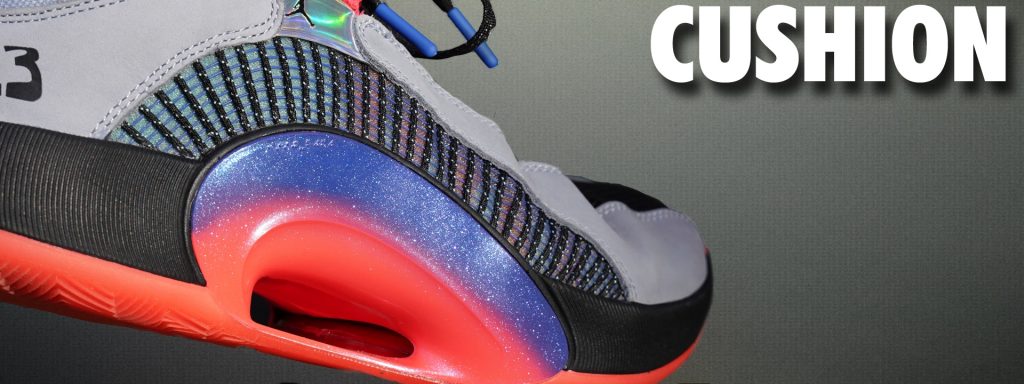
Jordan 35 Cushion

Cushion

Unlocked Zoom Air is back and there’s more of it this time around. The forefoot hasn’t changed between the Jordan 34 and Jordan 35 in terms of the Zoom’s size, but the implementation is slightly different. There is only one cavity where the Zoom is exposed and I felt this housed the cushioning a bit more than it had in the Jordan 34. So, less of the amazing Zoom-y feeling that I loved from the previous model.

However, the heel is much improved as the Hex Zoom unit from the Jordan 34 has been replaced with a large heel Zoom Air unit. Much like the forefoot, the Zoom-y feeling is muted a bit, but the impact protection is there. Larger players along with those that play on their heels should enjoy these a bit more.

Did someone say Zoom? Your darn right I did. Zoom in the forefoot is the same size as used in the Jordan 34. A larger volume Zoom unit is used in the heel (compared to last year’s hex unit). It wasn’t as bouncy from the start but after about 20-30 minutes, that forefoot Zoom Air felt good and snappy. It offered responsiveness along with stability and court feel. Despite the Heel Zoom Air unit being changed, I didn’t feel it as much. However, that doesn’t mean it didn’t work. I crashed the boards hard and my knees felt good when landing. It also gave me a nice transition from heel to toe when starting a fast break. I appreciate Jordan Brand sticking with heel and forefoot Zoom.

Jordan 35 Materials

Materials

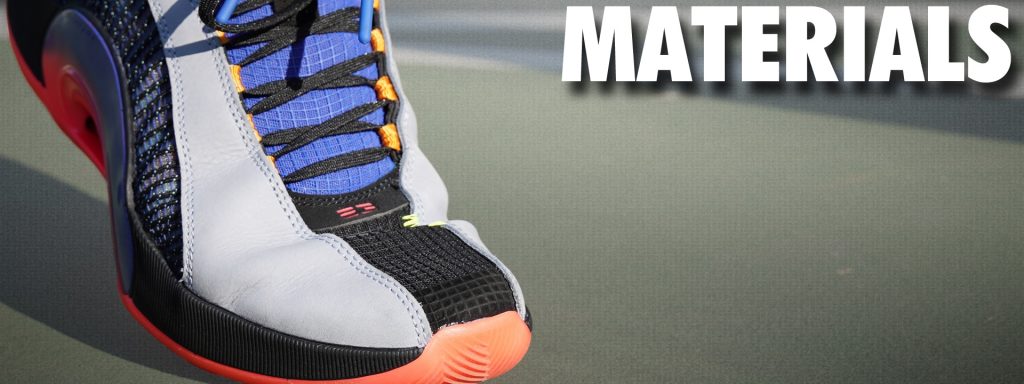
This is where I feel you get a slight upgrade from the regular Jordan 34 as Jordan Brand has brought raw materials back to the flagship shoe. Yes, the Jordan 34 SE was full of beautiful leather, but that was an SE — not the true flagship.

The overlay materials will change with colorways. Some will feature leather while others feature suede. It gives the $180 price point a bit of a premium feel and helps relax your mind a bit when spending such a high price for a basketball shoe. Yes, performance is the most important aspect, but some fans still buy the annual Air Jordan just to wear and not to play in. Those fans should be pleased.

For the modern hooper, there is still plenty of lightweight textile around the main build of the shoe. It offers a ton of ventilation and requires no break in time.

Upgraded. Nuff said. The blend of premium raw materials along with modern textiles was implemented because of insight provided by Jordan Brand athletes. The suede and leather combined with Flightwire gave the shoe a more upgraded and durable feel. Kurim was utilized to help with the caging underneath the Flightwire The kurim provides extra support along with a newly updated Eclipse Plate 2.0. What’s funny is that the premium materials inserted didn’t add much weight to the shoe. The Jordan 35 felt much lighter than its predecessor. Some of the interior build of the shoe seemed to be recycled from the Jordan 34. For example, the nylon lace loops and their location. Not necessarily a bad thing, but we’ll discuss that later on.

Jordan 35 Fit

Fit

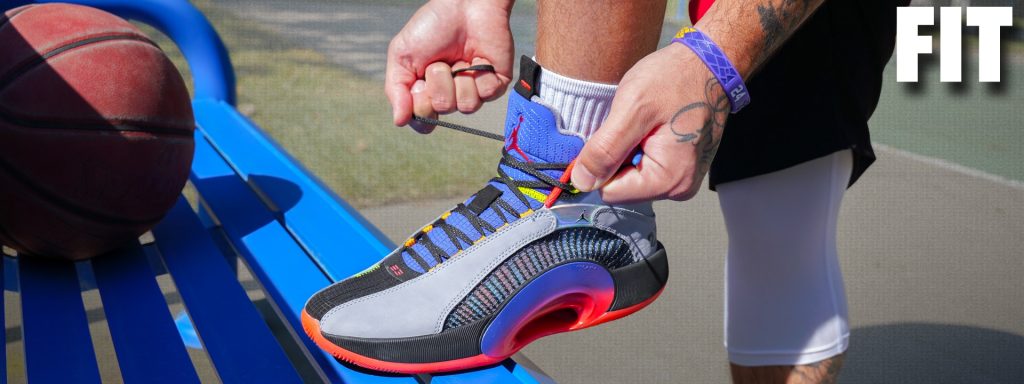
The Air Jordan 35 fits true to size so that is what I would recommend for most foot shapes.

However, the fit is also where I had an issue with the shoe. The nylon lace cables that run down to the footbed did a number on my arches. I had noticed the issue on the very first night of testing and immediately took the shoes off. Unfortunately, it was too late and the damage was already done. There needs to be more of a buffer between the foot and the cables. Some padding, a thicker inner sleeve…something. Taping is something I would do just to avoid the issue. Although, you’ll likely still feel them trying to gnaw at your feet. Yes, I’ve been trying everything and I just find this portion of the design to be a flaw. I’m surprised it wasn’t caught during wear-testing.

The rest of the shoe fits and locks the foot down perfectly. It’s a shame that the arch area is affected the way it is. I hope others that play in the shoe don’t have to deal with the same issue. It’s one of the more painful injuries I end up encountering when testing shoes and it takes forever to heal up.

Initially, the Jordan 35 started off a little snug. However, after a few quick movements and a little bit of playing, the shoe really contours to your foot. As a slightly wide footer, I’m still able to stay true to size and they feel fan-freakin-tastic. Lockdown was solid once you get the lacing adjusted correctly. This shoe was made for anyone’s feet, whether narrow, normal, or wide

2020年12月31日星期四

Nike Zoom Rize 2 Performance Review

 The Nike Zoom Rize 2 is a follow up to one of 2019’s top performing basketball sneakers, the Nike Zoom Rize. Our test of the Zoom Rize 2 spanned two pairs and months of testing including several pandemic-induced stops and starts.

Needless to say, we’re happy to finally get this review posted. Enjoy this (very complete) performance review and let us know on Twitter if you have any follow up questions.

Traction

Nike Kobe 9 inspired outsole pattern?! I didn’t play in the lebron 18. But I know that when Nike name drops what is regarded as one of the best performing outsoles ever in the product description, it better be great.

I’m not sure the Nike Zoom Rize 2 traction is all-time great. But it was great for me during testing in both regular solid rubber and XDR rubber versions. And it was good on a mix of surfaces both indoors and outdoors. The mostly radial, partial foot map pattern covers you on movements in every-which-way. It also provides the same tread depth and spacing that made the original Zoom Rize a great option.

If outdoor play is your only option, I would recommend opting for the XDR outsole for durability purposes. However, I found the standard rubber to be the better performing option on both inside and outside surfaces. It will fray much more than the XDR, but if I’m being honest, the standard solid rubber’s durability is solid.

Nike Zoom Rize 2 Cushion

Cushion

This is where the Zoom Rize 2 gets interesting. For one, the forefoot Zoom Air bag improved from an already hefty 10mm thickness. On the other hand, the unit doesn’t provide the same amount of coverage. It’s essentially a large volume heel unit (think Air Jordan 35 or Nike Kobe 10) transferred to the medial side.

Despite the smaller amount of space covered, the forefoot Zoom feels bouncy and highly effective, especially for more explosive movements. The position of the Zoom bag is key. It’s decoupled from the heel section of the midsole and placed directly behind a deep outsole flex groove. What this does is provide points of extra compression on both ends. The extra compression distributes the air smoothly and enhances the snappy, springy feeling so many of us love about Zoom.

We still don’t know the foam used in the Zoom Rize series. But in the second iteration, the heel and carrier portions of the midsole feel just as good as the first. Maybe even a bit springier. Court feel aside, you are getting just about everything you could ask for from a cushion standpoint.

Nike Zoom Rize 2 Materials

Materials

The Zoom Rize 2 sheds some of the weight and bulk from the original Zoom Rize by using a thinner textile base. The textile base is topped with haptic print detailing. This textured detailing is somewhat similar to what was introduced on the Nike Kobe 6. However, the “islands” are much smaller. The pattern crosses the entire lateral side and toe of the shoe, but not the medial sections. The print may protect the rest of the upper a bit, but I see it as more fashion than function. Performance-aside, I’m happy it’s there.

It’s funny, because materials may be the biggest improvement over the first iteration simply by doing less. As mentioned, excess materials were shed for a more form-fitting, decently-supportive, minimal-to-no-break-in set up. Overall, I just enjoyed the upper and suspect many others will as well.

Nike Zoom Rize 2 Fit

Fit

I bought two sizes. I bought my true size in one. In the other, I bought an EP (Enhanced Performance) version (with XDR outsole) from Asia in a half size down. Though the half size down is the EP version, I don’t believe it was built on a different last. It seems more narrow than other EP and PF (Performance Fit) shoes I have. That’s just something to note in case you’re in the US and don’t want to buy via Nike By You.

Initially, both pairs seemed to fit similarly, so true size and a half size down are both playable for me. However, I prefer the fit of a half size down as they’re just a touch closer to the foot. This felt more secure as the materials do stretch just a bit over time.

Wide footers, you may want to consider half size up on this one. Although the materials shouldn’t be much of a problem for comfort, it’s a narrow shoe overall.

Nike Zoom Rize 2

Support

This is what everyone is wondering or already made assumptions about. That Zoom sits HIGH in the forefoot, but is it unstable? Not in my opinion, but that doesn’t mean it’s perfect. I’d prefer the base to be a little bit wider. But if Nike did that, it would add extra weight. And that would just give some people a different thing to complain about.

Fortunately, I didn’t have any issue or even a scare when it comes to rolling over the footbed. I attribute it to the strength of the lateral TPU support piece that cages the forefoot Zoom. It also extends to the arch to provide torsional support across the decoupled tooling. For comparison, this plastic is much stronger than the plastic that cages the smaller Zoom bag of the Nike Zoom BB NXT. Although there isn’t a true outrigger, it still does a good job of not buckling under pressure.

The heel support works by way of an internal counter as well. But going back to the midsole height, I just want to be clear on a few things. I am not trying to sell anyone on this being a stable shoe. I’m admittedly not exactly what you would call shifty on-court. But when it comes to putting effort into defensive movements, side-steps into shots, and hard plants for off-ball change of direction, I felt secure in the Nike Zoom Rize 2.

Overall

Overall

The Nike Zoom Rize 2 is my personal favorite shoe to play in during this pandemic. Everyone that enjoyed the first Zoom Rize, will likely enjoy the Zoom Rize 2 just as much, if not more. The overall and surprisingly lighter weight of the shoe will make some feel faster and more explosive. On the other hand, the narrower base and higher midsole height will worry some people.

Chris’s experience in the Jordan Why Not Zer0.2 comes to mind. It almost seems like a combination of that shoe and the Nike Zoom Rize, but with less bulk.

If you are unfamiliar with either of those shoes, I’ll leave you with this. The Nike Zoom Rize 2 has all the necessary features to be enjoyed by bigger post players like Marc Gasol or Nikola Jokic while also appealing to faster, downhill type guards like Russell Westbrook. That may not cover everyone’s preferences, but it’s a wide spectrum, nonetheless.

2020年12月30日星期三

 The Nike LeBron Ambassador series is a consistently solid basketball shoe that releases yearly in Asia. Generally made for outdoors play, but with a build that can work extremely well indoors, the shoe is in its 13th year. Does the Nike LeBron Ambassador 13 reign supreme or will this iteration be an afterthought?

Traction

Have you ever heard fingernails scratching on a chalkboard? Or watched the cars drift in a Fast and the Furious movie? That’s the best way to describe the traction of the Nike LeBron Ambassador 13. Wholly balls this thing bites. Stop on a dime good. Going 0-60 and stopping in less than a second good. No matter the lateral cuts you make, quick switches on defense, hard plants, or triple-threat jab steps, the shoe just clamps onto the floor as if its life depended on it. The traction might have overtaken the Lebron Ambassador 9 as my favorite traction of this line.

Nike LeBron Ambassador 13 Cushion

Cushion

Get your tissue boxes ready, because this news is like taking an L on nike kyrie 7. Nike took out the forefoot Zoom Air. Let me reiterate. My knees take an L every time I have to wear these on court. While there is a large heel Zoom Air bag, the lack of forefoot cushioning really killed me. Not literally, but my knees need some serious WD40 after this. I’m not saying the shoe didn’t work, It just doesn’t fit the mold of what’s necessary for a shoe built for outdoor courts.

Someone at Nike Basketball team decided it wasn’t necessary to have forefoot Zoom Air. Instead they relied on the low to the ground ride to make the shoe lighter and faster. While I don’t disagree with their idea…actually, I WHOLEHEARTEDLY disagree with the idea. The forefoot Zoom has been a staple of the shoes in the Ambassador line since the beginning (which featured forefoot Zoom Air and heel Air Max). Why would Nike take out something that’s been working so well? Something that’s been even better than the Soldier Line on occasion and even giving the signature line a run for its money in some instances?

It seems to be a cost-cutting move that doesn’t include the shoe’s primary use case in the equation. I’ve tested Asia exclusive models for years now. The feedback I get is that about 90%+ of the Asian market plays outdoors and needs good impact protection. And, now, that same 90%+ of the market is pissed, including your boy. Nike owes me a pair of good knees. Please, for all the LeBron Ambassador line fans, bring back both the large volume forefoot/heel Zoom setup and the soft Phylon midsole from the Ambassador 8 and 9. Then, we’ll forgive you.

Nike LeBron Ambassador 13 Materials

Materials

Since this is an alternate to the signature model, the materials have never really stood out. The simple mesh upper, strategically placed fuse, XDR solid rubber outsole, phylon midsole, and a large volume heel Zoom Air unit make up the shoe. The material combo works. It just needs the forefoot Zoom bag back. Are you tired of me talking about it yet? That’s how much it affected me.

Nike LeBron Ambassador 13 Fit

Fit

For the first time, the shoe itself fit a little snug, even after I relaced the shoe. However, after a game or two, the shoe fits like a glove. I mean that in the most modest way possible. While overseas basketball shoes are generally built on a wider last, this shoe seems to have been adjusted a bit. My slightly wide foot struggled for the first 10 minutes. But after some heat built up in the shoe, it molded around my foot quite nicely and got better with time.

Nike LeBron Ambassador 13 Support

Support

Oh boy, here he goes again. Yup, I said what I said and I stand by it. I want my ****** forefoot Zoom Air back! Okay, besides that, the support is adequate. It doesn’t overdeliver, but the Ambassador line was always built on a no frills platform. The Nike LeBron Ambassador 13 sticks to the same script.

Nike LeBron Ambassador 13 Overall

Overall

The LeBron Ambassador line has always been quite solid and continues to be (with the exception of the forefoot Zoom Air removal). The Nike LeBron Ambassador 13 is light, strategic, and just darn good (with the one issue). The wider base of the shoe allowed me to plant my feet without hesitation and jolted my confidence in the solid XDR rubber outsole and the pattern. The upper molded to my foot and I almost felt like I didn’t have the shoe tied on.

But again, it only takes one thing to break my confidence and that is the lack of proper cushioning. LeBron James himself is 6’8” 240+ pounds of championship muscle. His signature line has a full length Zoom Air strobel along with a heel Air Max unit. Previous Ambassador models had enough cushion to work for those who play on the blacktop. For the money I and others paid for them, we deserve forefoot Zoom Air.

Don’t get me wrong, I like the air jordan 35 minus the forefoot cushioning. Will the Nike basketball team be able to rebound from this hiccup? Time will tell, but I speak for myself, the Asia basketball community, and the LeBron Ambassador fans: please don’t take away what has worked so well. We want to continue to love the Ambassador line as much as have to this point.

2020年12月29日星期二

Nike LeBron 18 Performance Review

 18 years of performance basketball shoes built for the most explosive basketball player ever (EVER!!!). LeBron James’ Nike line is typically the flagship for Nike basketball technologies and the Nike LeBron 18 carries on the tradition.

The shoe already has a place in history. LeBron won his fourth title overall and first with the Los Angeles Lakers while wearing them in 2020’s NBA Bubble. But despite the hype, the question remains, is the LeBron 18 a great performing basketball shoe? Let’s find out.

Traction

Chris: The traction was very consistent during my time in the Nike LeBron 18. Indoors, it worked wonders. I love the flex grooves as it allowed the rubber to remain in contact with the floor at all times.

Outdoors, they’ve held their own as well. Not extremely durable, but effective nonetheless.

Bryan: No herringbone, but all of the herringbone angles are there, at least in the forefoot where they’re needed. The traction doesn’t have an extremely hard bite, especially on lateral movements. But to be honest, I never had issues unless the court was just absolute trash. I felt like I was slipping slightly when coming around curls and screens but realized it was more of the midsole compressing than the traction slipping.

One thing that helps keep the foot on the floor are the large flex grooves cut under the ball of the foot and then down the center of the forefoot from the top of the toebox to the ball of the foot. The same concept was used on the Nike LeBron 17 by splitting the Zoom Air in the forefoot but it allowed the shoe to lose floor contact. No such problem with the LeBron 18.

The heel reminds me of the Nike Zoom Flight 5 and Nike Zoom 2K3 with the nub pattern. Again, I had no issues at all with the heel. The large concave area in the heel works almost like a suction cup, offering an extra grab on the floor.

Outdoors? If the surface isn’t extremely rough and you can rotate with another pair you’ll probably be ok. The rubber is thick but the pattern is soft so you will burn through it fairly quick.

Stan: Solid. Unfortunately, I was only able to test the LeBron 18 outdoors due to the pandemic. And safe to say, these are completely blacktop friendly. I was able to really clamp down on the ground while in a defensive stance as well as maneuver myself out of a triple-threat position into a quick jab without worrying about sliding. No matter what type of cuts I made, the rubber traction held me down. It doesn’t stand out too much, it just works.

Drew: The guys nailed it. The LeBron 18’s traction worked well in all directions and I didn’t have any issues stopping or with lateral movements.

Cushion

Chris: Three layers of cushioning makes the Nike LeBron 18 one of the most cushioned shoes of 2020.

A Cushlon midsole surrounds a rear Air Max unit and a full length Zoom Strobel. Sometimes having this much cushion could end up being too soft which can create some lag time with your movements. However, the mix of cushioning systems worked well without much delay.

While they were comfortable indoors, outdoors is where the cushion shines. Impact protection is on another level. If you’re a player that wants to have as much cushion as possible then this is currently your best bet.

Bryan: By now you know the specs – Air Max in the heel, full length Zoom Air unit embedded in that heel Air Max and under the forefoot, and a Cushlon foam carrier. To be real, when I first played in them, it was almost too much. Seriously. How much cushion can you put in a shoe? However, after that first three game night, I was hooked. I played on a rubber “looks like wood” rec center floor and normally three games there kills my joints. The Lebron 18 got me through back to back nights of 4-5 games each and my legs still felt great.

I didn’t feel that Zoom “spring” like on the Air Jordan 35 or the Unlocked Zoom models (Air Jordan 28 being the first example). To me, the feeling was more like the LeBron 12 with the Lunar/Zoom insert, soft but not mushy and pillowy.

Court feel is an issue if you prefer Harden Vol 4 type feel. The LeBron 18 rides lower than the LeBron 17 but if you love court feel, the LeBron line is not for you. The only issue I had was on occasion when I turned on my heel into a jumper or landed off-center and the bubble compressed on the edges. That said, for straight-ahead play and defense, this is the new standard of basketball cushioning.

Stan: A good combination of speed and power. The best of both worlds. My knees appreciated the amount of impact cushioning the Nike LeBron 18 provided. No matter how heavy-footed my landings, the bounce-back was nearly as immediate as I needed so I could get out in transition. Those who aren’t as heavy-footed might not feel the compression as much, but that doesn’t mean it’s not working. The amount of feedback is ample for anyone who plays a hybrid power and speed game. No complaints here.

Drew: The LeBron 18 surpassed the LeBron 10 and LeBron 16 as my favorite cushioning on a LeBron model. I get a nice pop on every footstep. And the harder the surface of the court, the better the pop. This shoe will save ankles, knees, and back on outdoor courts while indoor courts are closed during the pandemic. The LeBron 18 made my legs feel younger and bouncier. This kind of “turn back time” type of cushioning is worth every penny.

Materials

Chris: Knitposite 2.0 is in place and feels like a thick knit, sort of like Nike’s Battleknit from the LeBron 15, but with a lot of glue sprayed onto it. The Knitposite 2.0 has a rubbery feel, but that makes it so there isn’t much stretch while also requiring little to no break-in time.

The toe areas have been fraying a bit, so the material isn’t perfect. But it’s about as durable a knit I’ve worn thus far.

Bryan: I know. It gets confusing keeping up with all of the different names for the Nike knits. If “knit” wasn’t in the name, though, you couldn’t tell. There is no stretch at all, the knit is so plasticized and glued it feels almost sticky in hand. Someone online compared it to a candle wick.

Don’t get me wrong, it flexes just fine and is comfortable on foot. Knitposite 2.0  just doesn’t feel like the Battleknit from LeBron 15 or even the forefoot Knitposite from the 17. The heel cup is a rubberized affair that wraps into and under the heel. The tongue is just…wow (not a good wow). ln my Reflections colorway it’s plastic fuse and it’s HOT. So hot, in fact, the worthless Air bubbles fogged over every time I played in them. Nothing affected the performance, but the tongue is usually a point of ventilation, except on the LeBron 18.

Stan: The updated tongue features three translucent air-like pods that mimic Nike Air. However, they have no function. In fact, the area between the airbag-like features where I tie my shoe, especially towards the top of the midfoot area, created some discomfort and pinching. It was quite uncomfortable. I had to loosen that area up just a tad on my right shoe. Luckily, I didn’t feel it as much in the left shoe.

The additional downside of the material is directly associated with the tongue itself. The tongue seemed to be made of a hard TPU plastic that causes chafing if you wear low cut socks. The issue was lessened when wearing thicker performance-based socks such as stri. Rumor has it the design and materials team knows this is an issue so hopefully we’ll see some changes and modifications on future colorways.

Drew: The tongue in my Lakers colorway is synthetic suede. While it didn’t chafe as bad as those with the Reflections colorway, it still bugs. The built in air bubbles make the tongue flex weird and it doesn’t really settle down until you lace all the way up. Luckily, the gusseted tongue doesn’t slide side to side. The LeBron 18 is begging for a LeBron 10 style tongue that would better match the nylon heel material.

Except for the tongue, all the other materials feel like high end synthetics worthy of a high end signature shoe.

Fit

Chris: The Nike LeBron 18 fits true to size. Lockdown is solid from a linear standpoint. Laterally, however, it could use some work.

The outrigger section of the shoe is a bit tippy on hard stops and quick starts. The more force and torque put on the forefoot really shows the fault with the wearer not sitting inside the midsole a bit, and how important an outrigger is. Implement those two changes and I’d be more comfortable with the shoe on a regular basis rather than grabbing them on days I’m feeling slow.

Tightening up the laces does help a little, but that also creates another issue with the cheap plastic tongue they used. It ends up digging into the top of my foot which makes me reluctant to wear them more often.

Bryan: The fit is definitely interesting. I bought a size 11 because I got lucky in this colorway at a Nike store. I’m normally a 10.5, so it worried me a bit. The length was a little more than I normally like, but the way the toebox dips down at the tip felt great. I tried on a true to size 10.5 in the Lakers colorway and honestly, I liked the fit of the size 11 better. The width hugs my foot perfectly and the lacing system really brings in the upper around the foot. The midfoot locks in with the cord/flywire lacing system. It’s nothing fancy but it does the job.

The lacing system also does a good job of pulling the heel into the cup, where thick padding wraps around the ankle/heel and stops any heel slip. Compared to the last 3 models, the LeBron 18 is the leader in lockdown and fit.

Stan: I’m a slightly wider foot as most of you already know. The LeBron 18 started off a little snug. However, true to size is the way to go. I have almost a thumbs-width worth of room in the front, which is the way I prefer it. The achilles notches in the interior really hug the back of your heel when the shoe is laced up. Again, I had a minor issue in my right shoe, where I had to loosen the lacing along the midfoot a tad to alleviate pinching, but the rest of the fit was solid.

Drew: I went true to size and it was the right decision. My foot had the right amount of room at the toe and I didn’t experience any sliding despite the knit upper. The huge achilles pillow enveloped my heel and kept it planted in the back of the shoe. And I didn’t experience any hotspots when lacing up tight. The LeBron 18 fits my foot almost perfectly.

Support

Chris: Heel support and containment are awesome. The forefoot, as stated in the fit section, could be tweaked. Sitting within the midsole will help a lot with ensuring you remain on the footbed while making lateral movements. An outrigger will also help avoid the roll over that you can experience as well.

Bryan: What would a LeBron model be without great support (minus the 15)? When your namesake is 6’9”  and 275, support is super important. The support is based on the shoe construction. Lowering the midsole by a couple millimeters gives the forefoot a more stable feel. The knit around the forefoot and midfoot has almost zero stretch and really locks the foot in. The wide base under the foot and the siderails is a little bit higher than the midsole to keep your foot on the footbed without feeling completely restrictive. The LeBron 18 also has a more pronounced arch than the previous three models. If you’re a flatfooter, you definitely want to try them on first.

The rubberized heel cup feels like it would be too soft to really help but the internal construction layered within the cup keeps your ankles straight and your feet happy. The LeBron 18 is a solid, stable shoe that doesn’t feel like it.

Stan: The Nike LeBron 18 started off a little snug, however, due to the materials itself, after a little break in time, the shoe really contoured to my slightly wide-feet and felt fine. I felt locked in when running full steam forward and backwards on the court. I was slightly concerned about lateral movements as I felt the knitposite really stretching and the flywire reinforcement getting put to the test. If the outsole had an outrigger, it would probably lesson the issue. Overall, not great, but not bad at all bad.

Drew: I felt like I sat inside the midsole at the ball of the foot and the toe. It kept me in place. I’m not particularly fast these days, but I was able to execute all my go to moves on court. Lateral movements while playing defense also felt secure. I didn’t experience tipping or instability.

The big pliable heel counter does a great job of assisting in lockdown. I got a nice one to one fit that made the shoe feel like an extension of my foot. An extension of my foot with otherworldly cushioning that is.

Overall

Chris: Overall, the Nike LeBron 18 is almost a beast. Are they bad boys? Yes, the cushion is simply amazing. Traction was solid too. Again, the days I’m not feeling at my best physically are the days I go for the LeBron 18. However, the lateral instability stops me from dubbing them a complete performance beast. They’re very close to being back to that LeBron 8 level of performance so I’m excited to see what the LeBron 19 will offer.

Bryan: When you buy a LeBron shoe, you know what to expect – max cushioning, stability, and weight/bulk. Come on, it’s LeBron. He’s a beast on court that deserves a beast on foot. If you’re a bigger player who needs cushioning, or enjoy the feel of max cushion and don’t care about court feel, or are older like me and with little quickness left you but your knees are still willing and able, you definitely need to check out the LeBron 18. There’s no hurry to spend your $200 (plenty of the colorways will hit sale racks), but if you do, you’re getting the best cushioning on the market.

Stan: The LeBron 18 is heavy but plays light. Nike’s weartesters overlooked or really missed some basic stuff. And I say that as a former Nike weartester. I know what I’m talking about). We’re on the 18th LeBron model and some of these things shouldn’t be overlooked. However, with the change in the upper’s materials and the new cushion setup, we’ve really come a long way since the Air Zoom Generation and even the LeBron 7. I’m absolutely stoked about where Jason Petrie, Tim Day, and the rest of the team at Nike Basketball will take the line. Here’s to the next one.

Drew: The Nike LeBron 18 is my favorite basketball shoe of 2020. The cushioning is amazing, the comfort and lockdown were great, and I’m not fast enough to notice any support issues. The only issue for me was the stiff, annoying tongue. Fix that in a future colorway and I’ll buy another pair. The shoe’s bounce makes me feel younger and justifies the $200 price tag. Dropping $200 is never easy, but with something this comfortable, your ankle, knees, and back will thank you later.