2019年12月22日星期日

Nike Joyride Dual Run Performance Review

The Nike Joyride Dual Run is an evolution in the Joyride line of running shoes. The original Nike Joyride Run Flyknit (click to read our review) was Nike’s first use of Joyride and aimed at weekend warriors running short distances. It was fun to wear but not great for more than 3-4 miles of running.
The Joyride Dual Run is both more affordable and aimed at allowing serious runners to get in on the Joyride experience.

Cushion

The Joyride Dual Run downsizes the number of compartments filled with beads from four to two. Nike removed the two forefoot compartments to make the forefoot more stable and remove the “beads sliding out from beneath your foot” problem. This makes a big difference in speed workouts. You no longer lose energy pushing the beads and instead have really good ground feel.
The same super comfy, yet unnamed, foam from the Joyride Run Flyknit returns to be the midsole in the Joyride Dual Run. The midsole only offers 19mm of foam between your forefoot and the ground but you still end up with a plush forefoot ride.
There also appears to be less beads in both the heel and midfoot compartments. The original tech featured mounds of beads pushing up into your foot. The Joyride Dual Run’s beads don’t do that. It also feels as if the insole layer between your foot and the beads includes a thin layer of padding so you don’t feel any individual beads beneath your foot.
While I don’t 100% love Joyride for running, it’s still fun, and the Joyride Dual Run improves the overall formula.

Traction

The traction pattern in the Joyride Dual Run Black and Joyride Run Flyknit is almost the same. The Joyride Dual Run dispenses with some of the hard rubber that surrounded the forefoot pods and one of the rubber pieces in the heel. Honestly, it feels about the same but the Joyride Dual Run will not be as durable as the Joyride Run Flyknit due to the missing rubber at the forefoot.

Support

The rear Joyride compartment’s casing extends almost to the ankle on the lateral side of the heel. That little bit of extra rubber, a normal sized heel counter, and your foot sitting slightly inside the midsole throughout the entire shoe keep your foot on the footbed. Nike also gives the midsole a nice wide base. While it’s not an ultra supportive shoe, Nike does a good job of making you feel as secure as you can given you’re standing on a bunch of beads.

Materials

The Nike Joyride Dual Run’s materials are standard mesh with fuse overlays. The fuse overlay in the toe is mostly a design element that wraps around and reinforces the bottom two lace loops on the lateral side. The fuse below the Swoosh logo also wraps around and reinforces both the heel and the bottom two lace lops on the medial side.
We’ve seen these materials on running shoes for years and years. Though they’re nothing special, they get the job done. It’s just kind of strange seeing pedestrian materials paired with space age Joyride tech.

Fit

While the Joyride Dual Run fits true to size (order your typical Nike size), the overall Fit of the shoe is just ok. The tongue is a stretchy half bootie that’s too short. Because of that, you’ve got to hold it a certain way to make sure it doesn’t fold up as you slip your foot inside. It was annoying every time I put on the shoe. The heel tab does help but it’s too little to overcome the tongue’s issues.
Along with the tongue, the lacing system is not very good. It has two plastic (and fuse reinforced) holes at the bottom but the top three lace loops are hidden. You lace through a layer of nylon that hides behind mesh or fuse. This makes them difficult to lace. And to make matters worse, the laces are super thin and super short. I finally stopped messing with the laces and left them tied. This made it harder to get into the shoe but it was better than messing with the laces each day.
The rest of the shoe’s mesh and it’s padded ankle collar are fairly normal for a runner. If Nike hadn’t gotten cutesy with the tongue or laces the Fit would have been solid all around.

Overall

The Nike Joyride Dual Run is an incremental improvement in the run-ability of the Joyride line. If the tongue and laces don’t bother you, it’s an inexpensive way to experience Joyride.
And despite the Joyride Dual Run’s issues, Nike is moving in the right direction. I’m optimistic 2020 will bring us a Joyride model that works for serious running while also fitting great. Keep your fingers crossed.

2019年12月17日星期二

New Balance OMN1S performance review

After having a rough time trying to find a pair to buy and test, our New Balance OMN1S performance review is finally here.
The New Balance OMN1S traction is amazing. No other way for me to describe it.
It’s a variation of herringbone, but done is a beautiful way. It’s almost like a serrated outsole that slices through dust — even on the worst courts. The rubber used gripped every court I took them on as well no matter how good or bad the courts finish was.
For me, this is the best traction I’ve used all year long. And there have been some great ones — Air Jordan 34 — but this one has proved to be the most consistent no matter what was thrown at it.
Oh, did I mention it’s durable as hell? For you outdoor hoopers… this one will last you a good while.
Except for New Balance branding, a modified herringbone pattern that plays in to the ‘Klaw’/former Raptor theme runs full length on the outsole. This moderately aggressive pattern along with the rubber compound does well to minimize the impact of dust. The solid rubber colorway tested doesn’t seem to accumulate as much dust as a translucent may, and what is built up eventually gets pushed out due to the nature of the grooves in the herringbone pattern.
It’s not always a screeching or obvious bite – but like Ja and Ashanti, it’s always on time. Traction fit for one of, if not the best, two way player in the game.
This shoe grips to the floor just like Kawhi palming a basketball with his bear claws. No matter what direction I moved, the grip just snagged the floor — in a good way. I felt no issue nor slippage with the shoe. I didn’t even wipe much (even though it’s a force of habit to kick your leg back and do a hand swipe). The traction is straight legit.
 
This is everything I want the Curry line to feel like. Court feel. Stability. Cushion. The three wish list items I always have for cushion, and one that I tend to really only get with Zoom Air.
The Fuel Cell setup is awesome and I’ve become a believer. To all of those that run in New Balance runners… man, y’all must love running around in this stuff.
I will say that it doesn’t feel quite as nice as day one, but it still feels really good. Its also really light and flexible so there is really nothing cumbersome about the shoe at all.
Don’t let the fluffy feeling exterior or Ortholite insole fool you, New Balance’s FuelCell is a little on the firm side in the OMN1S midsole. That doesn’t make it a bad cushion, however. It is a stable setup with great court feel, transition, and comfort. Impact protection is okay, but nothing you should plan on jumping out the gym in.
Overall, this implementation of FuelCell isn’t quite on the level of other brand’s top foams, but I find it to be a suitable cushion nonetheless.
While the comparisons to other brands may or may not get thrown in, the Fuelcell doesn’t exactly scream or feel highly-cushioned. You feel low to the ground, garnering more of the impact towards your legs and knee. You do feel an ample amount of it at the heel, however, there is a drop off from the midfoot to the toe. While players who like court feel will like this setup, a person that required more impact protection, like myself, I do feel my knee/back aching more since I rely on that impact protection more. It’s not great, but it gets the job done.
 
 
The build is pretty standard for today’s modern basketball shoes. It feels like a Jaquard knit to me, and I feel it’s the safest way to go when it comes to using textiles on basketball products.
There is no real stretch to the material as the way its structured keeps everything together really nicely. It offers more of a contouring type of textile that moves with your foot instead of just wearing a sock shoe just to wear a sock shoe.
Durability has been great as well. Not traditionally something you think about in correlation with textile builds.
 
FitWeave is the name – the upper reminds me of the Crazylight Boost 2016 jacquard a bit. It’s flexible, but just a tad bubbly in the toe, which can be offset by going a half size down, which I did. It is a strong material, so containment is not an overall issue so long as the fit is right.
The tongue area’s stretchy knit provides crazy ventilation but does allow for some unwanted shifting. This is where the synthetic suede eyelets and collar (Heatwave colorway) play an important role. For $140, I’m not mad at the upper base, but for the synthetic touches, were talking about felt like stuff that is far from premium – it especially looks bad in the pink color it comes in.
Taking price out of the equation and going strictly performance, everything is functional.
Going true to size, which is what I originally had done, proved to be a mistake. The shoe fits 1/2 size too long. While playing in the pair in my true size my foot was never locked in at all and there was all kinds of shifting while making any sort of movement on the hardwood.
Luckily, I was able to find a pair 1/2 size down — hit up hoop-jordan.com if you’re looking for a pair. They seem to sit there even though they’re sold out everywhere else. Once I went down 1/2 size the lockdown was damn near perfect. From heel to toe and from medial to lateral side — just solid all around.
One thing I don’t love is the tongue. It’s light and well ventilated, but it’s really thin. So, there were times when I’d had laced the shoe up a bit too tight and it would cut off circulation in my foot. A quick adjustment and I all was well, but it’s just the one thing that made the shoe not quite perfect for me.
I never tried the New Balance OMN1S on in my true size. Starting with Nightwing, I heard enough recommendations to go down a half size and that seems like it was the best decision made. In length, a half size down is perfect for me, and in width I have no issues.
As I alluded to in materials, lockdown is highly dependent on the eyelets of the OMN1S, as the tongue area and midfoot band are just too stretchy for my liking.
New Balance has wide options on their direct site, but purchasing from there seems to be quite a struggle compared to retailers like Footlocker and Shoe Palace that only seem to carry standard sizing. If you are a wide footer and take a shoot at NB online’s wide options, just consider that these run long also.
Hella long (insert a “That’s what she said!”). I have a size 13 and the shoe feels like a size 14+. So, it is highly recommended to try on a pair, or if it was a guessing game – 1/2 size down at least. Luckily – New Balance might be one of the few if not so far only available grand that has the normal and wide foot option to select – Shoutout to NB for showing love for us Shrek-feet people. I went with thicker cushion socks to alleviate the extra room in the shoe and played fine, I just wish the sizing gets corrected for future models ahead.
Support and containment was horribly dangerous when playing in my true size, but as stated previously, the second pair I bought 1/2 size down feels damn near perfect.
The fit and lockdown are able to properly do their thing while the standard support features — torsion shank, heel counter and outrigger — all work really well together.
As usual, getting the right fit is step one, then everything else in support should take care of itself. The internal heel cup is nothing spectacular but combined with a good fit it will do well along with a wide-enough base, stable cushion, lockdown and torsional support. Nothing amazing, but enough to get the job done.
While I’ve been critical about the way New Balance has been marketing the shoe, and making them nearly impossible to find, I will say that the design team that was in charge of creating the product did a really good job. If more basketball players were able to get a pair with ease instead of having to jump through hoops and pay ridiculous amounts above retail then I think you’d see a lot more New Balance logos on the court. Until that happens, New Balance basketball shoes will continue to be thought of a relic of the past instead of what they should be thought of as — one of the best basketball shoes of 2019.
I’m still not sold on this being a 1-5 position shoe but then again, what does positions really mean in this age of basketball where some NBA point guards wear max cushion sneakers and some centers often go the minimal cushion route?
does a solid job with the OMN1S coming back into the basketball marketing. Sizing needs some work but if you overcome that then everything comes together nicely for a pretty good performer.
It’s nice to see New Balance come back to basketball with a solid shoe. Would we like to see more models? Of course. Would we like New Balance to get the sizing right? Absolutely. Does the shoe hit all the checkmarks? I say it does. The shoe won’t make you play like the MVP Kawhi Leonard, but Darius Bazley and newly signed Dejounte Murray all seem to be onboard and so am I. The shoe provided everything a ball player like me requires (again – sizing and cushioning are the minor downsides) to play competitively without any worry. The shoe provided great traction and a solid build. I’m definitely excited about what’s next for New Balance as it’s a nice shoe to restart the basketball line.

2019年12月13日星期五

adidas D Rose 10 Performance Review

Ten years of signature shoes for Derrick Rose and adidas Hoops. Is the adidas D Rose 10 the best one yet?
The traction featured on the D Rose 10 are two of my favorite patterns — herringbone and radial patterns just tend to grip the best more often than not. However, the patterns used here are so tightly spaced that even the smallest amount of dust will accumulate and cause a noticeable lack of bite throughout gameplay. A quick wipe and all should be free and clear for a brief period of time, but if your court conditions are less than ideal then you may end up with some really lackluster grip.
 
Obviously, the cleaner the court the better the grip applies to almost every shoe, but it’s emphasized with the D Rose 10.
Cushion is Bounce once again, and it’s not as plush as it was on last years D Rose 9.
 
This version of Bounce gives off a slight budget-friendly feel to the shoe versus a premium feeling cushion worthy of the $140 retail price. But, and there’s always a but, you still maintain a good amount of court feel with some cushion under-foot. I just found it to be strange that every pair of my $105-115 pair of Dames with Bounce cushion have felt awesome under-foot and the D Rose 10 did not live up to my previous experiences.
 
Materials are vastly different than last years D Rose 9 as the pleated textile was replaced with full grain leather. This made for a really premium feeing shoe straight out the box along with a fairly fast break-in period.
 
This setup does stretch a bit more than I’d have liked once they were broken in, which caused me to constantly have to adjust my laces for a tighter fit, but some may end up enjoying this — such as wide footers.
 
This makes me think that the leather isn’t the best cut or style of leather, I may be wrong, as I’ve not had this much stretching of leather in quite some time. Although, it could have been due to the one-piece leather build instead of additional overlays adding some extra structure and support.
I was forced to go down 1/2 size due to all other sizes being sold out, but I’m happy that I had to since the shoe fits long… and the leather stretching thing too.
 
Wide footers may be okay going true to size, but those that aren’t extremely wide footed may be okay going down 1/2 sz once the shoe has broken-in.
 
Lockdown suffered a bit due to the material stretching, but it could’ve been much worse… adidas harden vol 4, I’m looking at you. Luckily the rear TPU heel counter holds you onto the footbed and extends toward the midfoot. I do wish the midsole cradled or cupped the foot in the forefoot as I feel it would’ve made the material stretch less noticeable, but perhaps that’s something they can improve upon in the next model.
Support is pretty average. Not bad by any means, but not over abundant either. Just enough is in place to keep you safe and secure while playing. The midsole has enough torsion support while the forefoot is exaggerated enough to act as an outrigger first lateral stability.
Mom Overall, the adidas D Rose 10 is much better than the previous model. They’re not quite as amazing as the D Rose 6 PK were, but they’re as nice as the early models the shoe is supposed to pay homage to. If you’re a D Rose fan and wanted to keep your collection going then these will likely make you happy. If you’re looking for the best bang for your buck then there are many other models in 2019 that will provide that for you.

2019年12月10日星期二

Nike Air Zoom SuperRep is built to serve the performance

Nike’s SuperRep family of footwear is built to serve the performance needs of class-based fitness athletes.
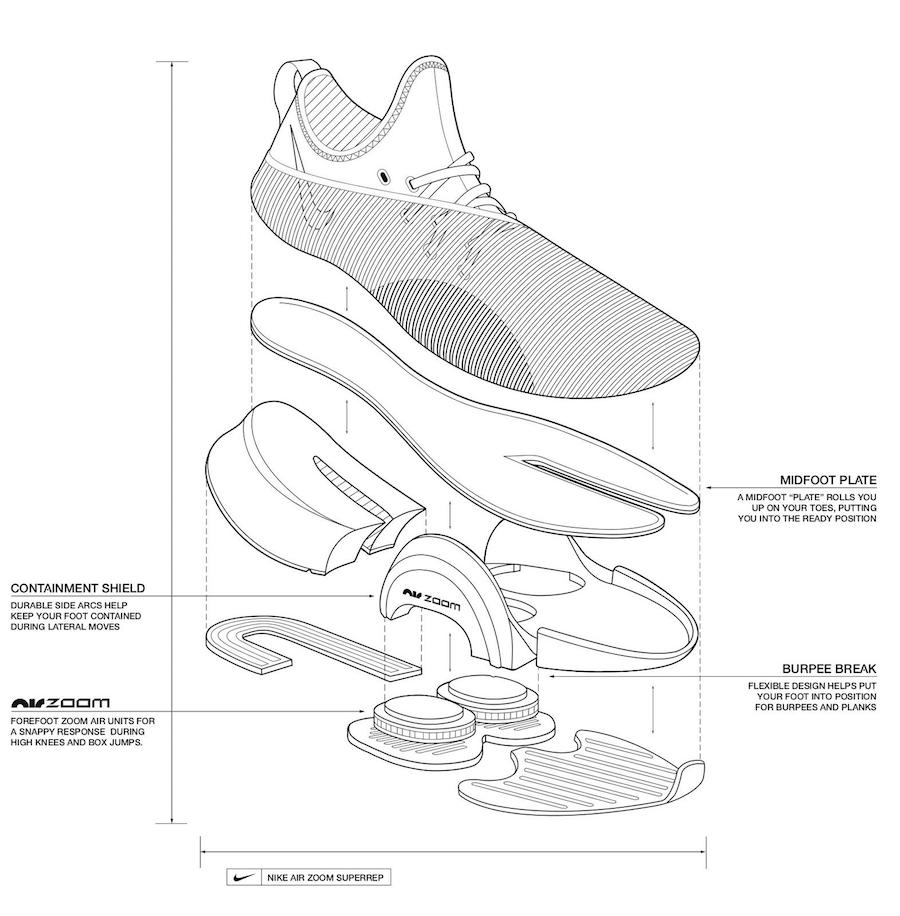
Each unique silhouette — including the debut shoe, the Nike Air Zoom SuperRep — responds to the specifications of a particular type of workout, be it a boot camp or spin class. The shoes are created with a commitment to extend the same level of expertise provided to professional athletes to all enthusiasts who work on a daily and weekly basis to better themselves.
“Fitness classes are booming around the world,” says Jamie Jeffries, VP/GM of Nike Training. “Working out is its own sport, and Nike’s SuperRep shoes are designed to deliver on the performance needs specific to these activities.”
The Nike Air Zoom SuperRep is an innovative shoe built specifically for the rigors of high-intensity classes.
High-intensity interval training (HIIT) workouts alternate bouts of going all-out with periods of rest to recover. The movements are diverse — burpees, kettlebell swings, lunges, mountain climbers, push-ups, squats and many more — and are sequenced to get maximum impact from maximum effort.
Using Zoom Air in the forefoot not only creates a dynamic aesthetic, it also helps provide impact protection and a responsiveness that gives back rep after rep after rep.
This cushioning — a two-unit system under the forefoot — doesn’t act alone. A plate running from heel to forefoot helps roll the foot forward and into a ready position for the majority of upright HIIT movements. The upper is crafted to support lateral moves, such as skaters and side lunges. The “burpee break” provides stability in plank positions and allows the foot to bend naturally when driving into mountain climbers.
Nike SuperRep Cushioning
Alongside the air jordan 34 is the SuperRep Go, made for quick home workouts, and the SuperRep Cycle. The spikes on the spin shoe are made with rubber to prevent slips and falls in the spin studio.

2019年12月9日星期一

Air Jordan XX2 22 Performance Review

Since the Curry 7 review is just around the corner, I thought I’d step back and review the AJ XX2 since the Curry 3 took a huge bite out of the AJ XX2 back story.  I’m disappointed that UA went there but if the Curry 3 performs, nobody will care. I guess since the XX2 was such a sales dud maybe UA thought they could pull it off without anyone noticing? I don’t know …

Pros
: traction, fit, support, materials
Cons: pod cushioning is too targeted and feels unnatural, tippy in the heel, pricey at $175 especially in 2007.
Sizing: half size down
Best for: guards
Weight
16.5 oz so just a half ounce more than the Crazylight Boost 2016.
Traction
Jordan Brand usually does a good job with traction and this was the highlight of the air jordan 34 for me. Stuck extremely well on clean floors and needed minimal wiping on dusty floors.  Probably would have been better if the entire outsole was the same depth but then the IPS system wouldn’t “work” as well
Cushioning
IPS is back again for the third straight model starting with the XX. Hurray?
I couldn’t tell a difference in density in any of the aforementioned models and this was no different. The IPS foam feels great overall at least with a nice bit of springiness.
As for the heel, Jordan Brand brought back the modularity idea allowing the player to swap between Max Air and Double Stacked Zoom. Now that sounds great in theory but the Max and Zoom don’t cover much surface area And the double stacked Zoom is nearly as thin as a quarter (I mean two quarters since its double stacked). Maybe this was the beginning of the end for real Zoom
You can feel the cushioning if you like quarter size set ups. It literally feels like a quarter size lump of cushioning is under your heel. Having the logo raised in the insole doesn’t help either.
Which feels better between the two ? Zoom pod for sure. It just has a more even feeling than the Max set up.
Overall cushioning is decent but far from ideal. A simple forefoot zoom and regular heel that covers the entire heel like the Kobe VI would have been great.
Fit
The XX2 came out before Nike and JB went to a more narrow last and fit so 10.5 fit me perfectly. Finger width of space at the toe, no heel slip and no space side to side.
The upper starts a little stiff since it is real leather but it breaks in nicely and gives a decent almost one to one fit. Not quite perfect but still good overall.
I really liked the simple lacing set up with the lace lock because it just works.
MaterialsWhat is this foreign space age material ? Oh it’s real leather. Good luck ever seeing leather again from any company.
JB and Nike were really pushing the quilted interior back in 2007.
Personally I like the look and feel but it doesn’t make a difference performance wise.
Nice materials and build quality, may leather Rest In Peace

Support and Stability 

Ah, when a higher cut shoe didn’t fold like a bad hand in Texas Hold em. I really liked the combo of the firmer mid cut with a stiff heel counter
JB also says the XX2 features a titanium coated midfoot shank plateErrr, just because it is painted silver doesn’t mean it’s titanium Jordan Brand. Clearly plastic with silver paint. It does its job just fine but don’t hype a piece a plastic as something it isn’t.
The XX2 is stable in the forefoot even without an outrigger but the heel is a little tippier than I prefer. The protruding outsole under the modular unit doesn’t help either.
Overall support is good but the tippy heel isn’t trustworthy.
Containment
Clean simple lines with no major physical barriers would be worrisome with today’s knits and woven uppers but leather is strong and doesn’t have that stretch on hard cuts. Also this extra leather rand helps in containing the foot. Similar idea to the Curry 3 “midsole frame”
Conclusion 
Every sneaker has a snorey..I mean story. Out of ideas, let’s say make up one about fighter planes! Zooooom fast powerful stealthy (is that a word? ). It’s everything an Air Jordan should be! Whoever was running Jordan Brand back then needs to be destroyed like Cyberdyne in Terminator 2 to prevent the proliferation of story telling these days. Unnecessary and adds no value to sneakers; let the players wearing them write the story.
Inspiration aside, the shoe itself is a good overall performer but the ultratargeted tiny heel cushion really ruins the shoe. Let’s see how UA does with the same inspiration.

2019年12月5日星期四

Air Jordan 11 ‘Bred’ OG vs 2019 Retro Comparison

We’re less than two weeks away from the official launch of the Air Jordan 11 ‘Bred’ Retro for 2019. How does this remastered version of the shoe stack up to the original?

You’ve got to give credit where it’s due. Jordan Brand did a very good job recreating the Air Jordan 11 to be as close to the 1995/96 version as possible.
Materials are the one area that are a glaring distinction between the two. Yes, we’d love to see the Air Jordan 11 brought back better than ever, but that isn’t what the brand has been trying to do. They’ve been trying to replicate the original, not replace it.
The truth is that the leather tanneries, textile manufacturers and carbon fiber manufacturers that Nike hired to make the parts that make up the OG Air Jordan 11 are no longer in business. It’s literally impossible for them to make the AJ11 exactly the way they were. So, getting as close as possible is the next best option. For that, we say good job.
There are some small and subtle things they still can work on. The most notable being the toe shape. The squared looking toes of the last decade are just boxy looking and make the original’s sleek design look bulky. If we can see some refinement of the toe shape in 2020 then we’ll be pretty happy.
We hope you enjoy our detailed comparison of the OG Air Jordan 11 Bred and the 2019 Retro. Good luck to everyone going after a pair. You’ll be able to find them available on Nike.com

2019年12月3日星期二

Nike Kyrie 3 vs 2 Performance Review and Comparison

Executive Summary: plays almost exactly the same as the Kyrie 2. Similar firm cushioning and very good traction. Shoe starts stiff but breaks in. No real reason to buy the 3 when the 2 does nearly everything the same or better though.
Pros: traction, court feel, fit, support and stability, containment, very durable
Cons: traction pods protrude and cause a little bit of inconsistent traction in the heel, needs periodic wiping on dusty floors on Non pod portions, cushioning needs break in and is very stiff and firm like the Kyrie 2, materials start stiff but break in, not the best value out there especially now that sale time is upon us.
Sizing: true to size, very wide footers will probably want to go up half a size
Best for: guards looking who value response and quickness; players who liked the Rose 4
Buying Advice: wait for sales, Nike made a lot. $90 is fair, $65 is near the bottom. Or just buy the Kyrie 2
Weight

14.5 oz which is pretty average
Kyrie 2 is the exact same weight
Traction
If there is one thing you can say about the Kyrie 6 line, it’s that it’s traction patterns look aggressive.
The main attraction of the Kyrie 3 traction is the use of traction pods in the forefoot that ride up the sides.
The rubber is softer and raised a millimeter or two from the rest of the shoe.
The concept works and the pods do their job very well. The rest of the shoe is a blade pattern or modified herringbone and feels softer than the Clutchfit Drive herringbone but firmer than the Kyrie 2 rubber.  I wish the entire outsole was made of the pods’ rubber or Nike put some of these pods throughout the entire outsole like the AJ XX because on a few occasions I’d spin out at the heel since the forefoot stuck better than the rest of the shoe. This occurred even on pristine floors. Nitpicky I know.
One concern with the traction pods is durability and efficiency once they wear down. I think they will still work fine once they wear evenly with the rest of the outsole but expect more wear in that area due to the softness of the rubber.
Overall traction is very good overall but I feel the Kyrie 2 provided better consistent traction overall especially on dirty floors since it is the same rubber, pattern, and depth throughout the outsole. Neither required too much wiping but the 3 needed a few more wipes per session. Not quite top tier stuff but still good overall.
Cushioning
Here is the tech highlight of the Kyrie 3. The rest of the shoe is Phylon just like last year’s.
If you did not like the cushioning on the Kyrie 2, you will not like the cushioning on the Kyrie 3. Say with me again, if you did not like the cushioning on the Kyrie 2, you will not like the cushioning on the Kyrie 3. One last time..
Cushioning is very firm on the Kyrie 3 just like the 2. It starts off very very stiff but softens a little with break in. I could feel the Zoom a tiny bit just like on the 2. It is serviceable and responsive as Randy noted but I just prefer a little more softness in the forefoot because I have Morton’s neuroma in each foot.  The good news is that the neuromas didn’t flare up badly but I could feel some buzzing after an hour just like the 2’s. I prefer a more balanced cushioning feel overall and these are just a little too hard for my tastes. The set up feels almost exactly the same as the Rose 4 except the Rose 4 has a thicker PU insole. Very low to the ground and quick feeling.
*interstingly enough if you check out sneakerdebut see the Kyrie actually sits at nearly 18 mm which is higher off the ground than the Harden V1 or CLB. Of course that’s not accounting for the insole thickness which probably evens it out. Thanks reader Pflite*
Although this didn’t really affect cushioning much, these two changes make the cushioning on the 3 feel a smidge firmer:
Number 1
The Kyrie 5 featured Poron in the forefoot while this year’s does not. Hard to really tell a difference but to the touch Poron is softer.
Number 2
The Kyrie 2 had an ortholite insole while this year’s doesn’t have the ortholite markings so in guessing it’s not ortholite. Anyways, the name doesn’t matter but the Kyrie 3 insole is very thin and flimsy like a limp noodle (it can barely hold its shape when I took the pic) plus it feels slightly thinner towards the middle than the Kyrie 2 insole. It’s as if someone wore down the insole of the Kyrie 2 and put it into the Kyrie 3. That’s how thin it feels to me. On Adidas Boost models, the thin insole is fine since it has all that Boost below it but with this firm set up, Nike really should have given us a thicker insole.
If you’ve ever played in basketball ball in tennis shoes like the Adidas Barricade or even the Nike Zoom Vapor 9, that’s what the cushioning feels like. Actually the Zoom Vapor 9 has the exact same size Zoom and a similar if not thicker Phylon set up from heel to toe including the foam strobel.
However, the Zoom Vapor feels better because the insole is thicker. If you want to improve the comfort level of the Kyrie 3, get a bigger size and put in a thicker insole to add a couple of millimeters more of cushioning.  Keep in mind that it might feel better underfoot but one or two millemeters isn’t going to fix any knee issues you might have.
Fit

I bought my true to size 11 and initially thought I should have gone up half a size. However, after playing in them a few weeks, true to size was the way to go. Even though I’m a wide footer, these stretched out enough for me. If you’re Fred Flintstone, you should at least try half a size up before deciding on the correct width though.
There is no movement in the forefoot, very little deadspace above the foot in the toe box and zero heel slip. Midfoot fit is still tight like the previous models but not deathly like the Kyrie 1.
After a few hours of break in time, you almost forget they are on your feet as the upper softens up. Almost
Even though the Kyrie 3 has a very good fit, the Kyrie 2 has an even better fit due to the strap that helped pull the ankle and heel back further.
Materials
In case you’re part of the Night’s Watch or need to defend Winterfell….
The materials start off stiff but soften up quickly. They don’t feel Flyknit soft or anything but they do soften up enough after a few hours of break in time. The spiked look doesn’t really convey a soft warm comfy feel does it?
The lateral side of the upper is a similar fuse  as last year’s model
Not cracker crispy like the Kyrie 1 but not definitely not Snuggles soft.
The medial side and toe box is mesh with a nylon backing and feels a lot softer than the lateral side. The front of the toe box does have a hard rand for durability as well.
I’ve noticed this is a trend these days as shoe companies have added strength and stiffness to the lateral side for containment and support while leaving the medial side soft for flexibility. Hmmm, maybe I did make a difference .(I’m kidding I don’t have that kind of pull)
Of course we can’t forget the featured marketing portion which is the forefoot flex area.
Across the top of the foot,  a long stretchy band flexes with your foot for support during quick cuts and sprints. 
Nike used a thinner mesh and Flywire to allow extra  flexibility at the forefoot.  I don’t it feel stretches at all but that thinner mesh allows for a more natural flex area. Plus it’s hard to quantify if it really works since the rest of the upper is so much stiffer than this little area.
If you’re big on materials and have to have that pure Flyknit or Primeknit or mesh feel, you probably will want to steer clear of the Kyrie 3. I think the materials are fine and don’t affect playability but every person has different needs and wants.
Support and Stability 

Support is good with the Kyrie 3 thanks to the fit, heel counter and stiffer fuse on the lateral side. Just plain and simple, solid support. As stiff as the upper starts off, it is plenty flexible like the Kyrie 2 and isn’t going to save any ankles
Nike continued with the curved outsole but didn’t choose to market it this time around.It seems slightly less curved in the forefoot than the Kyrie 2. After not playing in the Kyrie 2 for a year you can feel a difference with the curved outsole but it doesn’t make a difference for me in terms of performance.
Also helping with the stability was the firm, low to the ground cushioning.
Overall just a solid supportive and stable shoe. Same as the Kyrie 2.
ContainmentNo surprises here as containment was excellent thanks to that stiffer lateral fuse upper as well as the raised midsole. Softer materials might be all the rage but there are benefits to using stiffer and stronger materials like Fuse.
Conclusion 
Not the best value out there but a good performer overall. The Kyrie 3 has great traction, a good fit with solid support and stability and very firm cushioning. I had no issues with aches or pains but then again don’t have knee or back issues (knock on wood). The Kyrie 3 just feels like a quick high cut tennis shoe for players that value lateral quickness over everything else.
Cushioning will come down to personal preference and if you didn’t like the 2 cushioning you will not like the 3. I’ll even qualify that statement with this; If you don’t like UA Charged you will not like cushioning on the Kyrie 3. Charged foam is easily thicker bouncier and softer. If you want to improve the comfort of the Kyrie 3, size up and swap out the cheapo insole.
Is the Kyrie 3 an upgrade over the 2? No I don’t feel it did anything better than the Kyrie 2.
Is it worth paying $120? No probably not. There are plenty of shoes out that at the $120-$130 range that do everything just as well or better than the Kyrie 3. Curry 2, 2.5, 3 all come to mind.  Plus it’s almost mid season so there are plenty of sales on earlier launches.  Do not buy these if you want a softer cushioning set up or if you want a Charmin soft upper material. 
I’m guessing Nike made a lot of these to capture the new Kyrie fans post championship. If Kyrie 2 sales are any indication, these should hit $90 under range soon and bottom out around $65. If you want a marginally better performing and cheaper shoe, stick to the Kyrie 2.